


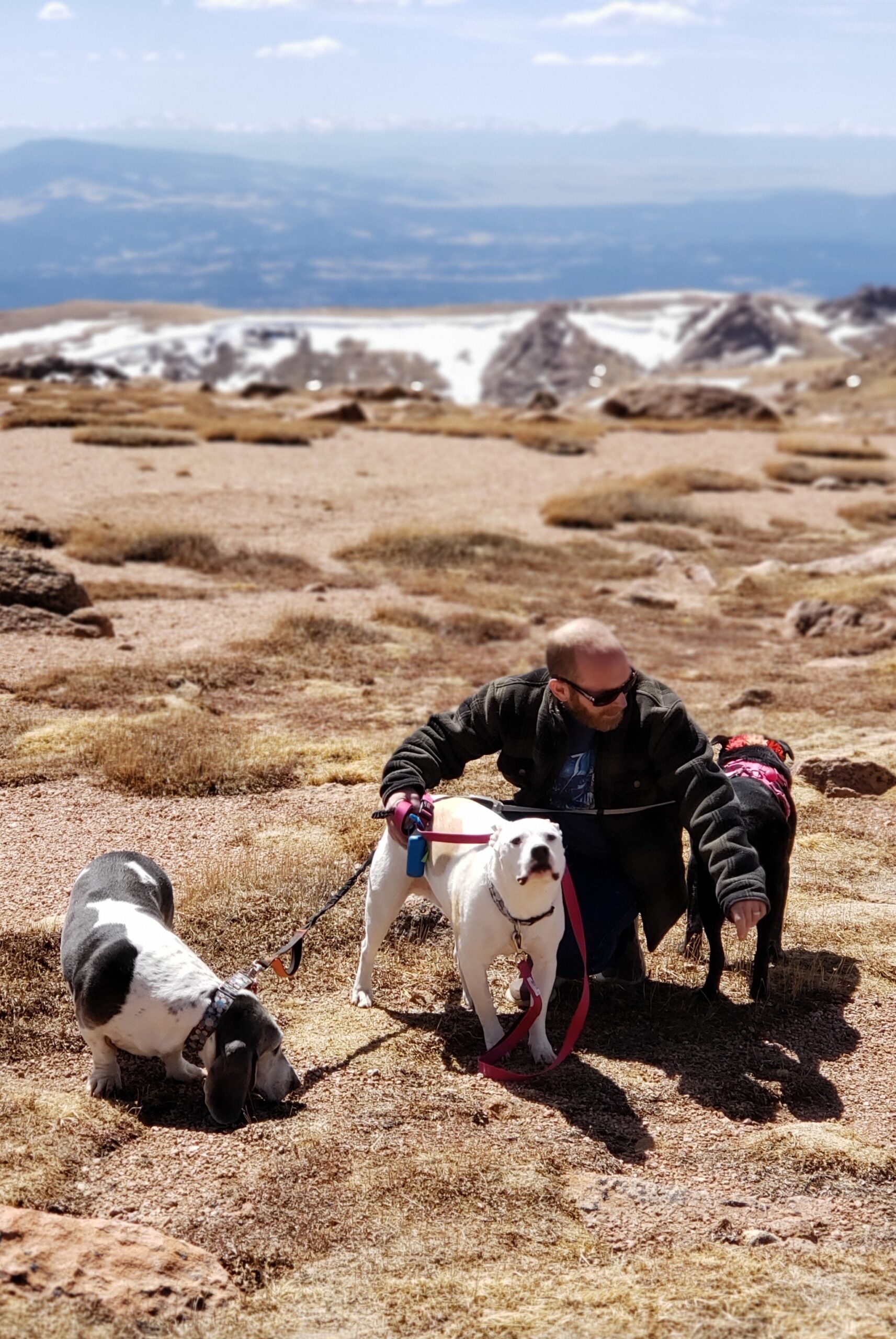
Excellent Crap You Can Drive To If Walking Sounds Terrible
America has a lot of mountains.
Some require technical climbing skills.
Some require months of preparation.
Some require enough physical fitness to make your lungs file a formal complaint with management.
And then there’s Pikes Peak.
Pikes Peak looked at all those difficult mountains and said:
“What if we just built a road to the top?”
As a result, it may be the most democratic 14er in America.
You can hike it.
You can bike it.
You can take a train.
Or you can simply drive to the summit while listening to classic rock and slowly discovering that oxygen is more important than you previously appreciated.
This is excellent crap.
The Crap at a Glance
Pikes Peak has everything:
- A 14,115-foot summit
- Historic railroads
- Alpine tundra
- Wildlife
- World-famous racing
- Spectacular overlooks
- Mountain donuts
- Geological oddities
- Enough altitude to make walking uphill feel like an extreme sport
And unlike most bucket-list mountains, it doesn’t require sleeping in a tent, eating freeze-dried mystery stew, or developing a long-term relationship with hiking blisters.
Let’s Talk About Zebulon Pike’s Terrible Day
Before we go any further, we should probably discuss the man whose name is attached to the mountain.
Lieutenant Zebulon Pike was sent west in 1806 to explore the southwestern reaches of the Louisiana Purchase and determine what was actually out there.
The government basically gave him a map, pointed west, and said:
“Go look around and report back.”
While exploring Colorado, Pike spotted the enormous mountain now known as Pikes Peak.
Naturally, he decided he should climb it.
Unfortunately, Pike made the same mistake thousands of tourists still make today.
He looked at the mountain and dramatically underestimated it.
Pike reportedly believed the summit could be reached in a day.
The mountain disagreed.
After several days of fighting snow, rough terrain, inadequate equipment, terrible weather, and what we would now professionally classify as “a series of poor decisions,” Pike and his party turned around.
He never reached the summit.
Not once.
The mountain named after him was actually first climbed by botanist Edwin James in 1820.
Let’s stop and appreciate that fact.
The most famous mountain in Colorado is named after a guy who looked at it, attempted it, failed miserably, and went home.
Honestly?
I kind of love that.
It’s one of the most American stories imaginable.
See giant mountain.
Become irrationally confident.
Ignore warning signs.
Suffer consequences.
Get mountain named after you anyway.
The Mountain Is Basically Showing Off
If you live in Colorado long enough, you get used to seeing Pikes Peak.
It’s always there.
Watching.
Lurking on the horizon.
Acting like the main character.
Then you reach the summit and realize the mountain may have earned the attitude.
On a clear day, visibility can stretch across vast sections of eastern Colorado and onto the Great Plains.
You don’t just see scenery.
You see weather systems making future appointments.
I half expected to spot next Tuesday approaching from Kansas.
Congratulations, You’re A 14er Now
One of my favorite things about Pikes Peak is how accessible it is.
Colorado has dozens of 14ers.
Most require effort.
Many require fitness.
Some require questionable judgment.
Pikes Peak requires:
- A vehicle, train ticket, or functional legs.
- A little planning.
- The ability to remember how breathing works.
Suddenly people who couldn’t identify a switchback if their lives depended on it are standing on a 14,115-foot mountain.
And honestly?
Good.
Not everyone should have to spend ten hours climbing a mountain just to enjoy one of Colorado’s greatest views.
The Air Is Optional
Nobody warns visitors enough about the altitude.
Actually, that’s not true.
Everybody warns visitors.
Visitors simply ignore it.
At 14,115 feet, the air is noticeably thinner.
You’ll watch tourists jump out of their cars full of confidence.
Five minutes later they’ll be moving around the summit like somebody secretly replaced the atmosphere with decaf coffee.
Walking up a short ramp suddenly feels like a respectable cardio workout.
Hydrate.
Move slowly.
Accept that the mountain is stronger than you.
This isn’t weakness.
It’s science.
More Than A Mountain
Pikes Peak has been many things to many people.
To the Ute people, it is Tava-kaavi, or Sun Mountain, a place woven into their history and cultural identity long before Colorado existed.
To gold seekers, it became a symbol of opportunity.
To settlers moving west, it was often the first major Rocky Mountain landmark visible from the plains.
To thousands of prospectors, “Pikes Peak or Bust” became a promise and occasionally a warning.
To Katharine Lee Bates, the view inspired America the Beautiful.
To race drivers, it’s a place to point a vehicle uphill and make highly questionable decisions at extraordinary speeds.
To Zebulon Pike, it was a humbling reminder that mountains do not care about your plans.
And to visitors today?
It’s one of the easiest opportunities in America to stand atop a fourteen-thousand-foot mountain and stare across half a state.
The Cog Railway Is Still Awesome
If you’d rather let somebody else worry about the driving, take the Cog Railway.
The train has been hauling tourists up the mountain since the 1890s.
That’s a lot of tourists.
The ride climbs through forests, meadows, rocky terrain, and eventually alpine landscapes that feel more like another planet than Colorado.
It’s one of those attractions that is both genuinely historic and genuinely fun.
Which is rarer than you’d think.
The Donuts Have No Business Being This Famous
Let’s discuss the donuts.
Because eventually everybody does.
The summit serves high-altitude donuts.
Apparently baking at 14,000 feet is complicated because the atmosphere is actively trying to ruin your recipes.
The result has become almost as famous as the mountain itself.
Are they worth trying?
Absolutely.
Would I drive to the summit specifically for one?
Let’s not ask questions we’re not prepared to answer honestly.
The Race To The Clouds
Most people see a mountain.
Race drivers see a challenge.
The Pikes Peak International Hill Climb has been terrifying normal people since 1916.
Drivers attack 156 turns while climbing nearly 5,000 vertical feet toward the summit.
Every year I watch footage and arrive at the same conclusion:
“Those people are significantly braver than I am.”
Or crazier.
There’s probably considerable overlap.
Colorado’s Giant Rock Collection
The geology around Pikes Peak deserves more attention than it gets.
Granite outcrops.
Quartz veins.
Unique formations.
Interesting minerals.
And if you’re lucky, maybe even an interesting geode during your travels around the region.
A scenic drive has an unfortunate tendency to transform into an amateur geology lesson.
At least that’s what happened to me.
What Sucks
Weather.
That’s pretty much it.
Pikes Peak creates its own weather whenever it feels like it.
A sunny morning can become a storm.
A calm day can become windy.
Visibility can disappear.
Snow can appear.
The mountain operates on its own schedule and has absolutely no interest in yours.
Frankly, that’s part of the appeal.
Why I Keep Recommending It
I’ve heard some locals dismiss Pikes Peak because it’s popular.
That’s nonsense.
Things are often popular because they’re good.
Pikes Peak is one of the most accessible, historic, scenic, and rewarding mountain experiences in Colorado.
You can bring grandparents.
You can bring kids.
You can bring out-of-state relatives.
You can bring that friend who considers a quarter-mile walk an act of aggression.
Everyone can enjoy it.
That’s difficult to accomplish.
Final Thoughts
Pikes Peak isn’t just another mountain.
It’s one of the defining landmarks of the American West.
The views are spectacular.
The history is fascinating.
The drive is unforgettable.
The railway is worth experiencing.
The racing history is incredible.
The donuts have somehow become a cultural institution.
And unlike Zebulon Pike, you can actually reach the summit without spending days freezing on a mountainside.
Just remember:
At 14,115 feet, breathing stops being automatic and becomes more of an enthusiastic suggestion.
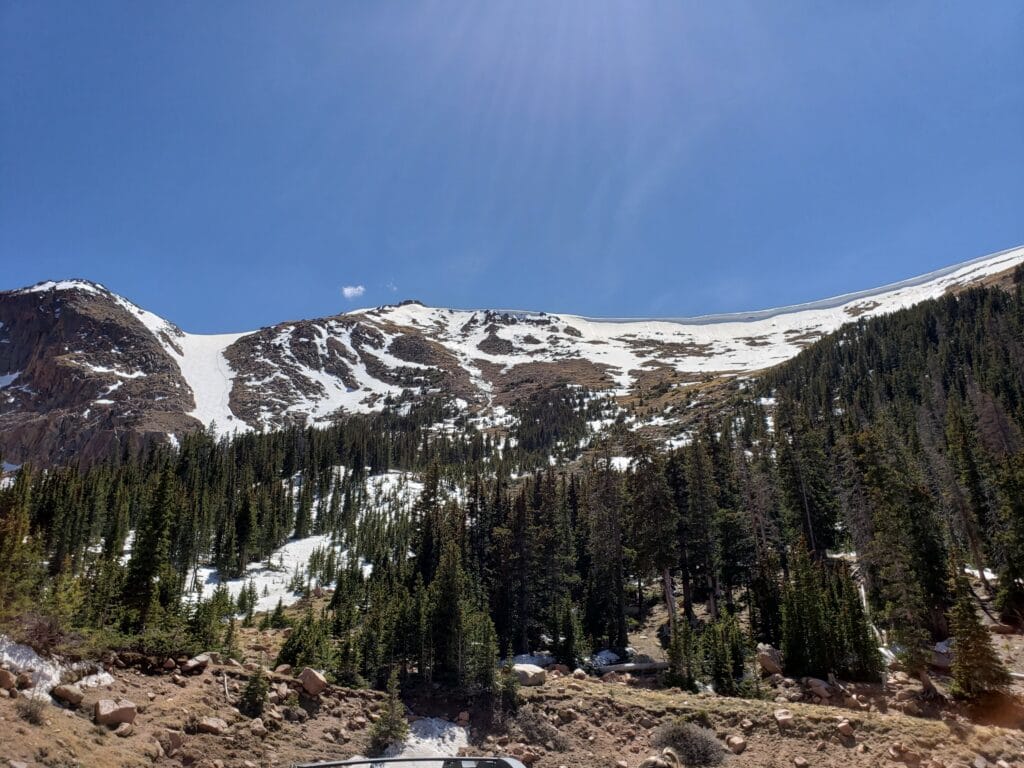
Poop Score: 💩
1 Out of 4 Poops — Excellent Crap
Why?
Pikes Peak delivers world-class scenery, fascinating history, easy summit access, unique attractions, and enough mountain drama to make every visitor feel like they’ve accomplished something.
Whether you drive it, ride it, or hike it, you’ll leave understanding why this mountain became one of Colorado’s most enduring symbols.
Just try not to repeat Zebulon Pike’s strategy.
The mountain already has one guy’s name who didn’t make it to the top.
That’s excellent crap. 🏔️💩🍩🚂
Looking For More Excellent Crap?
If you enjoyed Pikes Peak, don’t stop here.
Check out our other travel guides covering Colorado mountain towns, national parks, historic landmarks, hot springs, coastal cities, archaeological sites, and the occasional tourist attraction that probably seemed like a good idea at the time.
Because life’s too short to waste vacation days on mediocre crap. 🌎💩
or find more places to visit in our
