



A Halloween Editorial
Halloween is finally here, which means Americans everywhere are participating in one of our country’s finest traditions: purchasing $40 worth of candy so strangers’ children can knock on the door and complain that you bought the wrong kind.
Or at least that’s supposedly how it works.
Around here, Halloween follows a slightly different format.
We decorate.
We buy candy.
We turn on the porch light.
We wait.
And then absolutely nobody comes.
Not one child.
Somewhere in this neighborhood, children presumably exist. I’ve seen bicycles. There are basketball hoops. Occasionally a small person appears outside before mysteriously vanishing again.
All available evidence suggests families live here.
There is, however, one historical exception.
Since moving to this neighborhood, exactly one child has trick-or-treated at our house.
And even that one requires an asterisk.
The child didn’t actually discover our house through the normal Halloween process. The parent knew we were over here decorating, buying candy, turning on lights and foolishly attempting to participate in Halloween like this was a functioning American neighborhood.
She felt sorry for us.
So she brought her child over.
We received a pity trick-or-treater.
It was essentially Halloween charity.
“Look, honey, those people bought decorations and everything. Go knock on their door before they lose all hope.”
Unfortunately, this single event has completely ruined us.
Because now every October we remember:
It happened once.
And if it happened once, theoretically it could happen again.
That one child has sustained our Halloween optimism for years, like a gambler who once won $40 on a slot machine and has been feeding twenties into it ever since.
Yet every October 31, the neighborhood suddenly looks like the opening scene of a post-apocalyptic movie.
Preparations Begin
Naturally, we approach Halloween with optimism.
You buy the good candy because you’re not an animal.
None of this loose peppermints from Grandma’s purse business. Real candy. Chocolate. Reese’s. Snickers. Kit Kats. The sort of merchandise capable of establishing your house as a legitimate Halloween institution.
You put out the decorations.
Maybe there’s a skeleton.
Maybe some pumpkins.
Maybe enough orange lighting to make the house visible from low Earth orbit.
Then comes the ceremonial illumination of the porch light, the internationally recognized suburban symbol for:
WE HAVE CANDY. APPROACH THE BUILDING.
And then you wait.
6:30 P.M.: Optimism
The candy bowl is full.
Every passing car produces excitement.
“Here they come.”
No.
Just Steve coming home from work.
The dogs bark.
Everyone settles down.
Surely the kids will be here soon.
7:00 P.M.: Questions
Still nobody.
Perhaps children trick-or-treat later now.
Maybe we’re early.
Times change.
We didn’t have TikTok when we were kids. Maybe modern children need to finish uploading a reaction video before acquiring their Snickers.
No reason for concern.
7:30 P.M.: Intelligence Gathering
Movement outside.
Curtain opens.
Vehicle detected.
Possible children.
Stand by.
Nope.
Amazon.
For one glorious moment, however, there was hope.
8:00 P.M.: The Reese’s Reserve Is Breached
At this point an uncomfortable realization begins spreading through the household.
We may have purchased all of this candy for ourselves.
Initially this is treated as a tragedy.
Then someone eats a Reese’s.
Suddenly the situation doesn’t seem quite so bad.
8:30 P.M.: Fuck These Kids
We did our part.
There is candy sitting six feet from the front door.
Free candy.
This is perhaps the easiest economic proposition these children will receive during their entire lives.
Walk approximately 30 feet.
Say three words.
Receive chocolate.
No credit check.
No subscription.
No processing fee.
No QR code.
No app.
You don’t even have to create an account.
Yet somehow we’ve got no takers.
Frankly, I question their judgment.
The Great Halloween Migration
Of course, the obvious explanation is that Halloween has changed.
Families drive somewhere else. Bigger neighborhoods. Organized events. Trunk-or-treats. Commercial districts. Places where children can apparently maximize their candy acquisition per linear foot of walking.
Halloween has become logistical.
Kids aren’t wandering aimlessly around their own neighborhoods anymore. They’ve got routes.
Parents are probably standing over maps like military planners.
“Johnson subdivision has full-size Hershey bars. Avoid Maple Street. Intelligence suggests raisins.”
Meanwhile our house sits here like some forgotten candy outpost staffed by two increasingly bitter adults.
Then Comes the Worst Part
November 1.
You walk into the kitchen.
There’s the bowl.
Still full.
Now every piece of candy has become your responsibility.
You bought it.
You opened it.
Chocolate cannot simply be abandoned.
So naturally you begin what historians will later call Operation Eat All This Shit Before Thanksgiving.
At first, moderation prevails.
One little Snickers after lunch.
Maybe a Reese’s after dinner.
Then suddenly it’s November 6 and you’re standing in the kitchen at 11:43 p.m. eating your sixth fun-size Kit Kat while wondering what exactly is supposed to be fun about gradually eating an entire full-size candy bar in six individually wrapped installments.
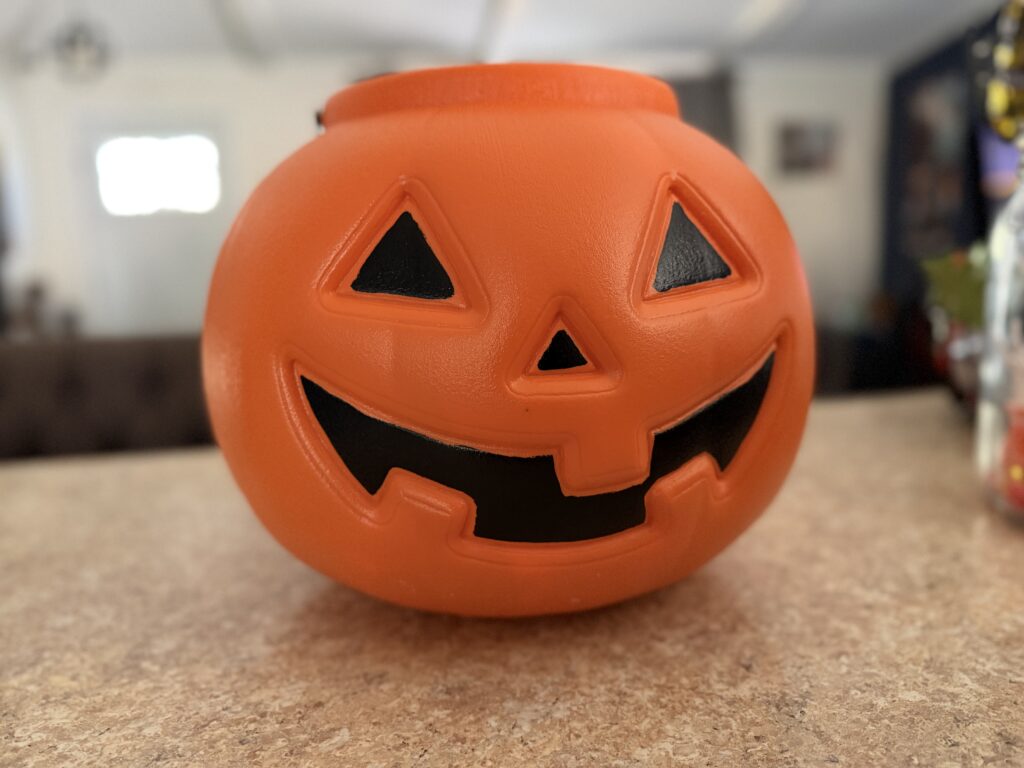
And Yet We’ll Do It Again
That’s the stupidest part.
Next October we’ll see the Halloween candy appear in stores sometime around Easter.
We’ll walk past it.
We’ll remember.
“Nobody came last year.”
We will swear we’re not doing this again.
Then October 25 arrives.
We buy candy.
We decorate.
We turn on the porch light.
We sit down.
And somewhere out there, dozens of children will climb into SUVs and drive past our perfectly good house on their way to some neighborhood apparently offering king-size Twix bars and mortgage assistance.
Still, the porch light stays on.
Because Halloween isn’t completely about whether anybody actually knocks.
It’s about tradition.
It’s about optimism.
It’s about community.
And, increasingly, it’s about creating an elaborate annual excuse to purchase an irresponsible quantity of Reese’s.
So Happy Halloween, everybody.
And if no trick-or-treaters show up tonight, remember:
You didn’t waste $40 on candy.
You simply misunderstood who the candy was for.
