


For most of human history, cooking was fairly straightforward.
You had fire.
You had food.
You put one near the other and hoped nobody died.
Eventually civilization advanced.
We invented pots.
Knives.
Ovens.
Refrigerators.
Microwaves.
Dishwashers.
These were genuinely useful developments.
Then, at some point, we apparently ran out of important kitchen problems and started inventing countertop machines capable of performing tasks previously accomplished with a bowl and moderate wrist movement.
Welcome to Kitchen Gadgets & Devices, where we review the appliances, gizmos, contraptions, electronic miracle boxes, and assorted culinary crap competing for the rapidly disappearing counter space in your home.
Some of this stuff is brilliant.
Some of it will genuinely change the way you cook.
And some of it will spend three years stuffed behind a crockpot before eventually migrating to Goodwill.
Our job is figuring out which is which.
Kitchen Gadgets Have One Job: Make Something Easier
That’s really the test.
A kitchen gadget doesn’t have to revolutionize civilization.
It just has to make something easier.
Faster.
Cleaner.
More consistent.
Less annoying.
If a device saves time, reduces work, improves the results, or accomplishes something that’s otherwise difficult to do, great.
That’s useful.
The problem begins when a gadget supposedly saves four minutes but requires fifteen minutes of disassembly, cleaning, drying, reassembly, and searching for the weird little plastic attachment that disappeared into a drawer sometime in March.
At that point, we’ve reinvented inconvenience.
Electrically.
We Have an Appliance for Fucking Everything
Walk through the kitchen section of any major retailer and marvel at what we’ve accomplished as a species.
Air fryers.
Rice cookers.
Pressure cookers.
Slow cookers.
Blenders.
Food processors.
Juicers.
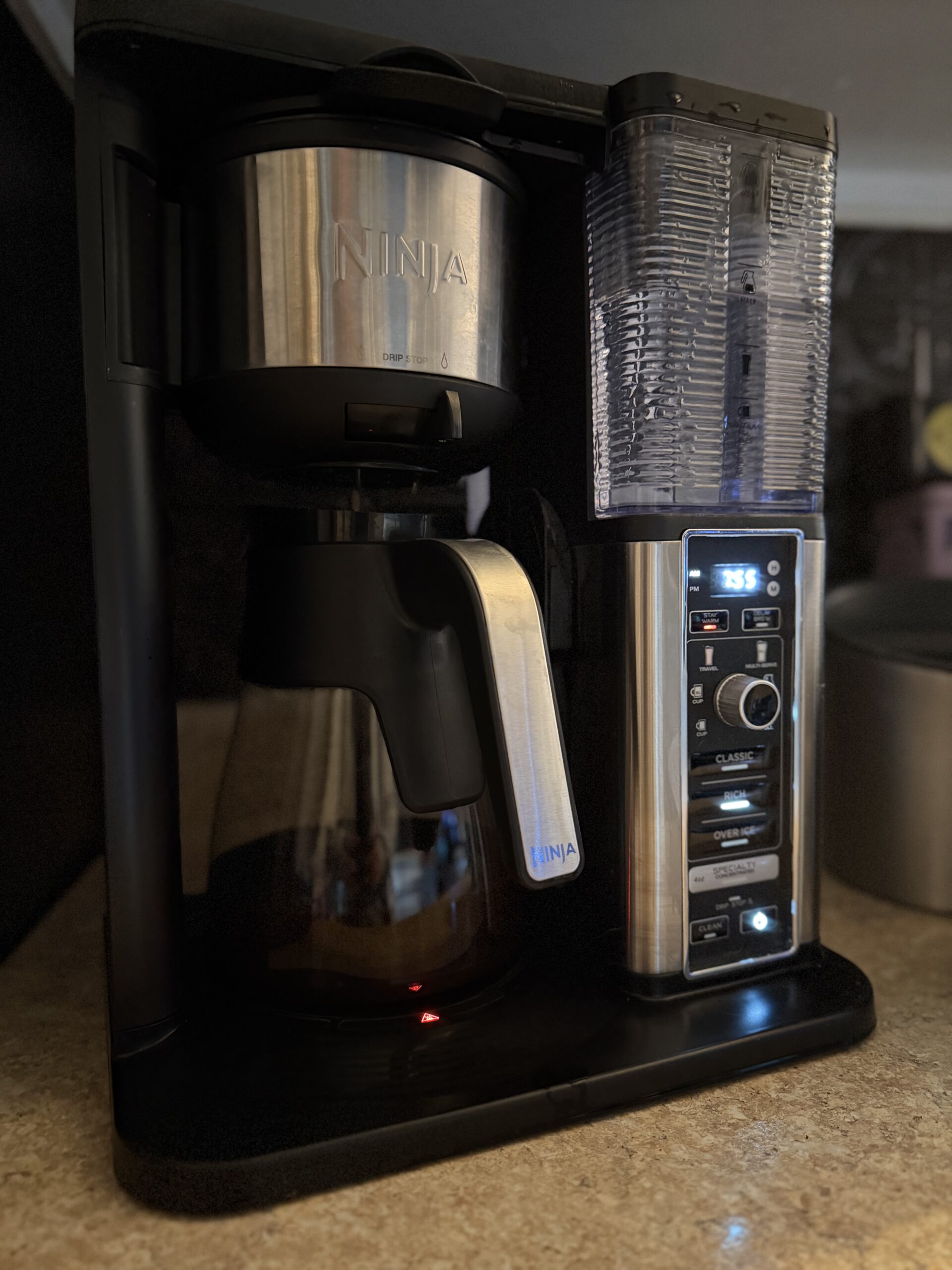
Coffee makers.
Espresso machines.
Electric kettles.
Stand mixers.
Hand mixers.
Immersion blenders.
Bread makers.
Ice cream makers.
Waffle makers.
Panini presses.
Indoor grills.
Egg cookers.
Milk frothers.
Vegetable choppers.
Food dehydrators.
Machines that produce tiny breakfast sandwiches using a sequence of trays resembling a laboratory experiment.
It’s remarkable.
There is almost no culinary problem so minor that somebody hasn’t attached a power cord to it.
But that doesn’t mean these gadgets are stupid.
Some are fantastic.
The question is whether they’re fantastic for you.
Useful Gadget or Countertop Squatter?
Counter space is valuable real estate.
Particularly once you’ve accumulated enough kitchen appliances.
At first everything looks beautiful.
The coffee maker goes here.
Toaster over there.
Maybe the stand mixer in the corner.
Then somebody buys an air fryer.
Then an espresso machine.
Then a blender.
Then some cheerful bastard gives you a bread maker for Christmas.
Eventually your kitchen counter resembles a small-appliance refugee camp.
That’s why one of the things we’ll consider is whether a gadget deserves the space it occupies.
If you use something every day, wonderful.
Leave it out.
If you use it once every eleven months to make zucchini noodles during a brief annual burst of optimism, perhaps we need to discuss storage.
Does It Actually Work?
This sounds obvious.
Apparently it isn’t.
Kitchen gadgets make enormous promises.
FASTER!
HEALTHIER!
EASIER!
PERFECT RESULTS EVERY TIME!
Anytime somebody promises me perfect results every time, I begin looking for the asterisk.
We’ll look beyond the promises and examine what these things actually do.
Does the air fryer cook evenly?
Does the blender actually blend the stuff people put in blenders?
Does the food processor save meaningful time?
Does the coffee maker make consistently good coffee?
Does the vegetable chopper chop vegetables, or does it merely transform onion preparation into an engineering project involving six plastic components?
The basic question remains beautifully simple:
Does the damn thing work?
Cleaning Counts
This is a big one.
Manufacturers love demonstrating kitchen gadgets before they’ve been used.
Everything is spotless.
The appliance gleams beneath studio lights while somebody casually prepares dinner wearing a white shirt that apparently possesses supernatural resistance to tomato sauce.
Nobody shows you what happens afterward.
That’s where we become interested.
How many pieces need washing?
Can they go in the dishwasher?
Are there tiny crevices where food goes to die?
Does grease collect somewhere only accessible using a cotton swab, chopstick, and several colorful words?
Can you actually clean the appliance?
Because an amazing kitchen gadget that’s miserable to clean eventually becomes a kitchen gadget you stop using.
And then it becomes furniture.
The One-Trick-Pony Problem
Some kitchen devices perform one task.
This isn’t necessarily bad.
A toaster mostly makes toast, and civilization seems comfortable with that arrangement.
But highly specialized gadgets face a tougher question:
How often are you actually going to use this thing?
If your family makes waffles every Sunday, a good waffle maker makes perfect sense.
If you made waffles once in 2019 after watching somebody make them on television, spending $160 on an artisanal rotating waffle system may represent excessive optimism.
We’ll look at versatility when it matters.
A gadget that performs several jobs well can replace multiple appliances.
A gadget that performs seventeen jobs badly has simply created seventeen new disappointments.
Smart Kitchen Devices: Because Apparently the Refrigerator Needed Internet
Naturally, the kitchen has joined the smart-home revolution.
You can now find connected ovens, thermometers, coffee makers, refrigerators, cookers, and other appliances featuring apps, screens, notifications, sensors, programs, and capabilities our grandparents would have assumed belonged aboard a spacecraft.
Some of this technology is genuinely useful.
Some of it raises an entirely different question:
Why the hell does this need an app?
We aren’t opposed to smart features.
We’re opposed to stupid smart features.
If connectivity makes cooking easier, improves monitoring, provides useful control, or adds something meaningful, terrific.
If downloading an app, creating an account, and agreeing to a privacy policy is required before I can make toast, we may have wandered too far from God’s light.
Cheap Isn’t Always Cheap
Kitchen gadgets are particularly good at tempting us with bargains.
Twenty bucks?
Sure.
Why not?
Then the cheap blender dies.
So you buy another one.
Then that one leaks.
Eventually you’ve purchased three mediocre blenders when you could have bought one decent blender and spent the remaining money on ingredients.
But expensive doesn’t automatically mean better either.
Sometimes you’re paying for stronger motors, better materials, repairability, warranties, thoughtful engineering, and durability.
Sometimes you’re paying for brushed stainless steel and a logo impressive enough to leave facing outward on the counter.
We’ll try to determine which.
Long-Term Ownership Matters Here Too
Kitchen appliances often look great during the first week.
Everything is new.
The blades are sharp.
The seals seal.
The buttons button.
Nothing smells strange.
The real test comes later.
Does the coating wear?
Does plastic crack?
Do seals leak?
Does the motor start sounding like it’s reconsidering its career?
Are replacement parts available?
Can anything be repaired?
Does the appliance remain easy to clean after fifty uses?
Do you still use it six months later?
That last question might be the most important.
Because a fantastic appliance you use constantly is probably worth considerably more than a cheaper appliance sitting untouched in a cabinet beside the fondue set.
The Drawer of Forgotten Gadgets
Every kitchen eventually develops one.
The drawer.
You know the one.
Inside lies an archaeological record of previous culinary ambition.
Garlic presses.
Avocado slicers.
Melon ballers.
Silicone brushes.
Strange peelers.
Tiny whisks.
Several unidentified pieces of plastic that presumably belong to appliances you may no longer own.
Opening this drawer produces the same sensation archaeologists must experience when uncovering a lost civilization.
Clearly these people had tools.
What the hell were they doing with them?
Our mission is to keep new purchases from joining that drawer.
Or at least make them earn their place there.
So… Should You Buy This Crap for Your Kitchen?
That’s ultimately what we’re trying to answer.
Not whether the product looks impressive in a commercial.
Not whether its box contains the phrase professional performance.
Not whether somebody on social media prepared an entire meal with it while apparently owning a kitchen large enough to have its own ZIP code.
We want to know:
Does it work?
Is it easy to use?
Is it easy to clean?
Is it built well?
Does it save meaningful time or effort?
Will you actually use it?
And is it worth the money and counter space?
Sometimes the answer will be:
Absolutely. Buy the damn thing.
Sometimes:
It’s good, but only if you regularly cook this kind of food.
And occasionally:
Congratulations. You’ve purchased an electric version of a knife.
Welcome to Kitchen Gadgets & Devices
Below you’ll find our growing collection of kitchen gadget reviews, small-appliance reviews, cooking devices, coffee gear, food-prep equipment, and assorted electrical contraptions supposedly designed to make feeding ourselves easier.
Some products deserve permanent counter space.
Some belong in a cabinet.
Some should remain safely inside the shipping box so they can be returned immediately.
That’s what we’re here to determine.
So clear a little counter space.
Find an available electrical outlet.
And let’s answer the question that should probably be printed on every countertop appliance box:
Do I actually need this shit?
Probably not.
But let’s review it anyway.
