


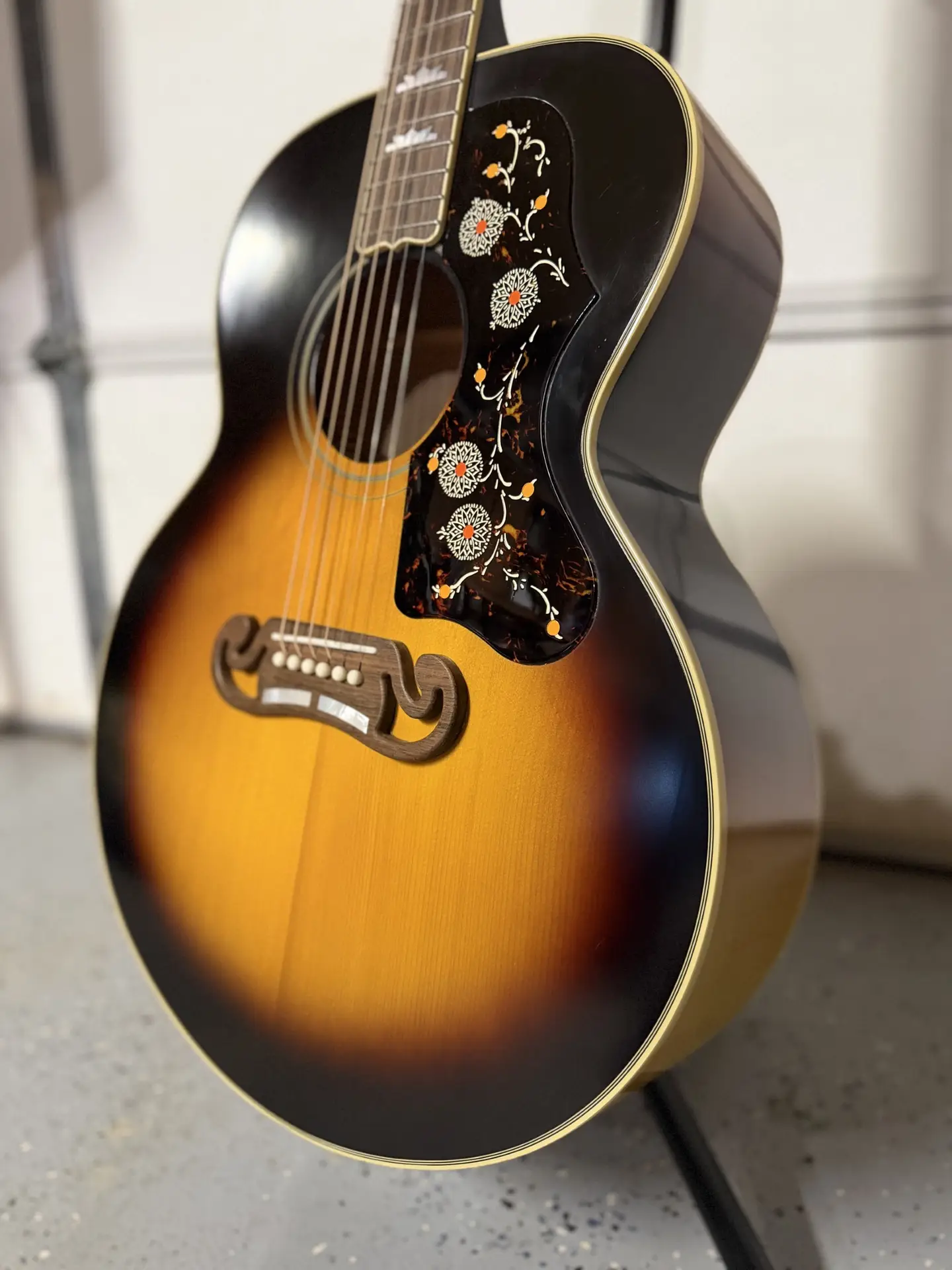
The guitar is a remarkable instrument.
Six strings, a piece of wood, some magnets, and enough emotional baggage to keep the music industry operating indefinitely.
In responsible hands, it can produce everything from delicate classical music to blues, country, jazz, rock, metal, and whatever horrifying noise somebody makes after discovering alternate tunings at three in the morning.
In less responsible hands, it becomes a decorative object leaning against an amplifier while its owner shops online for another guitar.
Welcome to our Guitars section, where we review electric guitars, acoustic guitars, affordable guitars, expensive guitars, strange guitars, beautiful guitars, and instruments purchased under the recurring belief that this one will finally complete the collection.
It won’t.
But that’s never stopped us before.
Guitar Reviews From Somebody Who Actually Plays Them
Buying a guitar is different from buying most products.
You don’t merely compare specifications, select the model with the largest number, and declare yourself victorious.
A guitar has to feel right.
The neck matters.
The weight matters.
The balance matters.
The fretwork matters.
The pickups matter.
The controls matter.
The way the thing hangs from a strap matters.
Even the location of a poorly positioned switch can become surprisingly important after you smack it with your hand for the four-hundredth time.
Then there’s the sound, which is allegedly the entire point.
Our guitar reviews look at the specifications, construction, hardware, electronics, materials, playability, sound, reliability, and overall value.
But we also look at the less measurable stuff.
Does it make you want to keep playing?
Does it feel like a real instrument or a collection of parts that met for the first time at the factory?
Is it inspiring?
Does it possess that mysterious quality guitarists call mojo when they can’t think of a more specific technical explanation?
These things matter because the best guitar is not necessarily the one with the most impressive specification sheet.
It’s the one you keep picking up.
Every Guitar Has a Story
Guitar companies love history.
Sometimes they love it so much they release seventeen slightly different versions of the same instrument from 1959.
There are historic body shapes, historic finishes, historic neck profiles, historic wiring, historic plastics, historically accurate screws, and pickup rings presumably recreated from petroleum extracted during the Eisenhower administration.
We enjoy guitar history too, although we’ll try not to become completely ridiculous about it.
Understanding where a guitar came from helps explain why it looks, sounds, and feels the way it does.
Why does this model have that body shape?
Why are the controls arranged like that?
Why does one guitar use a 25.5-inch scale while another uses 24.75 inches?
Why are some necks bolted on while others are glued into place with the confidence of a permanent decision?
Why does a design created more than seventy years ago remain so popular that companies are still arguing about the precise shade of faded cherry?
Those stories give guitars character.
They also provide manufacturers with endless opportunities to sell us another one.
Electric Guitars: Wood, Wire & Magnets
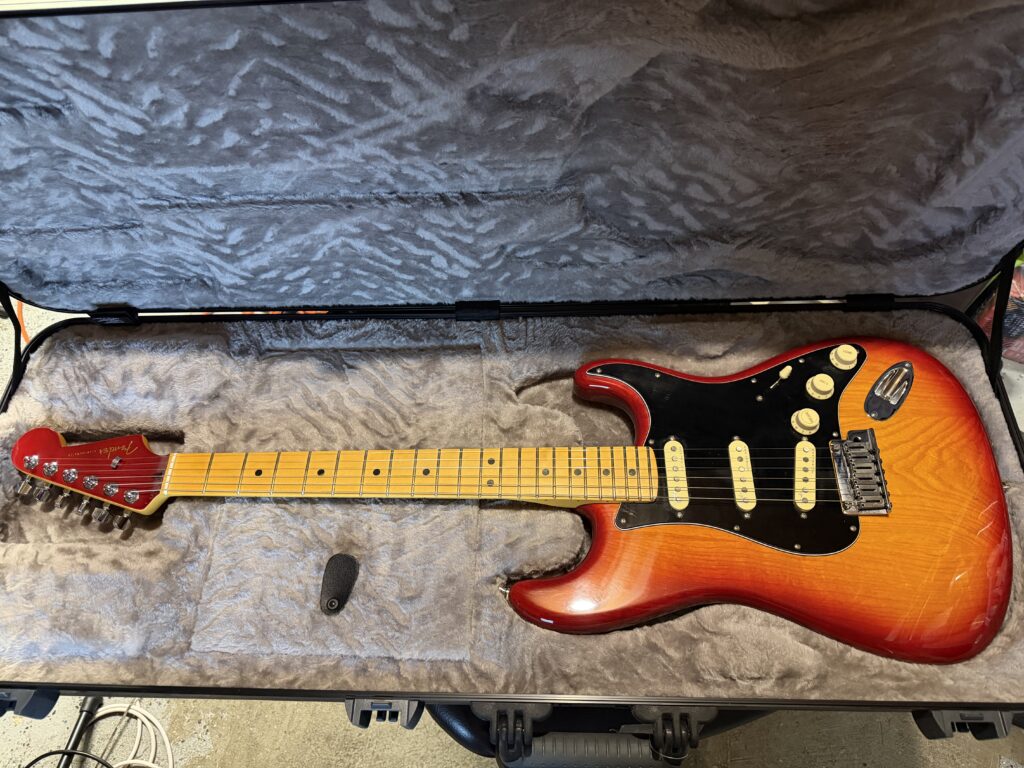
An electric guitar appears simple until you begin researching one.
Then you discover body woods, neck woods, fingerboard materials, scale lengths, fret sizes, neck profiles, bridges, tuners, potentiometers, capacitors, coil splitting, phase switching, active electronics, passive electronics, and arguments about pickups that have continued longer than certain governments.
We’ll try to make sense of that crap.
Our electric guitar coverage looks at how an instrument is built and what those construction choices mean in practical use.
Does the neck feel comfortable?
Does it stay in tune?
Are the controls useful?
Do the pickups provide distinctive sounds or merely several slightly different varieties of loud?
Is it versatile?
Is it specialized?
Can it cover everything from clean rhythm to high-gain filth?
And does it still feel comfortable two hours after you strapped several pounds of mahogany around your neck?
These questions are more useful than repeating marketing language about uncompromising tonal excellence until everybody falls asleep.
Acoustic Guitars: Technically Just a Wooden Box
An acoustic guitar doesn’t need an amplifier, effects pedal, or elaborate signal chain.
It simply takes string vibration and turns it into sound using a carefully constructed wooden body.
In other words, it’s a wooden box.
A tremendously complicated wooden box that can cost more than a used car.
Acoustic guitars are particularly sensitive to materials and construction.
Body size, bracing, scale length, neck shape, top wood, back and side materials, finish thickness, string choice, and playing style can all influence how the instrument feels and sounds.
A large acoustic might produce enormous bass while making a smaller player feel like they’re attempting to hold furniture.
A smaller-bodied guitar might be comfortable and balanced but lack the enormous low-end response somebody wants for strumming.
Neither is automatically better.
They’re tools for different players, sounds, and situations.
We’ll explain those differences without pretending every piece of spruce was harvested from an enchanted forest beneath a full moon.
Cheap Guitars Aren’t What They Used to Be
There was a time when buying an inexpensive guitar meant receiving an instrument with sharp frets, questionable electronics, unstable tuning, and an action high enough to fire arrows.
You didn’t learn guitar.
You developed hand strength and resentment.
Modern manufacturing has changed that.
Computer-controlled machinery, improved quality control, better hardware, global supply chains, and increasingly competitive brands have produced affordable instruments that can be remarkably good.
That doesn’t mean every cheap guitar is wonderful.
Cost savings must appear somewhere.
Maybe it’s the pickups.
Maybe it’s the tuners.
Maybe it’s the fretwork, finish, electronics, setup, or quality control.
Our reviews try to identify where those compromises are and determine whether they matter.
A less expensive guitar with solid fundamentals can be an excellent instrument.
An affordable guitar requiring several hundred dollars in repairs and upgrades is simply a more complicated way to buy an expensive guitar.
Expensive Guitars Aren’t Automatically Better Either
A high price can buy better materials, careful craftsmanship, premium electronics, more detailed finishes, improved quality control, and the attention of builders who aren’t required to complete seventeen guitars before lunch.
It can also buy prestige, nostalgia, limited-edition colors, elaborate inlays, and a certificate informing you that your guitar is special.
Sometimes the expensive guitar really is better.
Sometimes it’s only different.
Sometimes that difference is substantial.
Sometimes it’s mostly visible through a magnifying glass while an enthusiast explains binding nibs.
We’ll try to separate meaningful improvements from expensive decoration.
There is nothing wrong with buying a beautiful guitar simply because you love it.
Musical instruments are allowed to be emotional purchases.
Just don’t confuse:
“This guitar makes me happy”
with:
“This guitar contains three thousand dollars more tone.”
The first statement is completely valid.
The second requires considerably more evidence.
The Great Tonewood Argument
Few subjects demonstrate the human capacity for peaceful disagreement quite like politics, religion, and whether a maple fingerboard sounds brighter than rosewood.
Guitarists have debated tonewoods for decades.
Some hear enormous differences.
Others hear subtle differences.
Others believe the amplifier, pickups, strings, speaker, playing technique, recording equipment, room, and phase of the moon matter considerably more.
We’ll discuss materials, but we won’t pretend every claim made about them was delivered on stone tablets from the mountaintop.
Wood matters structurally.
It affects weight, appearance, stiffness, resonance, feel, manufacturing, and durability.
How much a particular wood changes the amplified sound of a solid-body electric guitar is where the conversation becomes considerably more entertaining.
We’ll separate what can be observed from what remains subjective, because guitarists deserve better than mystical descriptions of warmth, bloom, air, organic depth, and spiritually enhanced midrange.
Pickups: Where Electricity Joins the Argument
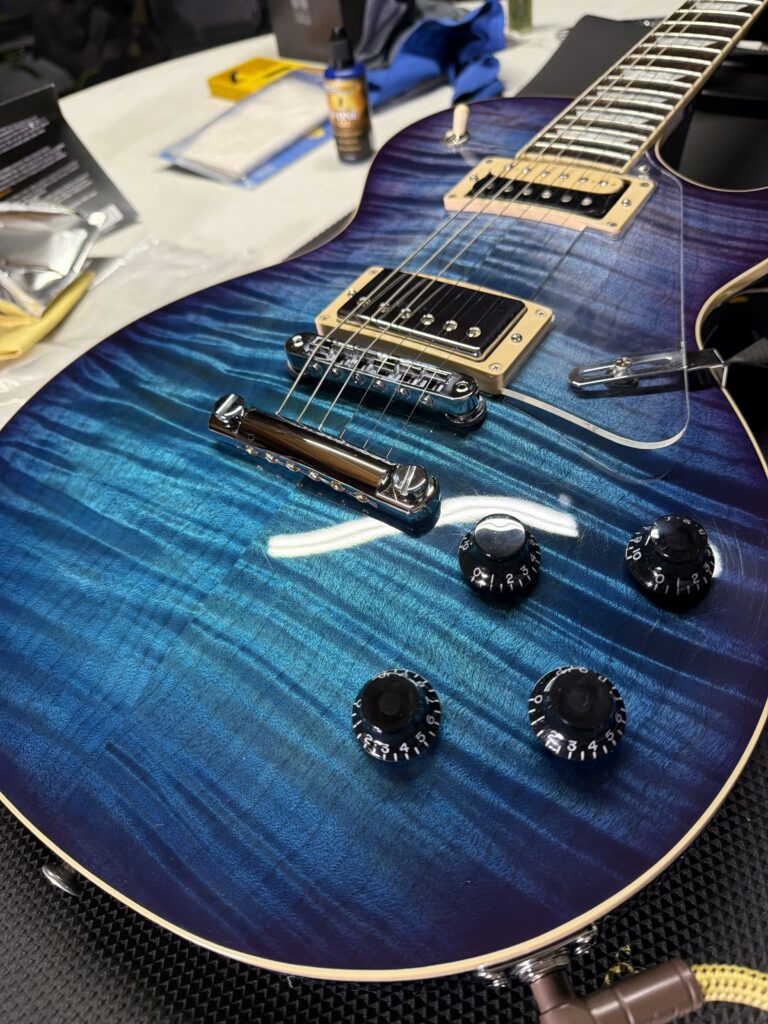
Pickups are small coils of wire wrapped around magnets.
This sounds straightforward until you ask guitarists which ones are best.
Then somebody produces a spreadsheet.
Pickups can dramatically affect output, clarity, frequency response, dynamics, noise, and how a guitar interacts with amplifiers and pedals.
Single-coils can be clear, bright, detailed, and noisy.
Humbuckers can be thicker, louder, quieter, and capable of making a perfectly civilized amplifier behave like it has consumed several energy drinks.
Then there are active pickups, mini-humbuckers, P-90s, Filter’Tron-style pickups, noiseless designs, rail pickups, piezo systems, and enough variations to ensure nobody ever finishes researching them.
We’ll look at how pickups perform in actual use, not merely whether they’re described as articulate vintage fire-breathers with modern clarity.
Whatever the hell that means.
Guitar Finishes: Beauty, Protection & Endless Internet Fighting
A guitar finish protects the instrument and gives it color.
Naturally, this has become controversial.
Nitrocellulose lacquer is praised for its traditional appearance, aging characteristics, and association with historic guitars.
Polyurethane and polyester finishes are generally durable, stable, and efficient for modern production.
Some players insist they sound different.
Others point out that the guitar is plugged into an amplifier producing enough distortion to frighten wildlife.
We’ll discuss finishes in practical terms:
- How they look
- How they feel
- How they age
- How easily they scratch
- How difficult they are to repair
- Whether they become sticky
- Whether the advertised color resembles the guitar that arrives
Because there is nothing more exciting than ordering Oceanic Midnight Sapphire Burst and opening a box containing something remarkably close to blue.
The Factory Setup Is Only the Beginning
A guitar can be beautifully constructed and still play poorly if it isn’t properly set up.
Neck relief, string height, nut slots, pickup height, bridge adjustment, intonation, and fret condition all contribute to how an instrument feels.
Some guitars arrive ready to play.
Others arrive ready for a conversation with a guitar technician.
That doesn’t always mean the guitar is defective.
Instruments react to temperature, humidity, shipping, string gauge, playing style, and the preferences of whoever eventually owns them.
The factory can’t know whether you want low action for a light touch or enough clearance to attack the strings like they owe you money.
Whenever relevant, our reviews will distinguish between a genuine construction problem and something that can be corrected through an ordinary setup.
That’s an important distinction when deciding whether a guitar is a good instrument, a bad instrument, or simply an instrument that spent four days inside a delivery truck in February.
Modifications: Because Apparently the Guitar Wasn’t Finished
Guitarists are rarely content to leave things alone.
We replace pickups.
Tuners.
Bridges.
Knobs.
Pots.
Capacitors.
Pickguards.
Strap buttons.
Sometimes we replace so many components that only the original neck plate remains, and we continue referring to the guitar by its original model name out of courtesy.
Modifications can fix problems, improve reliability, change the sound, personalize the appearance, or transform an affordable guitar into something that competes with more expensive instruments.
They can also become a financial hole into which perfectly good money disappears.
We’ll talk about useful upgrades, unnecessary upgrades, reversible changes, and modifications that may affect resale value.
Because spending $900 upgrading a $500 guitar doesn’t necessarily produce a $1,400 guitar.
It produces a $500 guitar with a complicated personal history.
Long-Term Ownership Matters
A guitar review written after twenty minutes in a store can tell you something.
It can’t tell you everything.
Long-term ownership reveals whether hardware tarnishes, switches crackle, tuning remains stable, finishes wear unexpectedly, screws loosen, frets develop problems, and the instrument continues inspiring you after the honeymoon ends.
It also reveals whether a guitar that felt slightly heavy for ten minutes becomes an instrument you actively avoid playing while standing.
Whenever possible, our reviews consider how guitars hold up beyond the first impression.
Because almost every new guitar is exciting when you’ve just opened the case.
The real question is whether you’re still excited six months later, or whether you’ve begun casually browsing trade-in values while insisting you’re only curious.
We Also Need to Discuss Looks
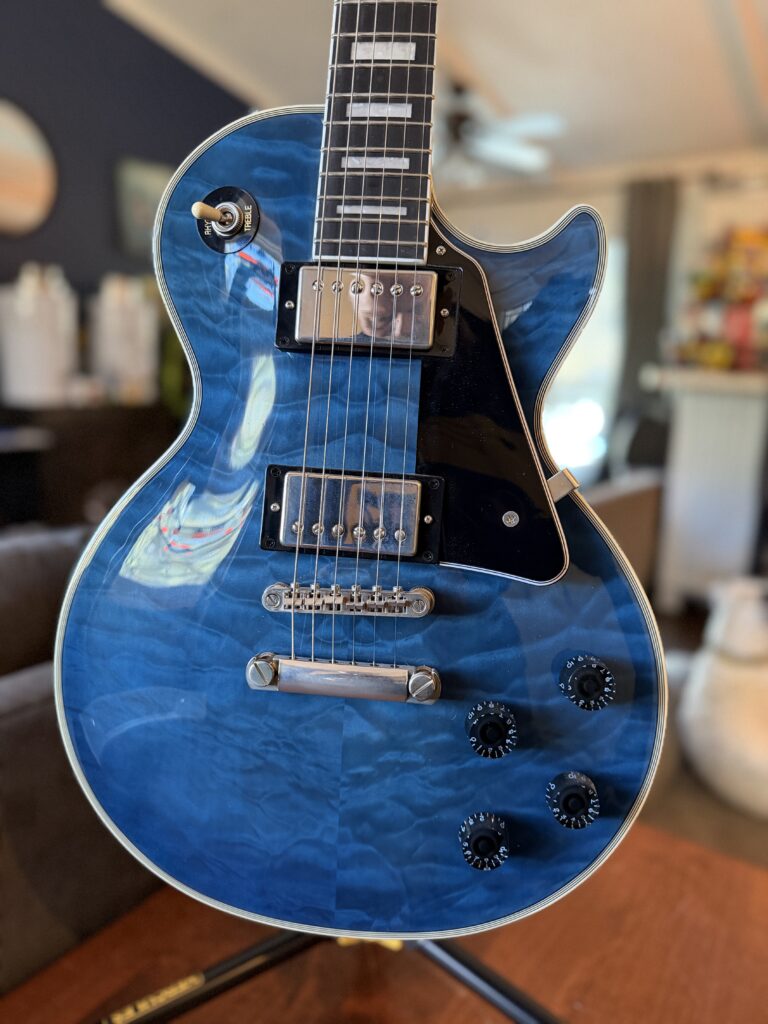
Guitarists like to pretend appearance doesn’t matter.
We’re lying.
Of course it matters.
Nobody needs flame maple, quilted veneers, gold hardware, mother-of-pearl inlays, binding, metallic finishes, transparent bursts, or a paint job resembling the surface of a distant galaxy.
Those things don’t make us play better.
They make us want to play.
That counts for something.
A beautiful instrument invites you to pick it up.
A distinctive guitar becomes part of a player’s identity.
And sometimes you buy a particular model because the finish is so gorgeous that all remaining financial objections become administrative details.
We’ll never claim appearance is irrelevant.
We’ll simply acknowledge that a breathtaking finish cannot repair bad fretwork.
Beauty matters.
So does quality.
Ideally, you get both.
So… Should You Buy This Guitar?
That’s the question at the center of every review.
Not whether the guitar is good in some universal sense.
There is no universal guitar.
A heavy single-cut guitar with powerful humbuckers might be perfect for one player and completely wrong for another.
A bright bolt-on guitar might produce exactly the sound someone wants while feeling uncomfortable to somebody accustomed to a shorter scale.
The useful question is:
Who is this guitar for?
We’ll consider:
- Construction and materials
- Fit and finish
- Neck shape and playability
- Hardware and tuning stability
- Pickups and electronics
- Sound and versatility
- Weight and balance
- Quality control
- Long-term reliability
- Modification potential
- Price and overall value
- Alternatives worth considering
- Whether we’d actually buy it again
Sometimes the answer will be:
Yes. This is an excellent guitar.
Sometimes:
Yes, but only if you specifically want what it does.
And occasionally:
No. It looks beautiful, but so does a boat, and both can become expensive objects you rarely use.
Welcome to the Guitar Department
Below you’ll find our growing collection of guitar reviews, comparisons, histories, construction guides, ownership reports, and questionable attempts to justify buying another instrument.
Some guitars are practical tools.
Some are works of art.
Some are affordable machines built to survive bars, garages, basements, and enthusiastic beginners.
Others arrive in elaborate cases accompanied by more paperwork than certain real-estate transactions.
We love all of them when they’re good.
We’ll complain when they’re not.
And we’ll continue pretending the next guitar will be the last one.
Welcome to Guitars.
Let’s find out whether that beautiful six-stringed bastard is actually worth buying.
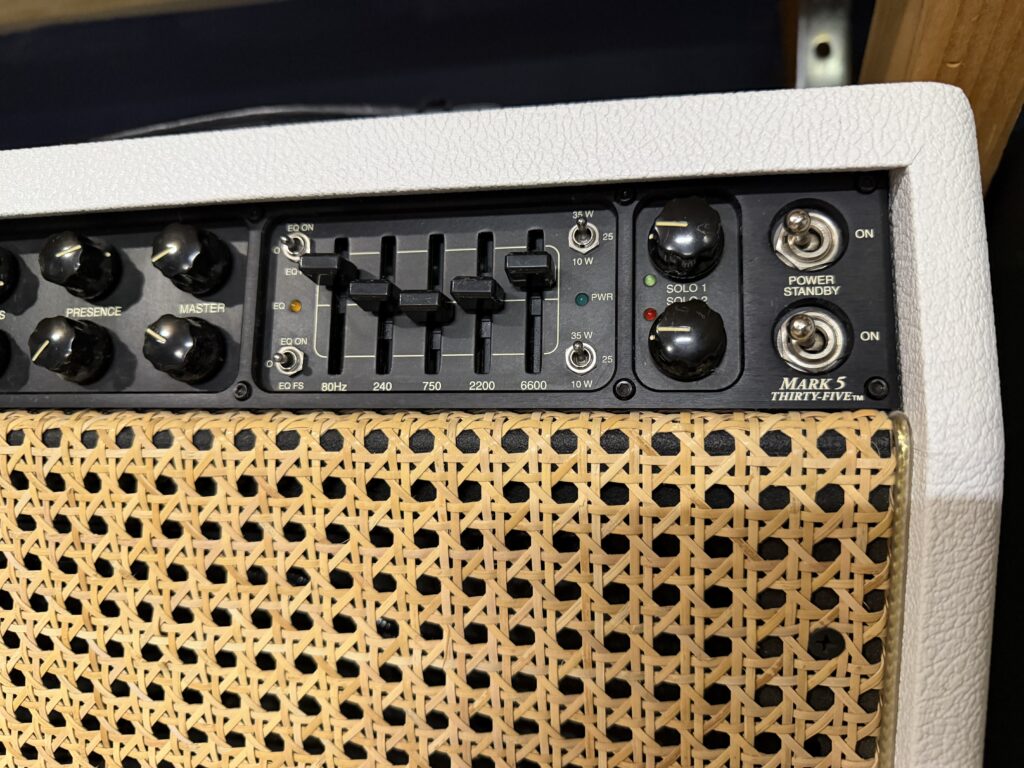
Mesa/Boogie Mark V:35 Owner’s Review: This Is an Awful Lot of Amp in a Very Small Box
Mesa/Boogie Grid Slammer Review
Hercules GS412B Plus Review: Excellent Crap for Keeping Expensive Crap Off the Floor
Guitar Gear, Tone Chasing, and Other Financial Mistakes
Gibson Trad Pro V Les Paul Review – Modern Sounds Hidden Inside a Classic
Fender American Ultra Luxe Stratocaster Review: My Sunday Driver
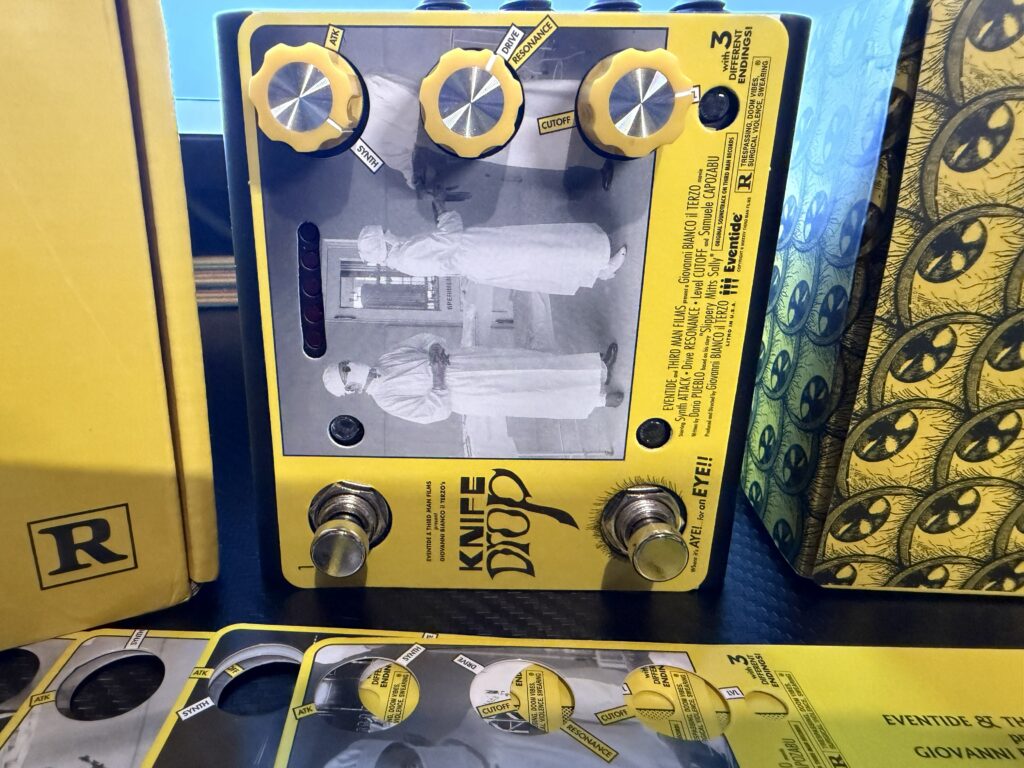
Eventide Knife Drop – Fuzz Pedal Review

Epiphone Les Paul Custom Viper Blue Quilted Top

