


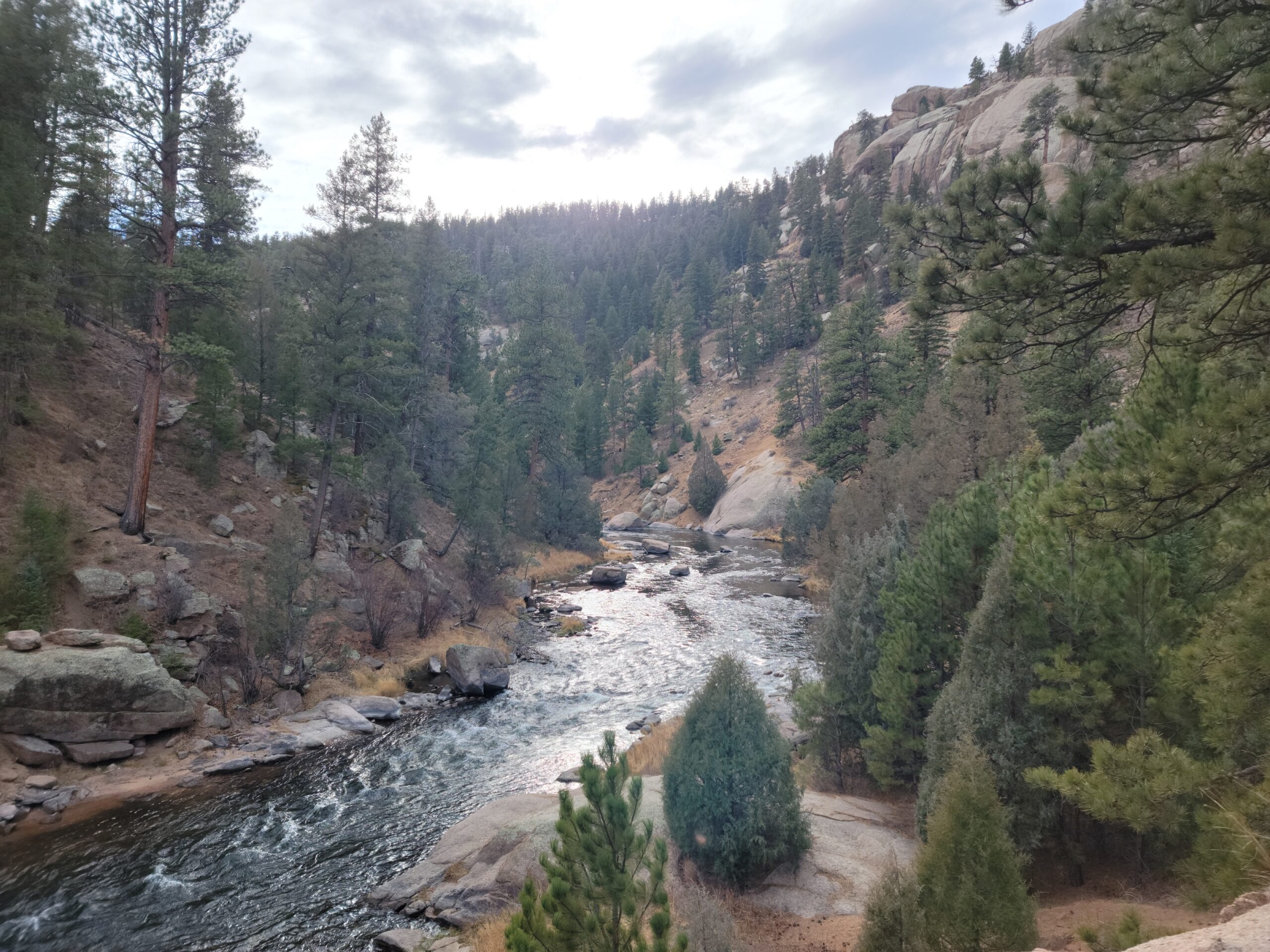
Colorado is one of the best places in America to go camping, which is convenient because camping itself is an objectively strange activity.
Human beings spent thousands of years figuring out how to build houses.
We invented plumbing. Electricity. Refrigerators. Furnaces. Memory-foam mattresses. Toilets that whisk our business away to some mysterious location where it becomes somebody else’s problem.
And then summer arrives and millions of us look around our perfectly functional homes and announce:
“Screw this. Let’s go live in the woods.”
So we load half the house into an SUV, drive into the mountains, sleep on the ground, cook over a fire, pee in questionable circumstances and somehow come home talking about what a relaxing weekend it was.
The problem is that Colorado has an unfair advantage.
It’s beautiful enough to make this nonsense worthwhile.
Wake up beneath the San Juan Mountains, sit beside an alpine lake while the sun comes up, wander through an aspen grove in September or look into a night sky far enough from city lights, and suddenly sleeping in a nylon bag seems perfectly reasonable.
The trick isn’t deciding whether Colorado has great camping.
It does.
The trick is figuring out which kind of Colorado camping you actually want.
Because there’s a enormous difference between:
“I’d like to spend the weekend outside.”
and:
“I’d like the nearest toilet to be 28 miles away.”
Let’s figure out where you belong.
First, How Much Camping Do You Actually Want?
Not everybody who enjoys nature secretly wants to become Bear Grylls.
There’s a weird strain of outdoor culture that occasionally treats suffering as evidence that you’re doing it correctly.
You slept on the ground?
Nice.
You slept on the ground at 11,000 feet?
Better.
You slept on the ground at 11,000 feet while eating cold beans and drinking water through a sock?
Now you’re camping.
Bullshit.
Camping is supposed to be enjoyable.
If your idea of camping involves a tent, campfire, picnic table and nearby restroom, congratulations. You’re camping.
If your idea involves a 32-foot fifth wheel with air conditioning, satellite television and a mattress better than the one in your house, you’re also camping.
Sort of.
We’re watching you.
Developed Campgrounds: Nature With Guardrails
For most first-time Colorado campers, a developed campground is probably the smartest place to start.
Depending on the campground, you may find designated sites, fire rings, picnic tables, toilets, drinking water, electrical hookups, showers or dump stations.
The exact services vary considerably.
That last sentence is important.
Never assume that because someplace contains the word campground, it’s going to contain whatever facility you’ve imagined.
Sometimes “restroom” means a nice building with running water.
Sometimes it means a concrete vault toilet where you enter, immediately realize several generations of spiders have established a functioning government, take care of business and leave.
Research before departure.
Dispersed Camping: Congratulations, You’re the Campground Staff
Then we have dispersed camping.
This is where things get considerably more interesting.
Colorado contains large amounts of federal public land where dispersed camping may be allowed under applicable rules and restrictions.
Instead of pulling into campsite number 42 and finding a picnic table waiting for you, you’re essentially establishing a temporary home in the wilderness.
And the wilderness has elected not to provide amenities.
No electricity.
No campground host.
Possibly no water.
Probably no bathroom.
Maybe no cell service.
Perhaps nobody else around for miles.
For some people, that last sentence just sold the entire trip.
Dispersed camping can provide some spectacular Colorado experiences, but freedom comes with responsibility. You need to know the regulations where you’re camping, pack out what you bring in, understand current fire restrictions, properly manage food and waste, and generally avoid behaving like the forest exists solely because you needed someplace to park a Tacoma.
You’re not visiting a campground.
You’re temporarily borrowing the land.
Act accordingly.
Some of the Best Places to Camp in Colorado
There isn’t a single “best campground in Colorado.”
That’s nonsense.
A campground that’s perfect for somebody hauling a travel trailer may be awful for somebody looking for solitude. A spectacular primitive campsite can be completely unsuitable for someone who needs accessible facilities.
So instead of crowning a winner, here are some excellent Colorado camping areas for very different kinds of trips.
Ridgway State Park: Camping With the San Juans Showing Off
If Colorado’s mountains occasionally seem to be showing off, the San Juans are where they stop pretending otherwise.
Ridgway State Park combines reservoir recreation with the spectacular mountain scenery of southwestern Colorado. Current accessibility resources also identify accessible camping and adaptive recreation opportunities at Ridgway. [coloradolakes.org], [cpwd.org]
And that’s important.
Accessibility in outdoor recreation shouldn’t mean:
“Technically there’s a parking lot.”
People planning around mobility limitations need to know whether they can realistically get from their campsite to restrooms, recreation areas and other facilities.
Ridgway makes an especially interesting base because the camping trip doesn’t have to end at the campground.
Ouray and the surrounding San Juan country are right there waiting.
This is the sort of place where you take 83 photographs of mountains and later discover that 71 of them are effectively the same photograph.
You will not regret taking any of them.
Best for
Mountain scenery, families, reservoir recreation, southwestern Colorado road trips and campers seeking accessible recreation options.
Bullshit Factor
Low.
You’re getting spectacular Colorado scenery without having to prove your worthiness through unnecessary suffering.
Lake Pueblo State Park: A Nice Way to Start Without Disappearing Into the Wilderness
Lake Pueblo State Park is a good reminder that Colorado camping doesn’t necessarily require disappearing four hours into the mountains.
Published accessibility information identifies tent and RV camping along with accessible campsites. Some campground areas have electrical services and facilities such as showers, flush toilets and dump stations. [coloradoparent.com]
That’s important for beginning campers.
If you’ve never camped before, your first trip probably shouldn’t begin with:
“We’ll just drive into the mountains until the road becomes terrifying.”
A developed campground lets newcomers figure out what they actually like.
Maybe tent camping is fantastic.
Maybe an RV starts looking pretty good.
Maybe after sleeping outside once you’ll return home, kiss the mattress and vow never to disrespect indoor plumbing again.
All valid outcomes.
Best for
Beginning campers, families, RV campers, boating and fishing trips, and people who’d prefer their outdoor adventure remain within reasonable shouting distance of civilization.
Bullshit Factor
Very low.
Nature without pretending modern infrastructure was a historical mistake.
Rocky Mountain National Park: Yes, Everybody Else Had the Same Idea
You can’t really write a serious Colorado camping guide without discussing Rocky Mountain National Park.
There are quieter places.
There are less famous places.
There are places where finding parking doesn’t occasionally resemble negotiating an international treaty.
But there’s a reason people keep going.
The place is spectacular.
Accessibility varies throughout the mountainous park, but current resources highlight options such as the roughly 0.8-mile packed-gravel Sprague Lake loop, along with accessible parking and facilities there. Visitors should also verify current entry and reservation requirements when planning their trip. [cpwd.org]
The important thing with Rocky Mountain National Park is planning.
Don’t treat it like a neighborhood park where you’ll spontaneously wander in Saturday afternoon and everything will magically work itself out.
Best for
First-time Colorado visitors, wildlife, mountain scenery, hiking and anyone willing to accept some popularity in exchange for seeing why the place became so popular.
Bullshit Factor
Moderate.
The mountains aren’t the problem.
Everybody else wanting to see the mountains is the problem.
Black Canyon of the Gunnison: Colorado Gets Dramatic
Some scenic attractions reveal themselves gradually.
Black Canyon of the Gunnison National Park is more like walking up to the edge and thinking:
Jesus Christ.
Current accessibility information for the South Rim identifies accessible overlooks, accessible vault toilets at multiple locations and accessible campsites, while warning that much of the surrounding terrain can be steep and rocky. [westernslo…rellis.com]
That’s exactly why camping guides should explain accessibility instead of dropping a wheelchair symbol beside the campground name and calling the job finished.
The campsite might be accessible.
The restroom might be accessible.
The overlook you’re hoping to visit might be accessible.
The route connecting everything is what ultimately determines whether the information is useful.
Best for
Dark skies, dramatic scenery, geology, photography and sitting quietly while the planet reminds you how extremely insignificant your problems are.
Bullshit Factor
Low to moderate.
Nature has done most of the work here.
Ouray and the San Juans: Go Ahead and Ruin Normal Mountains for Yourself
The area around Ouray deserves more than a passing mention because there’s camping in Colorado and then there’s waking up in the San Juans.
Amphitheater Campground is one camping option near Ouray. [recreation.gov]
This part of Colorado is ideal for people who want camping to be part of a larger trip rather than the entire objective.
Camp.
Explore Ouray.
Drive through the region.
See the mountains.
Watch the aspens if you’re fortunate enough to hit fall color at the right time.
Stand beside the vehicle repeatedly saying:
“Would you look at this shit?”
The San Juans are particularly good at making every mountain you’ve previously described as dramatic seem like it wasn’t trying very hard.
Best for
Scenic road trips, mountain photography, fall travel, sightseeing and anybody who believes a campsite should come with scenery worth waking up for.
Bullshit Factor
Potentially moderate, depending on where you stay and how adventurous you decide to get.
The mountains don’t care that your crossover has hill-descent control.
Use judgment.
Accessibility: What Does “Accessible” Actually Mean?
Outdoor travel guides need to get better about this.
Accessible isn’t a yes-or-no question.
A traveler may need to know:
- Is the road paved?
- Is the campsite level?
- What’s the parking surface?
- How far is the campsite from the bathroom?
- Is the bathroom actually accessible?
- Are nearby paths paved, gravel, dirt or rocky?
- Can someone reach the water?
- Are picnic areas accessible?
- Are there accessible fishing facilities?
- Can an RV or adaptive vehicle reasonably maneuver there?
Colorado does have destinations offering accessible campsites, trails, fishing areas and adaptive equipment, but the available features vary significantly by location. [coloradolakes.org], [cpwd.org]
So when planning a trip involving mobility concerns, verify the specific facility you need rather than assuming an “accessible campground” means everything surrounding it is equally accessible.
That’s not pessimism.
That’s avoiding a six-hour drive to discover a gravel hill standing between somebody and the reason they came.
Colorado Camping Gear: The Crap Actually Worth Bringing
Camping stores are remarkable places.
Enter one needing a tent and cooler and sometime later you’ll discover yourself seriously considering a $47 titanium coffee cup because apparently stainless steel has become unbearably primitive.
Stop.
The best camping equipment isn’t necessarily the most expensive or technically impressive.
It’s the stuff that solves problems you actually have.
A Good Sleeping Pad
Everyone obsesses over tents.
The sleeping pad deserves nearly as much attention.
The ground is hard.
This fact has remained remarkably consistent throughout human history.
A good sleeping pad provides cushioning and insulation and can be the difference between waking up refreshed and emerging from the tent walking like you’ve spent the night being beaten with lumber.
For ordinary car camping, shaving a few ounces of weight probably matters considerably less than getting a decent night’s sleep.
Buy for comfort first unless you’re actually carrying the thing long distances.
A Sleeping Bag Appropriate for Where You’re Going
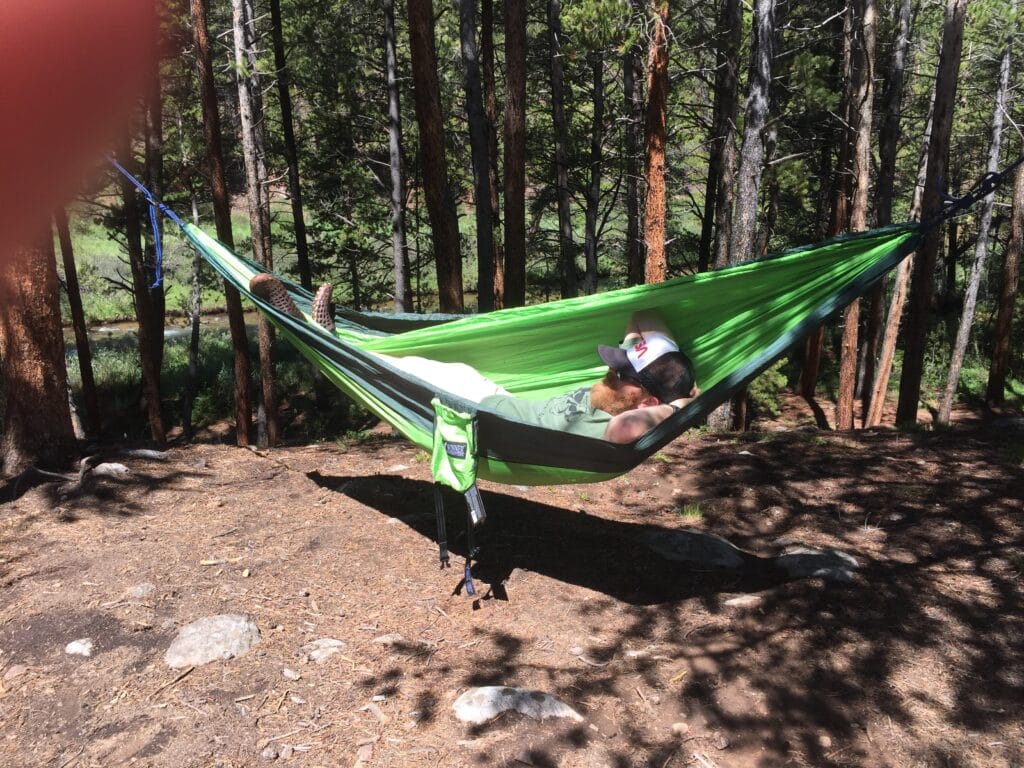
Colorado weather enjoys making tourists look stupid.
A warm afternoon at lower elevation does not guarantee a warm night in the mountains.
Choose sleeping equipment around the expected conditions at your destination, particularly elevation and overnight temperatures, rather than whatever the weather was doing when you left home.
Being slightly too warm overnight is irritating.
Being wildly unprepared for cold weather can become considerably more serious.
Camp Chairs
Bring chairs.
We’ve invented chairs.
They’re excellent.
There is no reason everybody needs to squat on logs around the fire like settlers who haven’t received supplies since April.
Car camping gives you the enormous technological advantage of a vehicle.
Put chairs in it.
A Decent Cooler
For car camping, a good cooler may be worth considerably more than a drawer full of specialized outdoor gadgets.
Does it keep food cold?
Does the ice last reasonably well?
Are the hinges durable?
Does it drain easily?
Is it big enough without requiring two adult men and a forklift to move when full?
Those questions matter.
Whether the manufacturer photographed it beside a bearded man wearing flannel beside a trout stream does not.
Headlamps
A flashlight works.
A headlamp works while leaving both hands free.
This becomes surprisingly important around 1:17 in the morning when something makes a noise outside your tent and your brain immediately concludes that a 900-pound grizzly bear has somehow ignored geography and personally selected your campsite.
Bring a headlamp.
Bring spare power.
Having two isn’t unreasonable.
Portable Power Stations
This is one modern convenience worth embracing.
Phones, cameras, lights and other electronics have become part of traveling whether outdoor purists approve of them or not.
A portable power station can make sense for vehicle-based camping, especially on longer trips.
Just match capacity to what you actually intend to power.
Don’t buy enough electricity to restart the Hoover Dam because you need to charge two phones and a camera.
The Camping Crap You Probably Don’t Need
Outdoor recreation has become a spectacular consumer industry because manufacturers eventually discovered something important:
People planning camping trips are terrified they’re forgetting something.
This has produced specialized products for almost every human activity imaginable.
Some are brilliant.
Some are solutions wandering around desperately looking for problems.
Enormous Camp Kitchens
You’re camping for three days.
You’re making eggs.
You are not opening a remote branch of Denny’s.
Tactical Eating Utensils
It’s a fork.
The fork has already been successfully developed.
We can stop engineering it.
Fourteen Lanterns
One bright light and a few smaller lights can handle a normal campsite.
At some point additional lighting stops being useful and begins informing aircraft where to land.
Gadgets You Haven’t Needed Anywhere Else
A good general rule:
If you’ve lived your entire life without needing something and suddenly believe it’s essential because the package contains a picture of a tent, step away for five minutes.
Camping With Dogs in Colorado
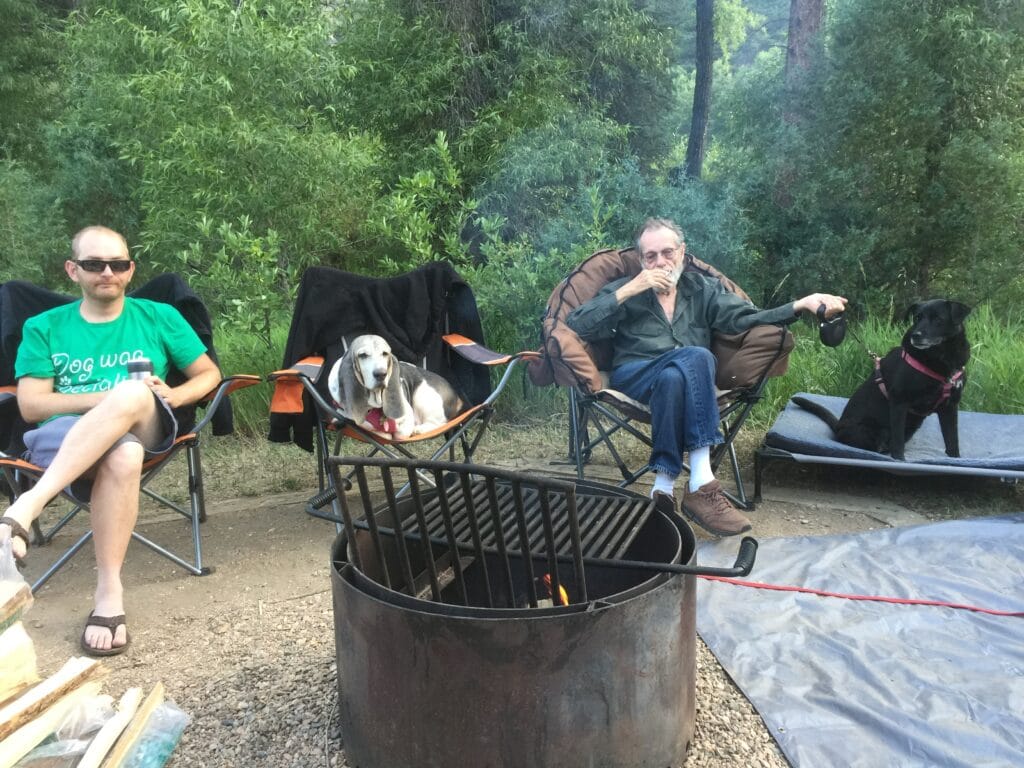
Dogs generally agree that camping is humanity’s greatest invention.
From their perspective, you’ve finally come to your senses.
Everybody lives outside now.
There are smells everywhere.
Food falls on the ground.
Walks happen constantly.
The entire family sleeps together in one weird fabric room.
This is the civilization dogs have been requesting all along.
But camping with dogs requires additional planning.
Check the rules for the campground and surrounding trails. Bring adequate water and food, manage leashes properly, watch temperatures and terrain, and have a safe sleeping arrangement.
And pick up after your dog.
Putting dog shit inside a plastic bag and then leaving the bag beside the trail is actually worse than accomplishing nothing.
You have taken something nature was eventually prepared to handle and lovingly wrapped it in plastic.
Take it with you.
Fire Restrictions Are Not Suggestions
Colorado wildfire conditions can become serious.
Always check current restrictions for the exact land or campground you’re visiting before lighting a fire.
And if fires aren’t permitted, don’t be the genius who decides:
“This one’s small.”
The forest does not care about your reasoning.
Neither does the fire department.
Leave the Place Looking Like Nobody Was There
This is probably the simplest camping rule.
If you’re fortunate enough to find a beautiful Colorado campsite, leave it beautiful for whoever arrives next.
Pack out garbage.
Don’t create new roads.
Don’t destroy vegetation to make the campsite more convenient.
Don’t dump waste where it doesn’t belong.
Don’t leave bottles around the fire ring because apparently the campground cleaning fairy works Tuesdays.
And don’t carve your name into things.
Nobody visiting Colorado in 2084 needs confirmation that BRAD + KAYLEE 4EVER once occupied campsite 17.
So, Should You Go Camping in Colorado?
Yes.
Absolutely.
Colorado’s enormous variety is exactly why it works so well.
You can camp somewhere with electricity, bathrooms and showers.
You can stay beside a reservoir.
You can wake beneath huge mountain peaks.
You can pull an RV into a developed campground.
You can pitch a tent.
You can travel farther into public land and discover what silence actually sounds like.
None of these methods are the correct way to camp.
The correct campground is simply the one that gives you the experience you wanted without introducing more bullshit than you’re willing to tolerate.
That’s really the secret.
Know what level of civilization makes you comfortable.
Check the campground facilities.
Check the road.
Check the weather.
Check current restrictions.
Bring enough water.
Bring appropriate gear.
Don’t purchase half of REI because somebody on YouTube convinced you a titanium spork was the final obstacle standing between you and nature.
Then get outside.
Sit beside the fire.
Look at the mountains.
Watch the stars come out.
And enjoy the strange realization that occasionally the best way to appreciate having a perfectly good house…
is to leave the damn thing for a few days.
