


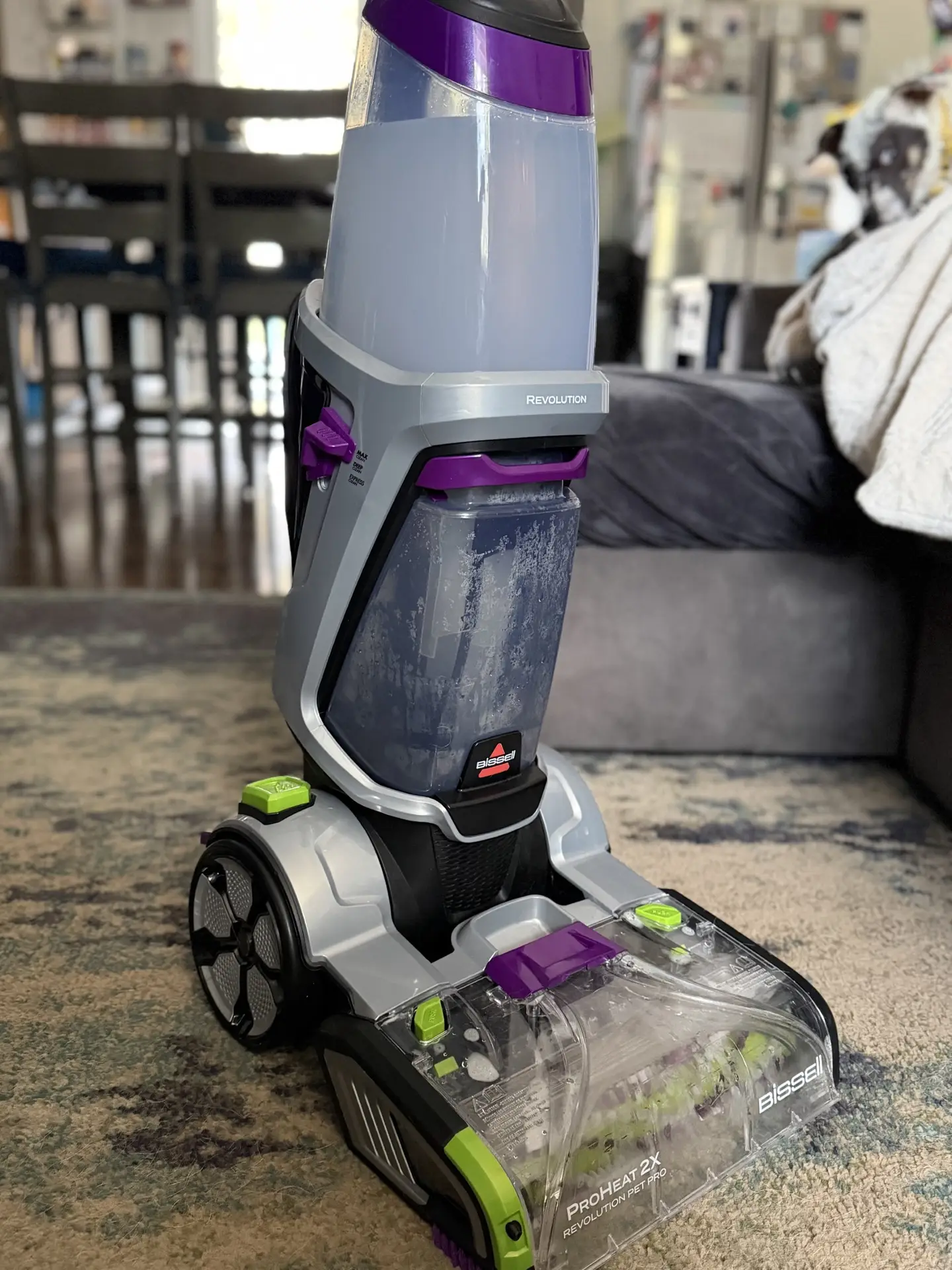
Human beings have been cleaning things since the first caveman looked around his cave and thought:
“Jesus, this place is a dump.”
For most of history, cleaning technology consisted of water, cloth, brooms, brushes, buckets, and whoever in the household drew the short straw.
Then electricity arrived.
Suddenly we had vacuum cleaners.
Carpet cleaners.
Steam mops.
Wet-dry vacuums.
Cordless stick vacuums.
Robot vacuums.
Upholstery cleaners.
Machines specifically engineered to remove stains caused by other members of the household who contribute absolutely nothing toward the mortgage.
Civilization had advanced.
And yet somehow the floor is still dirty.
Welcome to Cleaning Gear, where we review the vacuums, carpet cleaners, floor machines, stain removers, brushes, gadgets, and assorted mechanical crap designed to keep your home from looking like you’ve simply surrendered.
Cleaning Equipment Has One Job
Cleaning gear is refreshingly easy to evaluate.
Does it clean shit?
That’s basically the test.
A vacuum doesn’t need artificial intelligence.
It doesn’t need mood lighting.
It doesn’t need seventeen modes controlled by an app.
It needs to suck dirt off the floor.
Preferably without also sucking up every charging cable, dog toy, and missing sock within a fifteen-foot radius.
A carpet cleaner needs to remove dirt and stains.
A mop needs to clean floors.
A spot cleaner needs to remove spots.
If these products accomplish those things efficiently, reliably, and without requiring a mechanical engineering degree to operate, we’re off to a promising start.
The Vacuum Cleaner Arms Race
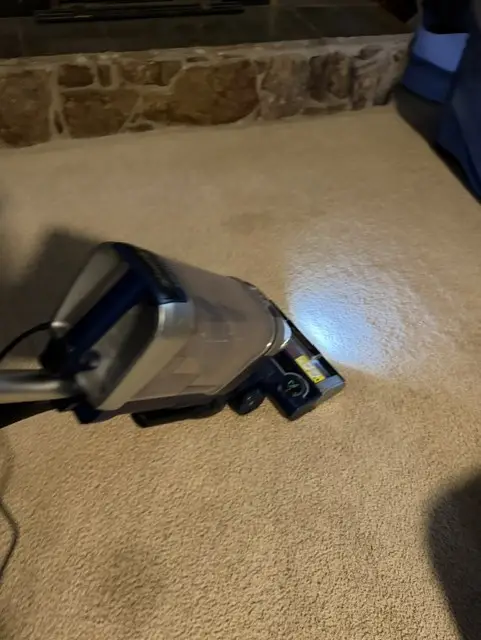
Few household appliances have enjoyed more technological escalation than the humble vacuum cleaner.
Once upon a time, it was essentially a motor attached to a bag.
Now we’ve got cyclonic separation.
HEPA filtration.
Powered brush rolls.
Anti-hair-wrap systems.
LED headlights.
Lift-away canisters.
Cordless motors.
Laser dirt detection.
Automatic suction adjustment.
And robot vacuums quietly wandering around the house like confused little hockey pucks.
Some of these improvements are genuinely fantastic.
Others make you wonder whether vacuum technology has reached the point where we’re improving things simply because the marketing department needs something new to print on the box.
We’ll sort through it.
Because the important question isn’t whether your vacuum possesses Advanced HyperCyclonic Dirt Obliteration Technology™.
The important question is whether it gets the damn dog hair out of the carpet.
Speaking of Dog Hair
If you don’t own dogs, you may believe vacuuming happens once or twice a week.
That’s adorable.
Dog owners understand that shedding operates under entirely different laws of physics.
You vacuum the living room.
It looks fantastic.
The dog walks through.
Hair.
You vacuum again.
Another dog scratches itself seventeen feet away.
Hair.
Eventually you begin to suspect the dogs are generating additional dogs somewhere inside the house and distributing them one follicle at a time.
That’s why pet hair performance matters so much in our cleaning reviews.
We want to know whether brushes clog.
Whether hair wraps around the roller.
Whether filters become overwhelmed.
Whether upholstery tools actually work.
And whether the machine can survive repeated encounters with the biological glitter produced by our furry overlords.
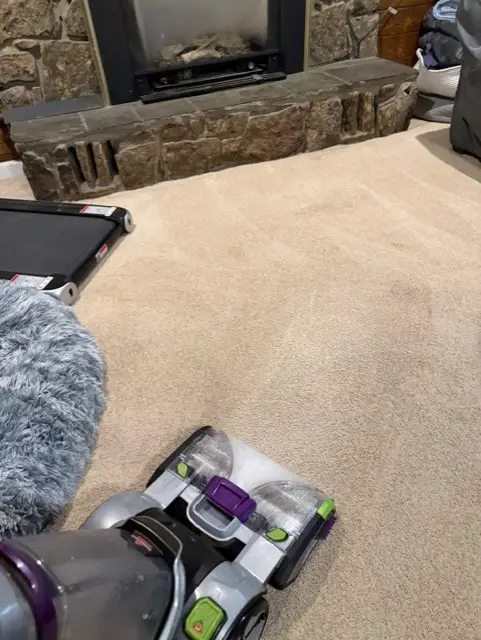
Carpet Cleaners: Discovering How Filthy Your Carpet Actually Was

Few household experiences are as satisfying and horrifying as using a carpet cleaner for the first time.
You look at the carpet.
Looks reasonably clean.
You run the machine across it.
Then you empty the recovery tank.
Sweet merciful Christ.
Was somebody farming potatoes in here?
Carpet cleaners provide a uniquely disturbing window into the difference between looks clean and is clean.
That’s why we take these machines seriously.
We’ll look at cleaning performance, water extraction, drying time, tanks, brushes, attachments, detergents, maintenance, and how miserable the machine is to clean afterward.
Because there’s cruel irony in owning a cleaning machine that takes longer to clean than the carpet.
Cleaning the Cleaning Machine
Manufacturers rarely emphasize this part.
Advertisements show the machine gliding effortlessly across a spotless suburban home.
Nobody shows what happens afterward.
Hair wrapped around the roller.
Dirty water in the tank.
Mud hiding inside a nozzle.
Filters that need washing.
Brushes coated with something you’d prefer not to identify.
Suddenly you’re sitting on the bathroom floor at 9:30 p.m. with a screwdriver wondering:
“Who cleans the cleaner?”
You do.
Surprise.
That’s why maintainability is a major part of our reviews.
Can the brushes be removed?
Can the roller be cleaned?
Are replacement filters available?
Are tanks easy to rinse?
Do hoses trap crud?
Can you access the places where dirt inevitably accumulates?
A machine that cleans brilliantly but becomes disgusting after six uses isn’t brilliantly designed.
Corded vs. Cordless: An Argument About Freedom
Cordless cleaning gear is wonderful.
Grab it.
Use it.
No plugging in.
No dragging cords around furniture.
No moving the plug because the cord is exactly four feet shorter than the room.
The downside is simple:
Batteries are mortal.
Eventually they run down.
Eventually they age.
Sometimes they run out of power precisely when you’ve entered that glorious psychological state where you’re actually willing to finish cleaning the whole damn house.
Corded machines avoid the battery problem but replace it with an extension of plastic that attempts to wrap itself around every table leg you own.
Neither design is inherently superior.
We’ll consider runtime, power, convenience, battery replacement, cord length, and what kind of cleaning the machine is actually designed to do.
Robot Vacuums: Congratulations, We’ve Domesticated a Frisbee
Robot vacuums represent one of humanity’s finest achievements.
We have successfully convinced a small round machine to clean the floor while we’re doing something else.
This is progress.
Of course, robot vacuums have their own personality.
They get stuck.
They become confused by rugs.
They discover charging cables.
They wedge themselves beneath furniture.
Occasionally they wander into a room, spin around several times, and leave without doing anything useful.
Basically, we’ve invented a household appliance with the work ethic of a teenager.
When we review automated cleaning gear, we’ll look at whether the automation actually saves work.
Because automation that requires constant rescue isn’t automation.
It’s a pet.
And we already have those.
Expensive Doesn’t Automatically Mean Cleaner
Cleaning equipment can become surprisingly expensive.
Premium vacuums can cost hundreds of dollars.
Robot cleaners can climb considerably higher.
Fancy floor cleaners sometimes look like they should be capable of detailing the International Space Station.
Maybe they’re worth it.
Maybe they’re not.
Better motors, stronger construction, effective filtration, quality batteries, thoughtful engineering, repairable components, and useful attachments can absolutely justify higher prices.
But putting brushed metal on a vacuum doesn’t magically make dirt more afraid of it.
We’ll look at where the money actually went.
Performance?
Durability?
Convenience?
Better materials?
Repairability?
Or mostly branding?
Because dirt does not give a shit what logo is on the vacuum.
Cheap Cleaning Gear Can Be Surprisingly Good
The opposite is also true.
You don’t always need the fanciest machine.
Sometimes the cheap little handheld vacuum is perfect for the stairs.
Sometimes a basic wet-dry vacuum outperforms a sophisticated household machine because subtlety isn’t required when the garage floor looks like hell.
Sometimes the best cleaning gadget is a $12 brush.
Value matters.
A product doesn’t have to be luxurious to earn a recommendation.
It just has to work.
Long-Term Ownership Matters More Than the First Cleaning
Almost every vacuum works when it’s brand new.
Filters are clean.
Brushes are fresh.
Batteries haven’t aged.
Hoses aren’t clogged with mysterious household debris.
Nothing rattles.
Nothing smells like the dog.
The interesting questions appear later.
Does suction decline?
Do plastic clips break?
Does the battery still hold a useful charge?
Does the hose split?
Do wheels develop strange noises?
Does hair continually jam the brush roll?
Do filters cost a fortune?
Can replacement parts be purchased?
Can you actually repair anything?
That’s why long-term ownership is especially important with cleaning equipment.
We’re interested in what happens after the honeymoon period, when the machine isn’t shiny anymore and has spent six months ingesting crumbs, carpet fiber, dirt, hair, and whatever the hell was under the couch.
The Great Cleaning Paradox
There’s something philosophically troubling about buying cleaning equipment.
Nobody really wants a vacuum cleaner.
We want clean floors.
Nobody dreams about owning a carpet cleaner.
We want carpet that doesn’t contain archaeological layers of previous dinners.
The machine itself is simply a means to an end.
So our reviews aren’t about worshipping appliances.
They’re about determining whether those appliances accomplish the job while creating the least possible amount of additional bullshit.
Because cleaning already sucks.
Your cleaning equipment shouldn’t suck in the metaphorical sense.
It should suck in the literal sense.
Preferably extremely well.
So… Should You Buy This Cleaning Crap?
That’s what we’re trying to answer.
We’ll look at:
- Cleaning performance
- Suction and pickup
- Pet hair performance
- Carpet and hard-floor performance
- Attachments and accessories
- Filtration
- Ease of use
- Weight and maneuverability
- Cord or battery performance
- Tanks, hoses, and brushes
- Maintenance
- Replacement parts and consumables
- Durability
- Long-term ownership
- Price and overall value
- Whether we’d actually buy it again
Sometimes the answer will be:
Absolutely. This thing is a beast.
Sometimes:
It works, but there are cheaper ways to accomplish the same thing.
And occasionally:
No. You’ve somehow purchased a machine that moves dirt from the floor into seventeen parts you’ll now have to wash individually.
Welcome to Cleaning Gear
Below you’ll find our growing collection of vacuum reviews, carpet cleaner reviews, floor-cleaning machines, spot cleaners, pet-hair tools, cleaning gadgets, and other equipment dedicated to humanity’s never-ending war against filth.
Some of it works beautifully.
Some of it makes cleaning noticeably easier.
Some of it will make you wonder why nobody designed it properly before putting it into production.
And some of it may finally retrieve that mysterious clump of dog hair beneath the couch that has developed enough mass to qualify as another pet.
Welcome to Cleaning Gear.
The house isn’t going to clean itself.
Unless we finally get the robots working properly.
Then we’re never touching a fucking mop again.
Speed Queen TR7 Review: This Damn Washer Is Too Fast
Speed Queen TR7 and DR7 Review: We Spent a Shitload on Laundry Machines. Was It Worth It?
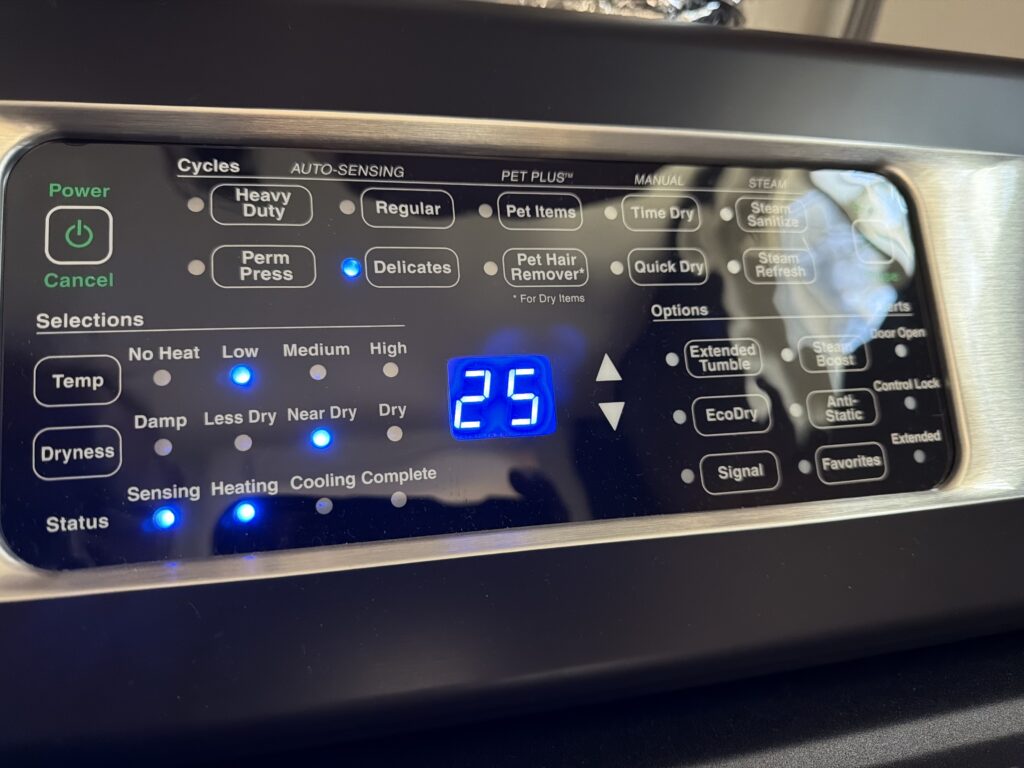
Speed Queen DR7 Electric Dryer Review: Finally, Something That Fights the Dog Hair
Shark Stratos AZ3002 Review: Excellent Crap for Picking Up Dog Fur
Samsung WA45-Series Washer Review: Bigger Isn’t Always Better
Samsung DVE45-Series Dryer Review: When “Sensor Dry” Eventually Becomes “Screw It, Use Timed Dry”
