

Labor dispute escalates after goats discover six-foot fence was apparently based entirely on the honor system.
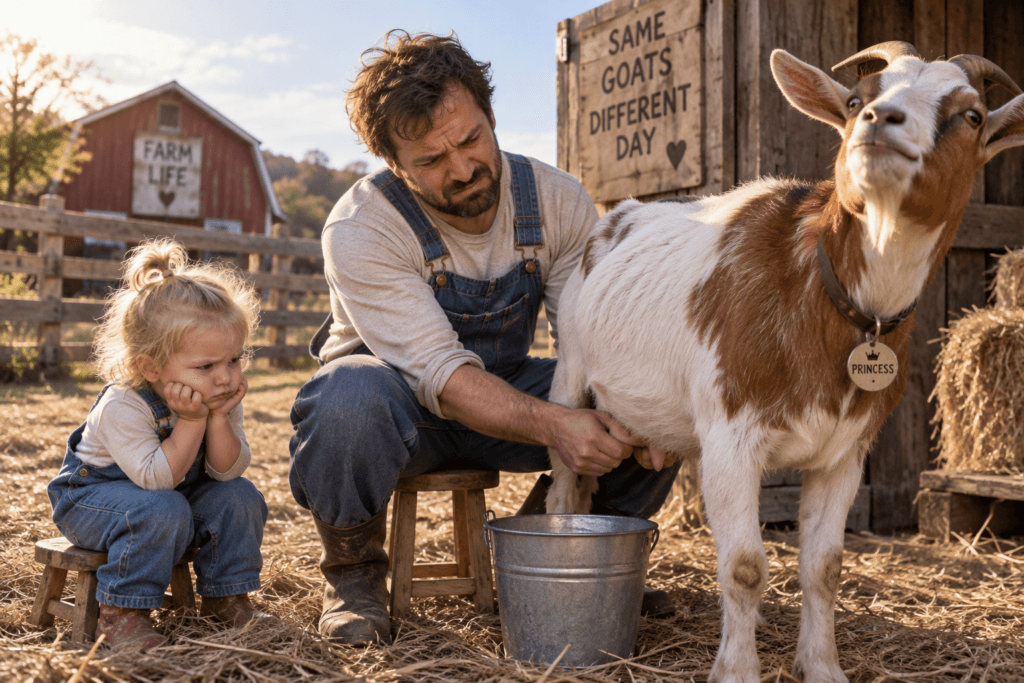
BROOMFIELD, CO — Production at a local handmade soap operation ground to a halt this week after several goats abruptly stopped producing milk and entered what agricultural experts are describing as an increasingly hostile labor dispute with management.
According to sources familiar with negotiations, the goats provided no written demands, appointed no representative, and have refused all requests for comment.
They simply stopped making milk.
“It was incredibly sudden,” said one person familiar with the operation. “One day everything was normal. The next day the goats apparently decided they were done participating in capitalism.”
Management initially believed the slowdown was temporary.
It wasn’t.
Attempts to encourage production reportedly included dietary changes, schedule adjustments, additional attention, and increasingly desperate motivational conversations with animals that continued chewing while maintaining absolutely no interest in the company’s quarterly objectives.
Then management escalated.
Neighbors report seeing several packages arrive containing suction pumps and what appeared to be a commercial cow-milking apparatus.
Labor experts now believe this was a strategic error.
“The goats had already demonstrated dissatisfaction,” said one agricultural mediator. “Introducing industrial machinery into the dispute was unlikely to improve morale.”
Sources say the goats inspected the equipment.
They inspected the soapmaker.
They inspected the six-foot fence surrounding the property.
And then, apparently for the first time in recorded company history, remembered they were goats.
The fence immediately became irrelevant.
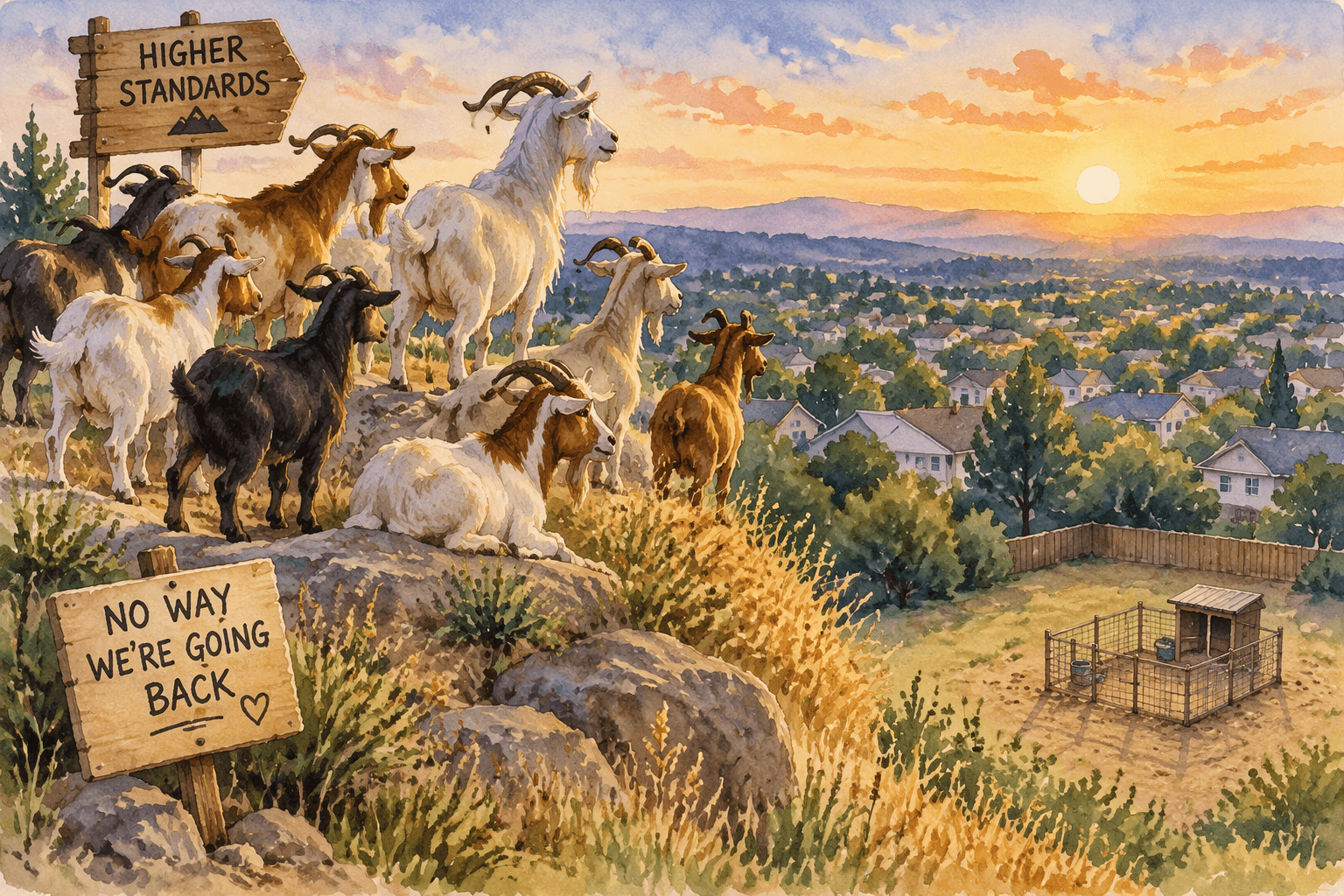
Witnesses reported seeing multiple members of the herd clear the enclosure and make their way toward the steep hillside overlooking the neighborhood, where they established what authorities are cautiously referring to as a breakaway republic.
The hillside was considered an unusual tactical choice until humans attempted to follow them.
Negotiations ceased shortly thereafter.
“They’re standing on terrain that requires hiking boots, trekking poles and a conversation with your cardiologist,” said one neighbor. “The goats look completely comfortable.”
Residents have since observed the animals grazing peacefully above the neighborhood while occasionally looking down toward their former employer.
Whether this represents surveillance, intimidation, or normal goat behavior remains unclear.
The soapmaker has repeatedly attempted to entice the herd home with treats.
The goats have accepted several.
They have not returned to work.
Labor economists described this as “an extremely effective negotiation strategy.”
Production at the soap business remains uncertain.
Without milk, management may be forced to reduce output, renegotiate with the herd, or locate a new dairy supplier less capable of scaling near-vertical terrain.
The cow milker has reportedly remained unused.
Its presence continues to be viewed as provocative.
Meanwhile, the six-foot fence, once considered an important piece of agricultural infrastructure, is now essentially decorative.
Neighbors say relations deteriorated further after one goat briefly returned to the property, ate something expensive, and escaped again without producing so much as a tablespoon of milk.
Experts called the incident “a powerful show of solidarity.”
At press time, management was standing at the bottom of the hill shaking a bucket of feed while several goats watched from above, secure in the knowledge that possession of the high ground had rendered collective bargaining unnecessary.
The goats have still not released an official list of demands.
Sources increasingly believe there aren’t any.
They just don’t want to make the fucking soap.