
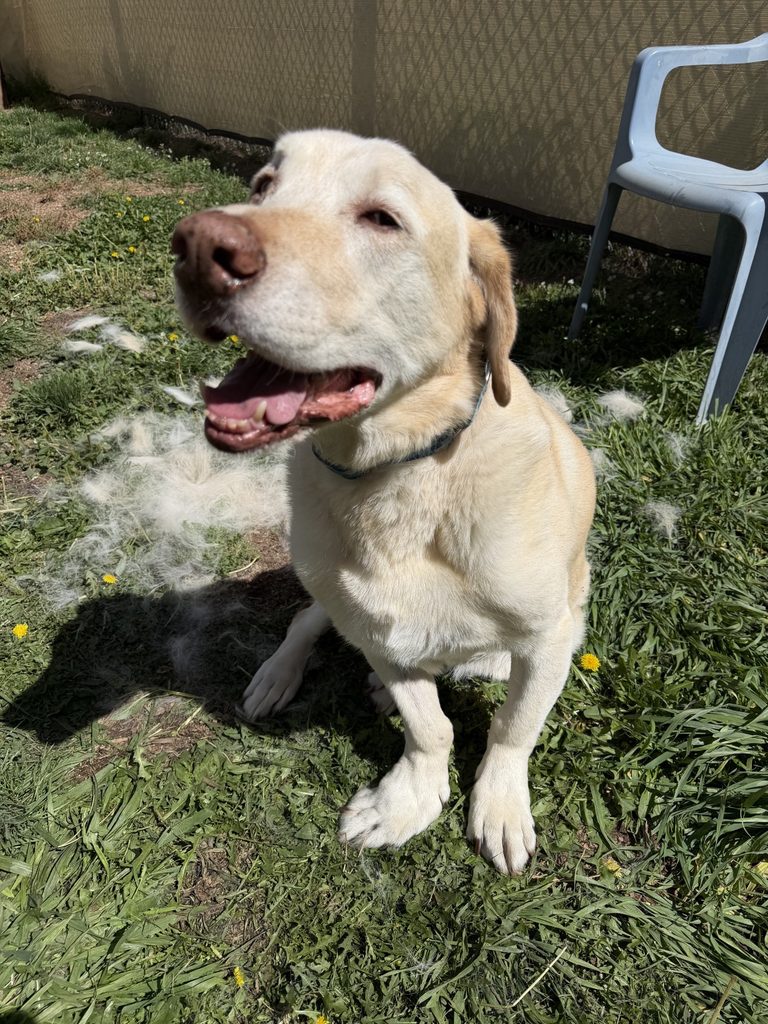
If you own a dog with an undercoat, you already know that shedding season is less of a season and more of a hostile occupation of your home.
The furniture grows fur.
Your clothes grow fur.
Your food somehow grows fur.
Eventually, you begin to suspect that your dog is quietly manufacturing a second dog and distributing the parts throughout the house.
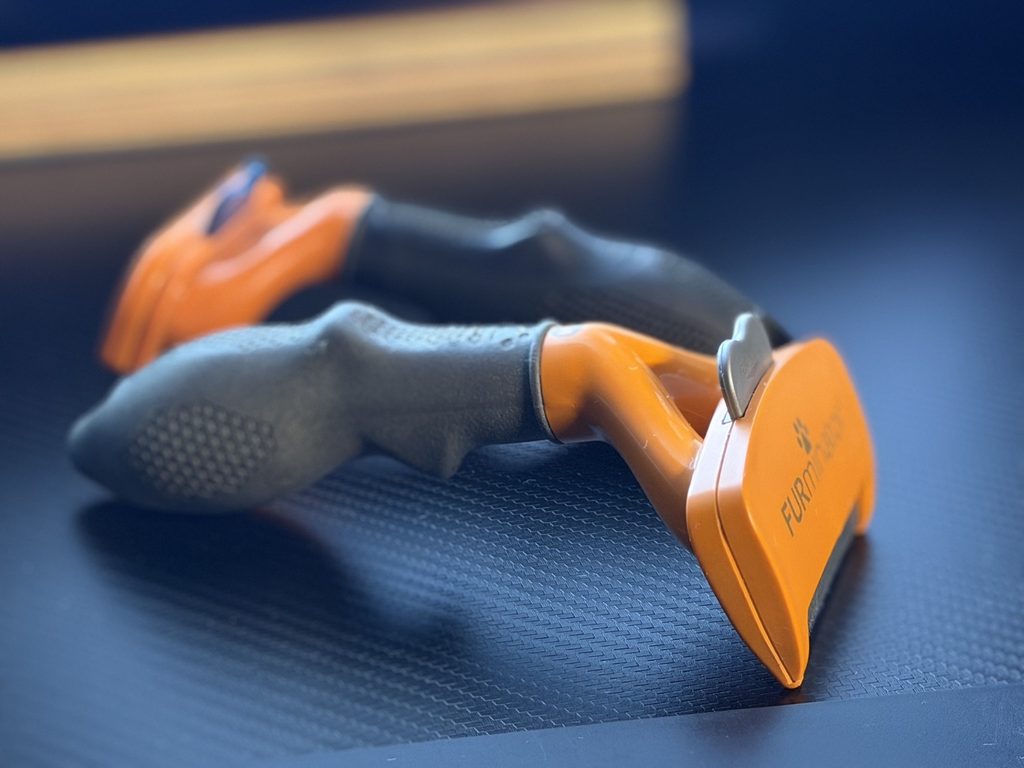
The FURminator Undercoat deShedding Tool is one of the most effective weapons I have found for fighting back.
It reaches through the outer coat and pulls out loose undercoat before that fur migrates to your carpet, couch, bed, clothing, vehicle, and possibly lungs. During heavy shedding periods, the amount of hair this tool removes can be both impressive and slightly disturbing.
Used correctly, it works extremely well.
The important phrase is used correctly.
This is not a soft brush that you can mindlessly drag over the same area for half an hour. It is a specialized grooming edge, and too much pressure or too many repeated passes can irritate the skin or damage the coat.
My technique is to imagine that the tool is the dog’s back foot during a scratch. Use light strokes through a small arc, covering an area gradually instead of digging downward or repeatedly scraping the same spot.
That approach removes piles of loose undercoat without turning grooming into strip mining.
💩 Poop Rating
💩 1 Poop
Excellent crap.
This thing removes loose undercoat so efficiently that it may leave you wondering how your dog had any room beneath the skin for organs.
Why This Review Matters
This review is for people researching:
- FURminator review
- FURminator for dogs
- Best dog deshedding tool
- FURminator Medium Long Hair
- How to use a FURminator safely
- FURminator coat damage
- Best brush for dog undercoat
- Dog shedding-season grooming
- FURminator versus undercoat rake
It combines product research with practical owner experience, including the technique I use to reduce pulling, overworking, and discomfort.
What the FURminator Actually Does
The FURminator is not an ordinary dog brush.
It is designed to pass through the outer coat and collect loose undercoat that is ready to shed.
That distinction matters.
A normal brush is useful for surface hair, everyday grooming, and distributing natural oils. A slicker can help with tangles and coat maintenance. An undercoat rake can open dense coats and loosen packed undercoat.
The FURminator is the cleanup crew that arrives when the undercoat has decided to abandon ship.
On an appropriate coat, it removes hair that an ordinary surface brushing can leave behind.
It does not stop the biological shedding process. It simply collects much of the loose coat before your house does.
Choosing the Correct Version
The version covered here is officially named the:
FURminator Undercoat deShedding Tool Medium Dog Long Hair
The wording can be confusing.
Medium refers to the size of the dog, not the length of the coat.
Long Hair identifies the coat-length version.
The current medium long-hair model is intended for dogs weighing approximately 25 to 50 pounds with coats around two inches or longer. The working edge is approximately 2.65 inches wide.
FURminator also makes different sizes and separate short-hair versions. Cats have their own models as well.
That is important because this is not a one-size-fits-every-furry-thing tool.
Buying the wrong version may make the experience less effective, less comfortable, or both.
Build Quality and Design
The FURminator is a relatively simple tool, but the design is much more thoughtful than it first appears.
Its primary components include:
- Curved stainless-steel deshedding edge
- Skin Guard contour
- Ergonomic grip
- Thumb-operated FURejector
- Built-in Edge Guard for storage
The curved edge follows the shape of the animal better than a completely straight blade. The Skin Guard is intended to reduce digging at the edges, while the handle gives you good control over pressure and direction.
The FURejector button pushes collected hair out of the teeth.
That sounds like a small convenience until you have removed enough fur to construct a reasonably convincing dog toupee.
Without the ejector, you would constantly stop and pull compacted hair from the edge. With it, you press the button, discard the fur, and continue.
It is simple, but genuinely useful.
Deshedding Performance
This is where the FURminator earns its reputation.
On a dog with the correct type of shedding undercoat, the tool can remove an absurd amount of loose hair.
The first few passes may look normal.
Then the undercoat begins coming out.
And keeps coming out.
And continues coming out until you start wondering whether you have accidentally voided the dog’s structural warranty.
During shedding season, it can make a dramatic difference in the amount of loose fur floating around the house. It will not eliminate shedding, but it can intercept an impressive amount of hair before that hair attaches itself to everything you own.
The FURejector also makes it practical to work through a large grooming session without constantly cleaning the tool by hand.
This is not subtle performance.
You can see exactly what it has removed.
Usually in a rapidly expanding pile beside you.
My Technique: Think Like the Dog’s Back Foot
Some negative reviews report discomfort, scratching, coat thinning, or irritation.
I can understand how that happens.
The tool is effective, and that effectiveness encourages people to keep going. Hair continues appearing, so the natural reaction is to apply more pressure and make more passes.
That is where the trouble starts.
The best way I have found to use it is to imagine that the FURminator is the dog’s back foot during a scratch.
Use:
- Light contact
- Short strokes
- A small arc of movement
- The direction of natural hair growth
- Limited passes over each area
Think light strikes, not deep raking.
You are trying to catch loose undercoat, not dig for buried treasure.
I also move gradually around the body instead of repeatedly attacking one section just because it continues producing fur. The fact that hair is still appearing does not mean the area needs another twenty passes.
Sometimes enough is simply enough.
Can It Break Up Mats?
With good technique, the FURminator may help loosen small areas of lightly packed coat and minor tangling.
However, I would not treat it as a true dematting tool.
There is a meaningful difference between loose undercoat that has begun clumping and a tight mat pulling against the skin.
For minor packed areas, light, controlled work can help. For a genuine mat, forcing the toothed edge through it can tug the skin, break healthy coat, bend the teeth, or make the dog understandably unhappy.
Dense or tangled coats are better prepared with an appropriate comb or undercoat rake before finishing with the FURminator.
Severe mats, especially those close to the skin, belong in the hands of a professional groomer or veterinarian.
In short:
It can help break up minor hairy traffic jams.
It should not be used as a machete.
Which Coats Work Best?
The FURminator works best on dogs with a real shedding undercoat.
Good candidates include many:
- Retrievers
- Shepherds
- Huskies
- Corgis
- Collies
- Australian Shepherds
- Double-coated mixed breeds
- Other dogs with dense seasonal or continuous shedding
The exact model should correspond to the dog’s size and coat length.
The tool is a poor choice for many:
- Non-shedding breeds
- Continuously growing coats
- Corded coats
- Very delicate or silky coats
- Single coats with little undercoat
- Inflamed or injured skin
- Heavily matted coats
If you are unsure whether the dog has a suitable coat, ask a groomer or veterinarian before using it.
The FURminator is excellent at its intended job.
That does not make it excellent for every animal wearing fur.
Comfort and Safety
Technique matters more with this product than with an ordinary grooming brush.
The coat should be:
- Completely dry
- Free of significant mats
- Clean enough for the teeth to move smoothly
- Covering healthy, uninjured skin
Always work in the direction of hair growth.
Use less pressure than you think you need.
Be particularly careful around:
- Belly
- Legs
- Tail
- Genitals
- Anus
- Bony areas
- Loose or sensitive skin
The manufacturer suggests limited weekly sessions rather than constant use. Treat that as a maximum operating range, not a quota you need to fill.
A dog does not need twenty minutes of deshedding simply because twenty minutes remain on the imaginary grooming clock.
Stop when you have made reasonable progress.
Also stop if the skin looks red, the tool encounters increasing resistance, the outer coat looks shortened, or the dog shows signs of discomfort.
The objective is to remove loose undercoat, not prove your commitment to the task.
Does It Cut the Healthy Coat?
The tool is designed to catch loose undercoat without cutting healthy, attached hair.
However, misuse can still break, pull, or thin the coat.
This is why pressure and repetition matter.
A pile of soft, fluffy undercoat is normal.
Patchy thinning is not.
Red skin is not.
Visibly shortened guard hairs are not.
The biggest danger is that the tool keeps producing hair, encouraging the user to keep scraping. The visible results can turn grooming into a strange competition against the dog’s coat.
Do not try to continue until absolutely no hair appears.
You may get there eventually, but the dog could be bald.
FURminator Versus Other Grooming Tools
FURminator
Best for periodically extracting loose undercoat from a dry, detangled, shedding coat.
Its weakness is that it is easy to overuse.
Undercoat Rake
Better for opening a dense coat, loosening packed undercoat, and preparing minor tangles.
It may be slower, but it can provide more control in thick or complicated coats.
Slicker Brush
Useful for normal brushing, feathering, surface maintenance, and some detangling.
It may not reach deeply enough to remove substantial undercoat by itself.
Metal Comb
Excellent for checking whether a coat is truly detangled down to the skin.
It is less efficient for removing large quantities of loose undercoat.
The ideal grooming kit may include more than one of these tools.
The FURminator does not replace the others.
It specializes.
Shedding Season Performance
Some dogs have a predictable shedding season.
Other dogs apparently recognize all twelve months as a valid opportunity to redecorate the house with fur.
Either way, this tool is extremely useful.
During a heavy seasonal coat blow, repeated short sessions are better than one enormous excavation. That gives the dog’s skin a break and reduces the temptation to overwork one area.
For year-round shedders, occasional maintenance sessions can keep loose undercoat from reaching critical mass.
Will the house become completely fur-free?
Of course not.
That would require magic, industrial air filtration, and possibly relocating the dog.
But the FURminator can substantially reduce how much loose coat is waiting to launch itself into the environment.
Cleaning and Maintenance
Maintaining the FURminator is simple.
After use:
- Press the FURejector to remove collected fur.
- Pull out any hair the ejector leaves behind.
- Clean accumulated dander or grease from the metal edge with warm water and mild soap when needed.
- Dry the tool completely.
- Engage the built-in Edge Guard before storage.
- Store it where it will not be dropped or damaged.
The teeth should remain straight, smooth, and secure.
Stop using the tool if you find:
- Bent teeth
- Broken teeth
- Sharp damage
- Corrosion
- A loose head
- A cracked handle
- A malfunctioning mechanism that interferes with safe use
The manufacturer does not provide a normal lubrication procedure, so cleaning and thorough drying are the safest maintenance approach.
Durability and Repairability
The FURminator has no motor, charger, battery, software, or subscription plan.
Thank goodness.
Its basic mechanical design means it can potentially last for many years if it is cleaned, dried, and protected from impact.
Long-lasting owner examples exist, including tools reportedly used for more than a decade. That makes extended service believable, but it does not establish a guaranteed lifetime for every version.
The current tool’s main weakness is repairability.
Replacement edges, ejector plates, handles, and internal mechanism parts are not broadly available as official consumer parts. If the edge bends, the handle breaks, or the ejector mechanism fails badly, replacing the complete tool is usually the practical answer.
Fortunately, there is not much to break if the tool is treated properly.
Avoid dropping it.
Avoid forcing it through mats.
Avoid storing it wet.
Those three habits should prevent a considerable amount of avoidable crap.
Watch Out for Counterfeits
FURminator warns that imitation tools may perform poorly, break more easily, or present an injury risk.
That matters because this product depends on the quality and consistency of the working edge.
An extremely cheap listing from a questionable marketplace seller may not be the deal it appears to be.
When a toothed metal edge is going directly against an animal’s coat and skin, saving a few dollars on a mystery copy is not an especially attractive gamble.
Buy from an established retailer or authorized seller.
Sometimes cheap crap is just crap.
A Brief History of Deshedding Tools
People were grooming animals long before product designers began giving brushes aggressive names.
Traditional grooming relied on:
- Combs
- Bristle brushes
- Curry combs
- Shedding blades
- Stripping tools
- Undercoat rakes
The basic goal was always similar: remove dirt, loose coat, tangles, and debris without damaging healthy hair or skin.
As grooming tools became more specialized, different designs emerged for different layers and coat types. Undercoat rakes reached beneath the surface, shedding blades covered broad areas, and slickers helped maintain and detangle many coat textures.
The original FURminator design grew from a toothed deshedding edge mounted in an ergonomic handle. Later versions added the FURejector so collected hair could be expelled with one hand.
The modern version added a curved edge, contour-following Skin Guard, revised grip, updated ejector, and built-in Edge Guard.
In other words, humanity spent centuries developing animal-grooming tools and eventually created one capable of producing a fur pile large enough to frighten the neighbors.
Progress.
Pros & Cons
✅ Pros
- Removes astonishing amounts of loose undercoat
- Excellent during seasonal coat blowing
- Useful for dogs that shed throughout the year
- FURejector makes clearing accumulated hair easy
- Comfortable handle provides good control
- Curved edge follows the body better than older straight designs
- Simple to clean and maintain
- Can potentially last for many years
- Reduces the amount of fur deposited around the house
- Works very well when paired with patient, light technique
❌ Cons
- Easy to overuse
- Excessive pressure can irritate skin or damage coat
- Not appropriate for every coat type
- Not a true dematting tool
- Should not be forced through tight mats
- Does not replace a slicker, comb, or undercoat rake
- Limited availability of replacement parts
- Counterfeit versions complicate bargain shopping
- The fur pile may cause you to question whether your dog has secretly been replaced by a smaller dog
Final Verdict
The FURminator Undercoat deShedding Tool is one of the most effective grooming tools I keep in my dog-accessory arsenal.
During shedding season, it can be the difference between manageable fur and watching tumbleweeds roll through the living room.
It removes loose undercoat extremely well.
It is comfortable to hold.
It is easy to clear.
And with good technique, it can work through dense shedding coat without causing unnecessary discomfort.
The key is restraint.
Use light strokes.
Work through a small arc.
Move to a different area instead of repeatedly digging into one spot.
Think like the dog’s back foot during a gentle scratch, not like a landscaper removing tree roots.
Used properly, this is neither a gimmick nor an ordinary brush with fancy branding.
It is a genuinely effective specialist tool.
Final Poop Score
💩 1/4 Poops
Excellent crap.
The FURminator gets the loose crap out of the dog’s coat before that crap gets all over your house.
And considering the sheer volume of fur some dogs produce, that makes it one seriously valuable piece of crap.




Leave a Reply