


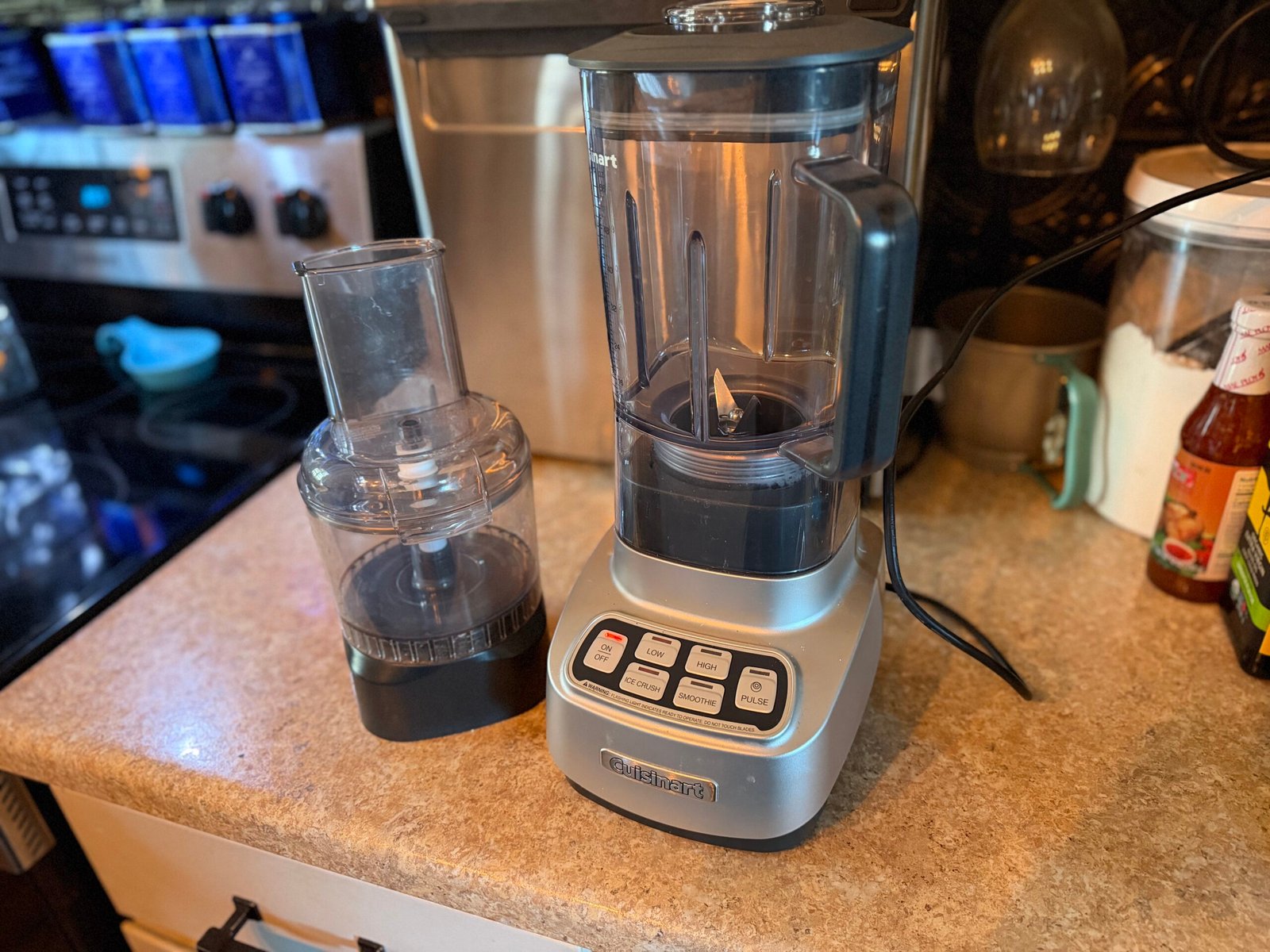
There are apparently a great many things you can judge a blender by now.
Does it have Wi-Fi? Does it have twelve buttons? Does the control panel look like something Starfleet installed? Can it connect to an app so your phone can presumably tell you that your banana has successfully ceased being a banana?
We don’t give a shit.
We approached this ranking with a considerably simpler question:
How good is this thing at destroying food?
Because that’s the whole reason you bought a blender.
If I drop ice, frozen strawberries, kale, peanuts, or some other stubborn bastard into the pitcher, I don’t care whether the blender has a beautifully illuminated smoothie button. I want whatever I put in there to reconsider the series of decisions that led it to this moment.
So our ranking puts 50% of a blender’s score on actual blending performance, followed by features and versatility, ease of cleaning and maintenance, and finally long-term build quality.
And that produces a rather different list than you get by simply counting features.
How We Ranked the Blenders
We weighted our rankings like this:
Blending and Pulverizing Performance: 50%
This is the big one.
We’re looking for machines that can effectively handle:
- Ice
- Frozen fruit
- Fibrous vegetables
- Nuts and nut butter
- Thick mixtures
- Smoothies
- Soups and purees
- Ingredients that don’t particularly want to become liquid
This isn’t just about motor wattage. Pitcher shape, blade design, circulation and the ability to keep ingredients moving through the blades all matter.
Independent laboratory testing supports putting significant emphasis on these tasks. RTINGS’ 2026 blender testing, for example, evaluates ice crushing, fibrous ingredients and challenging preparations such as nut butter. [rtings.com], [rtings.com]
Features and Versatility: 20%
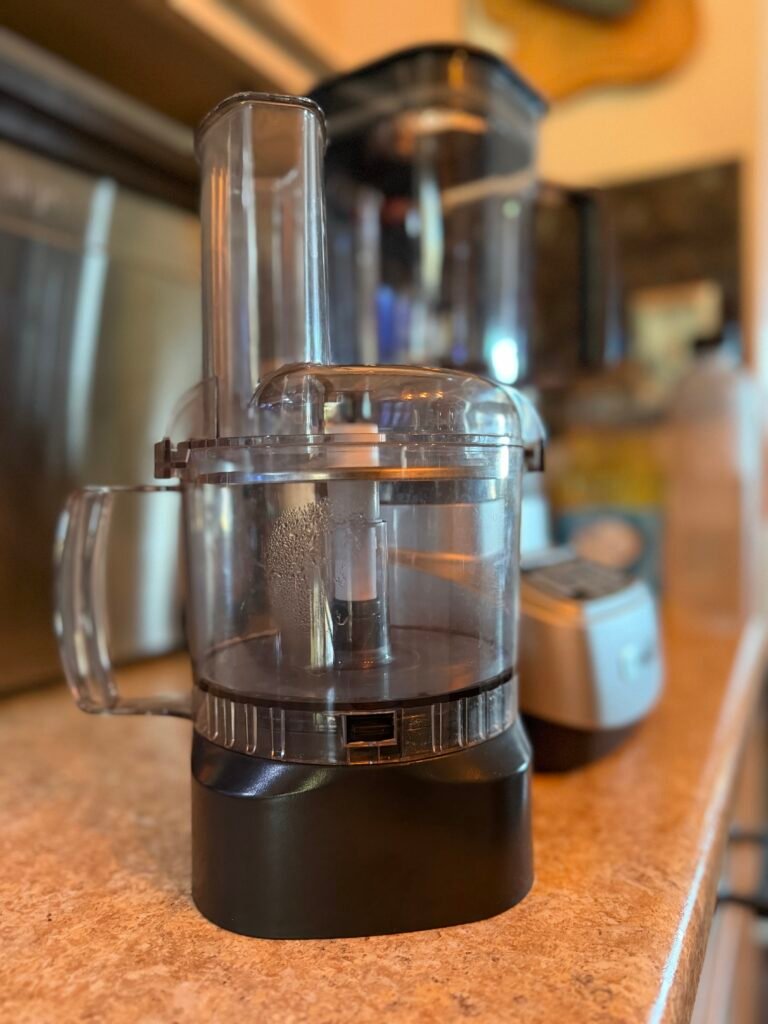
Once we know it can actually blend things, then we’ll reward the toys.
Variable speeds, pulse control, automatic programs, appropriately useful accessories, large pitchers and versatility all count here.
But we’re intentionally preventing features from overwhelming performance.
A blender with seventeen buttons that leaves chunks of frozen strawberry in your smoothie is just an expensive button collection.
Cleaning and Maintenance: 15%
Blenders are inherently messy contraptions, so we’re rewarding machines that don’t make the situation worse.
We favor simple designs, easily cleaned pitchers and lids, sensible blade arrangements and machines that don’t require half the kitchen counter to be covered in disassembled parts every time they’re cleaned.
Durability and Build Quality: 15%
Finally, we’d prefer the expensive electric food annihilator to continue annihilating food for a while.
Construction quality, warranty coverage and evidence from long-term testing all matter here.
With that settled, let’s break some shit.
1. Vitamix 5200
Best Overall Blender for People Who Mostly Care About Blending
The Vitamix 5200 is almost comically appropriate for our scoring system because its basic philosophy appears to be:
Here’s a motor. Here’s a pitcher. Now put something stupid in it.
It isn’t winning because it has the biggest collection of automatic programs. It wins because the fundamental blender underneath all of this is extraordinarily capable.
Epicurious has continued to rank the Vitamix 5200 as its best overall blender after years of testing and specifically praises its performance across smoothies, soups, almond milk and peanut butter. [epicurious.com]
And that’s exactly why it rises to the top of our ranking.
The 5200 represents the wonderful old-fashioned appliance philosophy of doing one job extremely well instead of trying to convince you that your refrigerator needs Bluetooth.
What We Like
- Exceptional all-around blending ability
- Handles difficult ingredients
- Excellent control over blending speed
- Proven design
- Particularly good choice for people who actually cook with their blender
What We Don’t
The controls aren’t especially glamorous compared with newer premium machines.
But that’s a little like criticizing a chainsaw because it doesn’t have Spotify.
Should I Buy This Crap verdict:
Yes. Absolutely.
If your primary expectation from a blender is that it reliably turns solid objects into considerably less solid objects, this remains our pick.
2. Breville Super Q
The Blender Most Likely to Steal First Place
If anything on this list has a legitimate argument against the 5200, it’s the Breville Super Q.
GearLab named the Super Q its best high-end blender and described it as producing exceptionally silky beverages and purees while providing useful, straightforward controls. [techgearlab.com]
That’s significant because our ranking heavily rewards the final product rather than the number printed on the motor housing.
The Super Q gives you serious high-performance blending while adding considerably more modern convenience than the beautifully primitive Vitamix approach.
What We Like
- Outstanding blending performance
- Excellent smoothness
- Useful controls
- Strong feature set
- Serious high-end alternative to Vitamix
What We Don’t
You’re paying premium-blender money.
Then again, if you’re shopping in this category, you’ve already accepted that apparently mankind has figured out how to sell an electric pitcher for several hundred dollars.
Should I Buy This Crap verdict:
One of the best blenders you can buy.
If features matter slightly more to you than they do to us, this could reasonably be your #1.
3. Vitamix A3500 Ascent
The Vitamix for People Who Want the Fancy Shit Too
Here’s what happens when you take the basic Vitamix idea and acknowledge that civilization continued progressing after the invention of the rotary dial.
The Vitamix A3500 Ascent retains the high-performance approach that made the company famous while providing a considerably more feature-rich experience.
This is where Vitamix makes sense for someone saying:
Yes, I want tremendous blending performance. But for this much money I’d also like the machine to look like it was manufactured sometime after the Reagan administration.
That’s fair.
For our ranking, however, those conveniences only account for 20% of the score, which keeps the simpler 5200 ahead.
What We Like
- High-end blending capability
- Excellent versatility
- More automation than simpler Vitamix models
- Premium construction
What We Don’t
You are moving further into Jesus Christ, that’s an expensive blender territory.
Should I Buy This Crap verdict:
Excellent if you want premium performance and premium conveniences.
If you’re only interested in pulverization per dollar, keep reading.
4. Blendtec Total Classic
The Blender for People Who Viewed “Will It Blend?” as a Challenge
The Blendtec Total Classic belongs near the top of any ranking that intentionally puts half its scoring weight on destroying things.
GearLab specifically identifies the Blendtec Total Classic as its heavy-duty blender recommendation. [techgearlab.com]
Heavy duty is exactly what we’re looking for.
Blendtec built much of its reputation around absurd demonstrations of blending power. We aren’t awarding points for marketing stunts, but the machine’s underlying capabilities put it firmly into the heavyweight category.
What We Like
- Serious blending power
- Excellent heavy-duty credentials
- Simple operation
- Strong competitor to Vitamix
What We Don’t
Its approach isn’t going to appeal to everyone, and there are more refined premium machines available.
But refinement wasn’t worth 50% of the score.
Breaking shit was.
Should I Buy This Crap verdict:
If your brain sees ice and nuts and immediately wonders, Yeah, but can I liquefy those?, you are Blendtec’s target audience.
5. Vitamix E310 Explorian
The Sensible Vitamix
This might be the blender I’d recommend to the greatest number of people.
The Vitamix E310 Explorian strips away some premium niceties while keeping the characteristic performance that makes spending Vitamix money considerably easier to justify.
Food Network named the E310 its best overall choice after testing blenders with frozen margaritas, kale-and-berry smoothies, nuts, nut butter and other preparations. [foodnetwork.com]
GearLab likewise praised the E310 as a strong long-term value and noted its performance in demanding blending tasks. [techgearlab.com]
That’s an impressive combination.
What We Like
- Excellent fundamental blending ability
- Strong independent testing
- Simpler than premium Vitamix machines
- Good long-term value proposition
- You’re paying for the important part
What We Don’t
You’re still paying significantly more than you would for many mainstream blenders, without getting the enormous feature sheet.
But again:
Blender.
Its primary job is right there in the name.
Should I Buy This Crap verdict:
Probably the smartest high-end purchase on this list.
6. Blendtec Classic 575
Horsepower Without the Cockpit
The Blendtec Classic 575 follows essentially the same philosophy that keeps Blendtec competitive here:
Make the machine straightforward and make the blending system powerful.
That’s a pretty good arrangement for our scoring methodology.
The Classic 575 particularly appeals to people who want high-performance blending without turning the experience into a technology demonstration.
What We Like
- Strong blending capability
- Straightforward operation
- Relatively uncomplicated design
- Built around actual blending rather than accessory overload
What We Don’t
If you’re shopping primarily for programs and accessories, several machines farther down this list will give you more crap in the box.
Of course, eventually you have to find somewhere to store all that crap.
Should I Buy This Crap verdict:
A very strong choice for someone who values brute-force blending more than gadgetry.
7. KitchenAid K400
The Surprisingly Serious KitchenAid
It would be easy to dismiss the KitchenAid K400 as the blender someone buys because it matches their mixer.
That would be unfair.
Independent comparisons have placed the K400 among legitimate midrange performers, and current research has repeatedly put it into the conversation as an alternative below the ultra-premium Vitamix tier. [lifetimeluxury.com]
That’s exactly where it belongs here.
It doesn’t quite bulldoze its way into our heavyweight division, but it offers an attractive balance between performance, usability and price.
What We Like
- Strong all-around capability
- Sensible controls
- Attractive middle ground between basic and premium blenders
- Good option if you don’t need industrial levels of food destruction
What We Don’t
Once raw pulverization becomes half the score, the heavyweight Vitamix, Blendtec and Breville machines pull away.
Should I Buy This Crap verdict:
A good blender for people who want a very good appliance without joining a blender cult.
8. Ninja Professional Plus Kitchen System
Holy Shit, Look at All the Stuff
And now we’ve reached Ninja.
The Ninja Professional Plus Kitchen System attacks the blender market completely differently.
Instead of saying:
Here’s our extremely expensive pitcher and rotating knife.
Ninja opens the cardboard box and apparently doesn’t stop putting things inside.
This is where our feature category becomes important. A kitchen-system configuration can combine traditional blending with additional processing capabilities, making it substantially more versatile than basic premium blenders.
And if you’re actually going to use that versatility, there’s tremendous value here.
What We Like
- Feature-heavy design
- Lots of versatility
- Useful for households wanting more than just a blender
- Strong value proposition
What We Don’t
Our methodology deliberately prevents accessories from disguising differences in blending performance.
RTINGS notes that jar and blade design matter alongside raw motor power when producing consistently crushed ice, which helps explain why specifications alone can’t determine the winner. [rtings.com]
That distinction matters with Ninja.
Should I Buy This Crap verdict:
Fantastic if you want an entire kitchen toolbox.
Less compelling if your sole objective is liquefy the son of a bitch.
9. NutriBullet Full-Size Blender Combo
The Blender for People Who Realized NutriBullet Doesn’t Have to Mean Tiny Cup
For years, NutriBullet has been associated with those little personal blenders you use to make one smoothie before discovering the cup in your car three days later.
The NutriBullet Full-Size Blender Combo is a different animal.
This is a proper 1,200-watt countertop blender with a 64-ounce pitcher, but it also comes with 32- and 24-ounce cups for single servings. You get three speeds, pulse, an Extract program and a tamper. [amazon.com]
That’s a genuinely useful feature set rather than a pile of buttons invented so somebody could put 17 FUNCTIONS! on the cardboard box.
Even better for our scoring system, the pitcher and cups can go in the dishwasher, while the removable extractor blade can simply be washed with soap and water. [amazon.com]
What We Like
- 1,200 watts of power
- Full-sized 64-ounce pitcher
- Single-serving cups included
- Pulse and multiple speeds
- Dishwasher-safe pitcher and cups
- Tamper included
- Considerably more versatile than a basic personal NutriBullet [amazon.com]
What We Don’t
It doesn’t have the same evidence behind it for outright pulverization dominance as the Vitamix, Blendtec and Breville monsters near the top of our list.
And that’s important.
Remember, half our score is essentially “How effectively does this bastard destroy whatever we throw into it?”
Being feature-rich doesn’t buy your way around that.
Should I Buy This Crap Verdict
Yes, particularly if you want one machine for both big batches and individual smoothies.
The NutriBullet Blender Combo occupies an interesting middle ground. It’s substantially more versatile than a traditional full-size blender because of those personal cups, without turning into one of those 47-piece kitchen systems where opening the box somehow leaves you needing another kitchen cabinet.
It isn’t our blender apocalypse champion.
It’s the much more reasonable proposition of a lot of blender without a lot of bullshit.
10. Breville Fresh & Furious
The Reasonable Breville
At the other end of Breville’s range from the Super Q sits the much more approachable Breville Fresh & Furious.
It’s aimed at people who want a competent everyday blender without converting the purchase into a major household financial decision.
Food Network’s blender testing included demanding jobs such as frozen drinks, smoothies, nuts and nut butter while also evaluating strength, cleanup and dishwasher-safe components. [foodnetwork.com]
That combination aligns nicely with what we’re trying to measure here.
What We Like
- Good everyday versatility
- More approachable than flagship blenders
- Sensible middle-ground choice
- Comes from a company capable of competing at the very top end
What We Don’t
Our 50% pulverization weighting is brutal.
Being good at everything isn’t enough to overcome machines that are exceptionally good at the thing a blender primarily exists to do.
Should I Buy This Crap verdict:
A good machine.
It just wandered into a ranking where we’ve decided that violence against frozen fruit is worth half the grade.
So Which Blender Should You Actually Buy?
For pure blending performance, our choice is the Vitamix 5200.
It doesn’t win because it has the longest list of features.
It wins because after you strip away the marketing bullshit and ask what do I actually want a blender to accomplish?, the answer becomes pretty obvious.
You want it to blend things.
Epicurious continues to put the 5200 at the top of its testing, while broader independent testing from RTINGS, Food Network and GearLab reinforces how important performance with ice, fibrous ingredients, nuts, smoothies and other difficult mixtures should be to a useful blender comparison. [epicurious.com], [rtings.com], [foodnetwork.com], [techgearlab.com]
Our Picks
Best High-End Alternative: Breville Super Q
Best Premium/Feature-Rich Choice: Vitamix A3500
Best Heavy-Duty Alternative: Blendtec Total Classic
Best High-End Value: Vitamix E310 Explorian
Best Midrange Choice: KitchenAid K400
Best Kitchen-System Option: Ninja Professional Plus Kitchen System
There are blenders with more buttons.
There are blenders with prettier screens.
There are blenders with enough automatic programs that you’re halfway to asking the goddamned thing to file your taxes.
But when 50% of the grade goes toward turning difficult ingredients into unrecognizable mush, the bullshit gets filtered out quickly.
Funny how ranking a product by how well it performs its primary function will do that.
Our Bottom Line
If we were spending our own money, the decision would come down to three machines.
Buy the Vitamix 5200 if you want the best balance of brutal blending performance and proven simplicity.
Buy the Vitamix E310 Explorian if you want much of the high-performance experience while emphasizing value.
Buy the Ninja Professional if you occasionally want to annihilate some ice and fruit without first consulting your retirement account.
Everybody else?
Pick the machine whose extra capabilities actually solve a problem you have.
Because the blender industry would dearly love to convince you that seventeen automatic blending modes are essential to human existence.
We’re still pretty sure “fast spinning knife in a bucket” was most of what we needed.
