Before this little metal box showed up, I was firmly in the camp of:
“I already have a dirty channel on my amp. Why do I need another dirty channel in a box?”
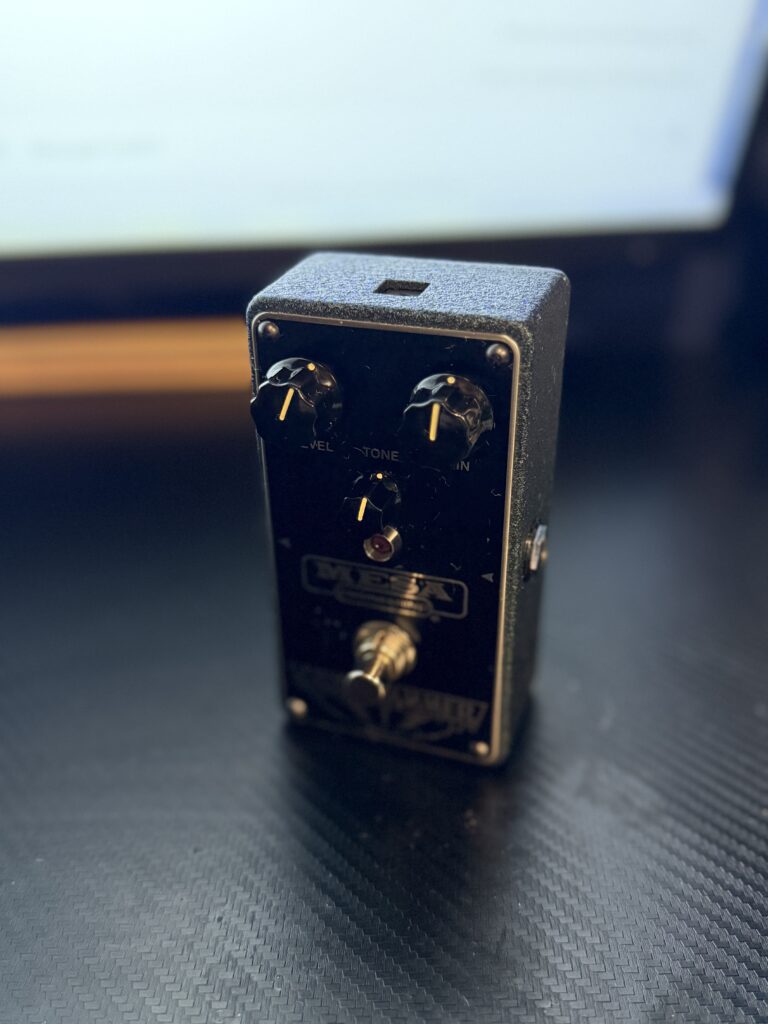
Then I plugged in the Grid Slammer.
Turns out the answer was:
Because pedals do things amps can’t.
Or at least not the same way.
You can have twelve knobs.
You can have a graphic EQ.
You can have multiple gain channels.
You can spend an entire afternoon trying to dial in the perfect tone.
Then you step on the Grid Slammer and suddenly your amp starts making noises it never made before.
I’m convinced the amount of fun produced by a handful of switches and electronic components in this little enclosure would be considered contraband in at least a few authoritarian countries.
💩 Poop Rating
💩💩 2 Poops
Good crap.
Not because it isn’t fantastic.
It’s fantastic.
The only reason it doesn’t earn a perfect one-poop score is because it’s a specialized flavor of awesome rather than a universal recommendation for every guitarist on earth.
For blues, classic rock, and pushing an already good amp into greatness?
This thing absolutely slaps.
Why This Review Matters
If you’re researching:
Mesa Grid Slammer Review
Mesa Boogie Grid Slammer
Grid Slammer vs Tube Screamer
Best overdrive for Les Paul
Mesa pedal review
Blues overdrive pedal
Classic rock overdrive pedal
this review combines long-term ownership with current market research.
My Introduction To Pedal Mania
The Grid Slammer was the first pedal that made me understand why guitar players end up with giant pedalboards that resemble NASA mission control centers.
Before this pedal, I thought overdrive was overdrive.
After this pedal, I understood that there’s a whole world of gain textures, clipping characteristics, frequencies, boosts, saturation, and tone shaping hidden beneath the surface.
It’s a dangerous realization.
The Grid Slammer wasn’t just a pedal purchase.
It was the beginning of a very expensive education.
What Does It Actually Sound Like?
Mesa describes the Grid Slammer as their take on the classic Screamer-style overdrive, and that’s true as far as it goes.
But that description feels incomplete.
The Grid Slammer doesn’t sound like somebody photocopied a Tube Screamer and painted it silver.
It sounds bigger.
More open.
More aggressive in the upper mids.
More vocal.
More willing to step forward and announce its presence.
When you hit a note, it wants people to hear it.
That upper-mid push makes solos jump out of a mix beautifully.
It’s one of those pedals that can make a guitar sound like it suddenly found confidence.
Les Paul Owners, Pay Attention
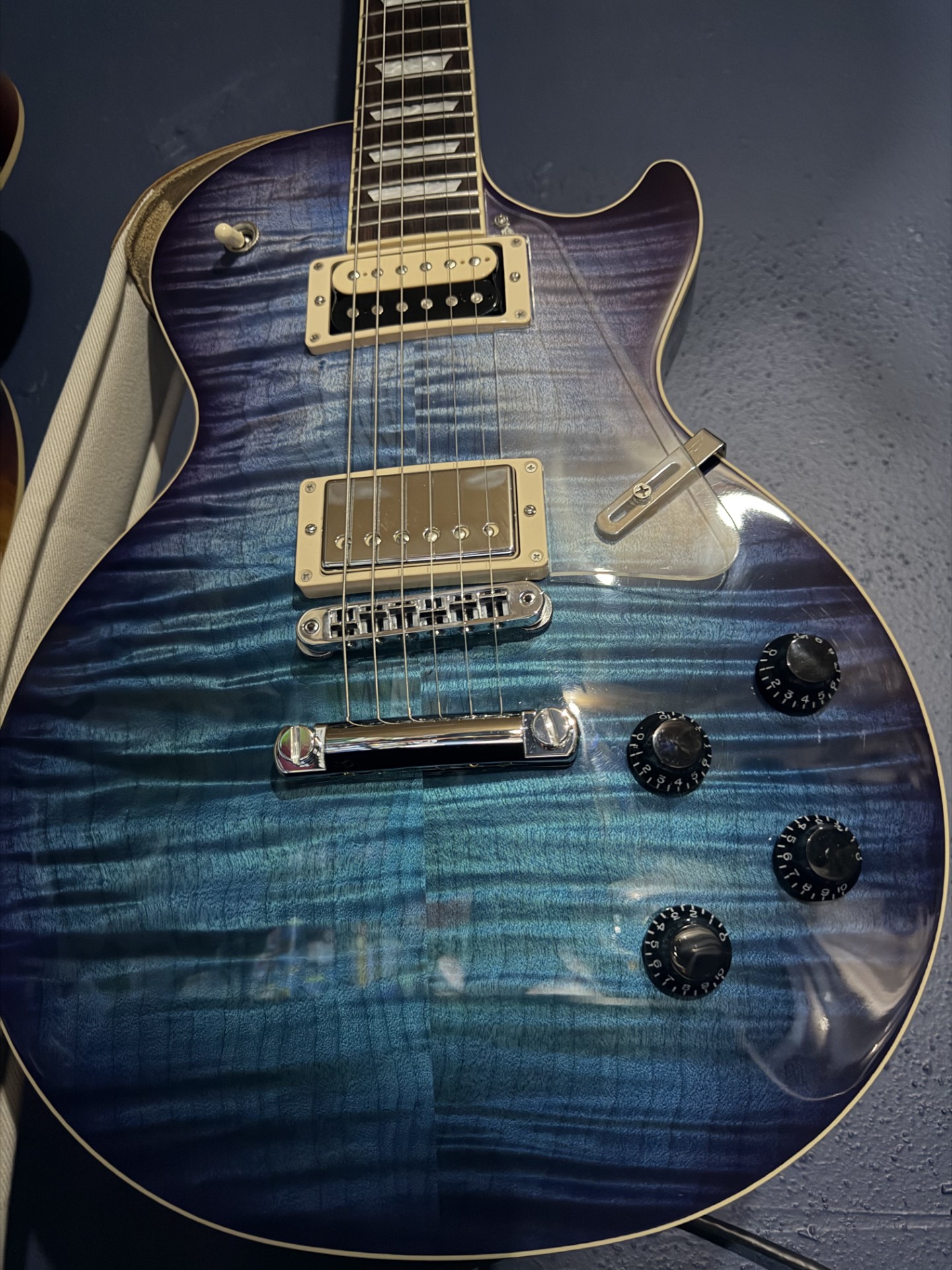
This pedal absolutely loves a Les Paul.
Mine certainly does.
The Grid Slammer takes that thick humbucker growl and gives it extra attitude.
The low strings become more focused.
Single notes start barking.
Lead lines gain sustain and presence without turning into mush.
A good Les Paul already sounds mean.
The Grid Slammer sounds like it’s encouraging bad behavior.
And I mean that as a compliment.
Blues And Classic Rock Heaven
This is where I think the pedal shines brightest.
Blues.
Classic rock.
Roots rock.
Hard rock.
Anything that benefits from touch sensitivity and dynamic response.
Roll back your guitar volume and it cleans up beautifully.
Dig in with the pick and it growls back.
That’s one of my favorite things about it.
The Grid Slammer doesn’t feel like you’re switching between clean and distortion.
It feels like you’re controlling the personality of the amp with your hands.
“But I Already Have A Dirty Channel”
I did too.
That’s what makes this pedal so impressive.
Most people assume a gain pedal is simply another version of a dirty channel.
The reality is much more interesting.
The Grid Slammer can add characteristics your amp never had.
Different attack.
Different compression.
Different midrange focus.
Different response to picking dynamics.
It doesn’t replace the amp.
It changes the conversation.
And that’s why pedals continue to exist despite modern amplifiers becoming increasingly sophisticated.
Built Like A Tank
Mesa didn’t exactly build this thing to survive life in a display case.
The enclosure is solid.
The switching feels substantial.
The controls feel sturdy.
And perhaps most importantly:
Mine still works exactly like it did when I bought it.
No weird noises.
No intermittent switches.
No failing pots.
No mysterious electronic drama.
Just years of reliable service.
That’s what I expect from Mesa, and the Grid Slammer delivers.
The Value Situation Has Changed
This is one area where I disagree with some of the market assessments.
A lot of valuation guides still treat the Grid Slammer like a fairly ordinary used overdrive pedal.
That may have been true once.
I’m not convinced it’s true now.
The pedal has become increasingly difficult to find through normal retail channels.
It’s sold out nearly everywhere.
And as availability has dried up, used prices have started climbing.
I’ve personally seen examples listed on Reverb in the $270–$300 range, which would have sounded insane a few years ago.
Now?
Not so much.
Would I tell someone to pay that much if they’re simply looking for a practical overdrive?
No.
There are other excellent options.
But if someone specifically wants a Grid Slammer?
The market appears to have noticed they’re not getting easier to find.
The funny part is that some used examples are now worth more than the original new retail price.
That’s not something you see every day with guitar gear.
How It Compares To The Competition
The Grid Slammer lives in a crowded category.
You have:
Tube Screamers
Maxon OD808s
BOSS SD-1s
EarthQuaker Plumes
Dozens of boutique clones
Most of them are good.
Some of them are excellent.
What keeps the Grid Slammer relevant is that it doesn’t sound generic.
It’s got that Mesa personality.
The upper-mid focus.
The openness.
The ability to push an amp without turning everything into compressed fuzz paste.
It’s not necessarily better than every alternative.
It’s just distinctly itself.
And in a pedal market flooded with copycats, that’s valuable.
Who Should Buy One?
Buy a Grid Slammer if:
You play blues
You play classic rock
You play hard rock
You own a Les Paul
You love expressive overdrive
You want to push an amp harder
You enjoy dynamic, touch-sensitive pedals
You appreciate Mesa build quality
Look elsewhere if:
You need metal distortion from the pedal alone
You want a transparent boost
You need extensive EQ controls
You want the cheapest Screamer-style pedal possible
Pros & Cons
✅ Pros
Fantastic blues and classic rock tones
Excellent with Les Pauls and humbuckers
Great dynamic response
Strong upper-mid presence
Cuts through a mix beautifully
Built like a tank
Made in the USA
True bypass
Works as both overdrive and boost
Still performs flawlessly after years of ownership
Makes you want to buy more pedals
❌ Cons
Increasingly difficult to find
Used prices keep climbing
Limited tone-shaping controls
Not a high-gain monster
Can become mid-heavy in the wrong rig
May start an expensive pedal addiction
Final Verdict
The Mesa Grid Slammer wasn’t just my introduction to pedals.
It was the pedal that taught me why pedals matter.
It sounds fantastic.
It’s built exceptionally well.
It has survived years of use without complaint.
And it continues to do things my amplifier simply can’t reproduce by itself.
That’s not because the pedal is replacing the amp.
It’s because it’s expanding what the amp can become.
If you love blues, classic rock, expressive lead work, and the unmistakable sound of a guitar pushing back when you dig into it, the Grid Slammer remains one of Mesa’s best pedal designs.
Even all these years later.
Final Poop Score
💩💩 2/4 Poops
Good crap.
A little metal box full of fun, sustain, growl, and questionable financial decisions.
The pedal that taught me a simple truth:
You don’t buy your first overdrive pedal because you need it.



Leave a Reply