



There are certain purchases that seem expensive when you make them and increasingly reasonable every year they refuse to die.
Our LG OLED55B7A-U appears determined to become one of those purchases.
We bought this 55-inch LG B-Series OLED in 2017, back when OLED televisions were still expensive enough that buying one required a certain amount of financial justification, marital diplomacy, and staring at the television aisle convincing yourself that yes, the blacks really were that much blacker.
The funny thing is that the picture that impressed us in 2017 still impresses us today.
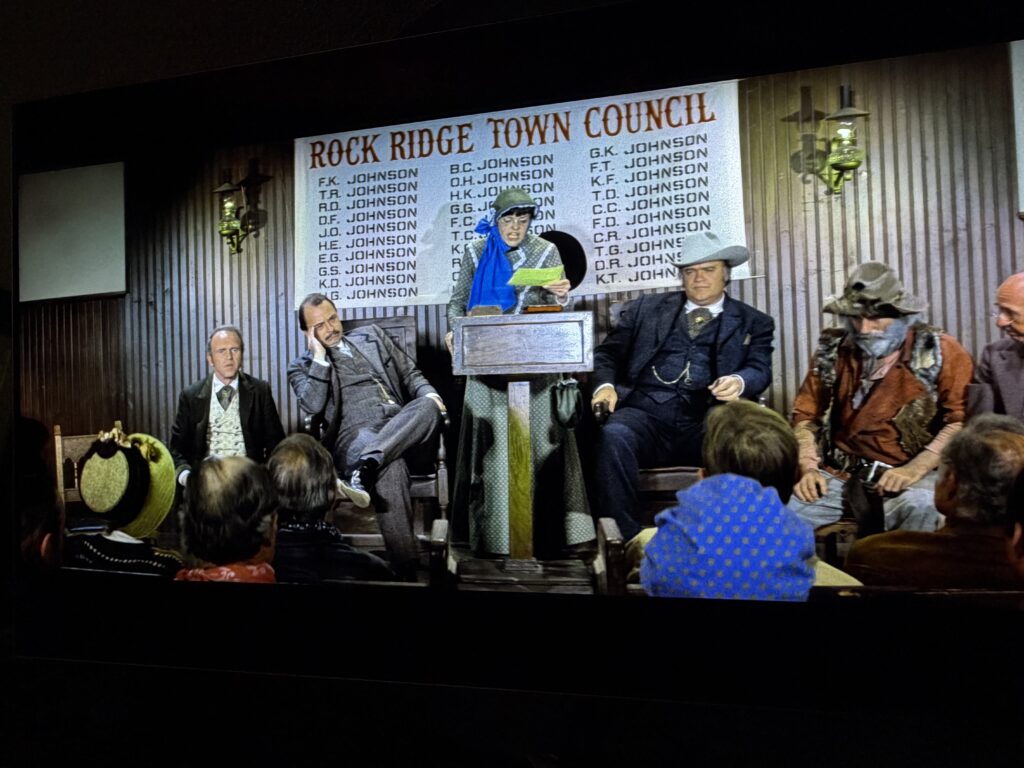
Nine years later, our B7A is still running. There are no dead pixels, no visible burn-in, and no obvious dark areas or brightness irregularities across the panel. We haven’t put laboratory equipment against the screen to determine whether it’s technically lost some brightness over the years, but from the revolutionary scientific instrument known as our eyeballs, it still looks bright, sharp and uniform.
More importantly, people who haven’t seen it before still walk into the room and compliment the picture.
That’s pretty remarkable for a television old enough that, in electronics years, it should be sitting on the porch complaining about these new televisions and how easy they’ve got it.
Perhaps even more surprisingly, we’ve seen newer inexpensive 4K displays that simply don’t look as good.
And that’s where this old LG teaches a valuable lesson:
4K is a resolution. It isn’t a guarantee of a great picture.
What the LG B7A Was
The LG OLED B7/B7A was LG’s entry-level OLED series for 2017, although calling it “entry-level” becomes fairly hilarious once you look at what you actually got. Contemporary testing described it as a high-end 4K OLED television and praised its infinite contrast, excellent viewing angles, wide color gamut and HDR performance. [rtings.com], [reviewed.com]
The 55-inch OLED55B7A had a native 3840 × 2160 4K OLED panel, HDR support including HDR10 and Dolby Vision, LG’s webOS 3.5 smart platform and four HDMI 2.0 inputs. It also included three USB inputs, Wi-Fi and Ethernet connectivity. [reviewed.com], [crutchfield.com]
The original reviewed price for the 55-inch B7A was $1,799.99 in 2017. [reviewed.com]
So no, this wasn’t a cheap television.
But nine years later, I’m starting to think cheap television and inexpensive television aren’t necessarily the same thing.
The Picture Quality Is Still the Story
This is why we bought an OLED.
And it’s why we’re still using it.
OLED’s major advantage is wonderfully simple: the pixels themselves produce light. Instead of having an LCD panel attempting to control illumination coming from a separate backlight, OLED pixels can illuminate themselves or shut themselves completely off.
Black therefore isn’t approximately black.
It’s black.
When RTINGS tested the B7, it specifically praised its perfectly uniform blacks and infinite contrast ratio. It also found excellent picture quality from an angle and low motion blur. [rtings.com]
Consumer Reports similarly found excellent HD picture quality, excellent color accuracy, deep black levels, excellent UHD performance and an exceptionally broad viewing angle. [consumerreports.org]
Those specifications and measurements help explain something we’ve continued noticing almost a decade later:
This television still looks fantastic.
And sometimes it looks better to us than a brand-new television with a giant 4K sticker plastered across the box.
4K Doesn’t Mean the Picture Is Good
Television marketing has successfully conditioned people to look at resolution as though it’s a picture-quality score.
1080p good.
4K better.
Presumably 8K means Patrick Stewart climbs directly out of the television and performs Shakespeare in your living room.
But resolution only tells part of the story.
You can have 3840 × 2160 pixels and still have mediocre contrast, poor black levels, bad viewing angles or unimpressive processing.
Our old LG has the same basic 4K resolution as an enormous number of televisions being sold today. What makes the image continue to look so good is everything happening with those pixels.
That extraordinary contrast makes images look dimensional and crisp. Dark scenes have real depth. Bright objects against a dark background can look striking because the television doesn’t have to illuminate the supposedly black area surrounding them with the same backlight.
Nine years haven’t changed the basic physics involved.
A new inexpensive LCD television doesn’t automatically beat an older OLED because the box it came in says 2026.
Technology doesn’t work like milk.
The Burn-In Question: Nine Years Later

Now we get to the elephant that’s been standing in the OLED room since approximately five minutes after somebody invented OLED:
Burn-in.
This was a legitimate concern when we bought the television, and it’s still something OLED buyers hear about today.
In fact, the original RTINGS B7/B7A review observed temporary image retention during testing and listed permanent burn-in risk as something OLED buyers should be aware of. [rtings.com]
So we’re not going to tell you:
OLED burn-in is a myth!
One television cannot establish that.
What we can tell you is considerably more useful.
Our television doesn’t have it.
After owning our LG OLED55B7A since 2017, we have no visible burn-in.
None that we’ve found.
There hasn’t been some heroic preservation campaign, either. We bought a television and proceeded to perform the apparently dangerous activity of watching television on it.
For nine years.
No laboratory torture tests.
No colored slides running continuously while somebody on YouTube explains pixel degradation for six hours.
We simply used the thing.
That’s not proof that another B7 can’t develop burn-in. It’s not evidence that OLED panels are immortal.
It’s one long-term owner’s experience.
But when that ownership experience now covers the better part of a decade, it’s certainly worth talking about.
No Dead Pixels Either
The panel itself has held up exceptionally well.
We’ve got no dead pixels that we’ve noticed, either.
That’s another area where longevity starts to matter more to me than whatever improvements appear on the spec sheet of the newest television.
A television can have phenomenal reviews when it’s sitting fresh out of the box.
Ask me again when it’s nine years old.
That’s the test we’re conducting here.
Very, very slowly.
What About Brightness Degradation?
OLED pixels are organic materials, so degradation over time isn’t some imaginary phenomenon.
But here’s where I want to be careful about what we actually know.
We didn’t scientifically measure the brightness of our television when we purchased it in 2017. Consequently, we can’t measure it today and honestly say:
“The television has retained 93.7% of its original brightness.”
Anybody giving you that number without having made the original measurement is performing science in much the same way I perform brain surgery.
What I can report is what we’re seeing.
The television still looks bright.
The picture remains uniform.
We aren’t seeing noticeable dim spots.
We’ve seen aging displays where the deterioration becomes visible without specialized equipment. Parts of the display start looking darker or uneven and something quite clearly isn’t right.
We don’t see that happening here.
If our B7 has lost some measurable amount of peak brightness since 2017, it’s not enough that I can look at the television and identify a problem.
That’s a pretty damn good result after nine years.
The Weirdest Compliment Comes From Other People
Probably the best endorsement for the television isn’t actually coming from us.
We’ve owned it for so long that we’re accustomed to it.
People visiting the house aren’t.
And we still get compliments from friends seeing this television for the first time.
That’s significant because nobody visiting someone’s house in 2026 has any reason to be impressed simply because a TV says 4K anymore.
4K televisions are everywhere.
Yet people still notice this picture.
There’s something tremendously satisfying about someone admiring your television and knowing they’re looking at a display you bought during the first Trump administration.
LG’s “Cheap” OLED Wasn’t Really Cheap OLED
Here’s another interesting historical detail.
The B7 technically sat near the bottom of LG’s 2017 OLED lineup, but that didn’t mean LG stuffed the cheap picture into the inexpensive model.
AVForums reported at the time that LG said its 2017 OLED Ultra HD televisions used the same panel and system-on-chip. The models were differentiated primarily through things such as cosmetics and sound rather than fundamental picture quality. [avforums.com]
That made the B7 an unusually appealing proposition.
You could spend more money.
You just weren’t necessarily buying more picture.
Someone at LG apparently forgot how product segmentation is supposed to work.
The Thin Panel Still Looks Modern
The B7 doesn’t scream OLD TELEVISION when you look at it, either.
One reason is simply the physical nature of OLED.
Without a conventional backlight assembly sitting behind the display, LG could make the upper portion of the panel remarkably thin. Contemporary reviewers specifically praised the B7’s extremely slim panel and minimalist appearance. [reviewed.com], [avforums.com]
It’s one of those rare pieces of consumer electronics whose industrial design hasn’t aged horribly.
Put a B7 in a room today and most people aren’t going to say:
“My God, is that from 2017?”
They’re going to watch the television.
And apparently occasionally compliment it.
Where Nine Years Actually Do Show
Let’s not get carried away and claim a 2017 television has magically become a 2026 television.
It hasn’t.
Modern premium OLEDs have continued evolving, and television connectivity, processors, gaming support and smart platforms have moved forward considerably.
Our B7 came from the world of webOS 3.5 and HDMI 2.0. [reviewed.com], [crutchfield.com]
That is where the B7’s age is easiest to appreciate.
And honestly, that’s fine.
The computer inside the television has aged more obviously than the television.
If smart features eventually become inadequate, external streaming hardware is easy to add.
Replacing a genuinely excellent 55-inch display because its built-in computer got old feels a little like replacing your house because the microwave is outdated.
Was Spending Nearly $1,800 on a TV Ridiculous?
In 2017?
Maybe a little.
The 55-inch B7A’s reviewed price of $1,799.99 was real money. [reviewed.com]
But here’s the problem with evaluating purchases entirely by what they cost on Day One.
You don’t know how long Day One is going to last.
If we take that $1,799.99 contemporary price merely as a benchmark and spread it across nine years, we’re down around $200 per year.
And the television is still working.
Every additional year drags that annual ownership cost lower.
Suddenly the expensive television starts looking suspiciously economical.
I’d rather spend more money once on something I legitimately enjoy for a decade than spend less money repeatedly replacing products I never particularly liked in the first place.
That doesn’t mean premium products automatically represent better value.
Far from it.
Sometimes expensive crap is still crap.
But occasionally you spend extra money because you’re buying something genuinely better, and then the damn thing lasts long enough to justify your decision.
This appears to be one of those times.
So, Should You Buy This Crap?
You obviously shouldn’t run out looking for a brand-new LG OLED55B7A.
It’s a discontinued television from 2017.
That’s not really the point of this review.
The question we’re answering nine years later is whether buying the thing in the first place turned out to be worth it.
Absolutely.
The LG OLED55B7A has given us nearly nine years of excellent picture quality and it’s still going.
Our particular television has:
- No visible burn-in.
- No dead pixels we’ve noticed.
- No obvious dark areas.
- No noticeable brightness problem.
- Picture quality that still looks spectacular.
- Enough visual punch that first-time visitors still comment on it.
- The slightly ridiculous ability to make some newer cheap 4K televisions look cheap.
That’s about as good a long-term ownership report as I can give any piece of consumer electronics.
The B7 also taught us something that’s easy to forget while wandering through a television department surrounded by gigantic boxes screaming 4K! HDR! AI! SMART! ULTRA! QUANTUM! at you:
Buy the picture, not the sticker.
The fundamental qualities that made this television great in 2017 are still qualities that make a television look great today.
Perfect blacks don’t become ugly because they’re nine years old.
Excellent contrast doesn’t go out of fashion.
And 4K didn’t suddenly become sharper because the calendar changed.
Nearly a decade after buying it, our LG B-Series OLED still looks good enough that we haven’t been given much reason to replace it.
In a consumer electronics industry built around convincing you that whatever you own became obsolete approximately twelve minutes after you bought it, that’s one hell of a compliment.
The ShouldIBuyThisCrap.com Crap Rating
💩 1 out of 4 Poops
Excellent crap.
Remember, around here the poop scale works backwards:
💩 = Excellent
💩💩💩💩 = Full of crap
The LG OLED55B7A earns the coveted single poop.
It was expensive. There were legitimate questions about OLED longevity when we bought it. And eventually some of its 2017-era electronics and features became dated.
But the part we actually bought the damn thing for, the picture, still looks fantastic nine years later.
Would we buy it again?
In a heartbeat.
Although apparently we don’t have to.
The bastard won’t die.
