




Author: Joe Zimmerman

  • Las Vegas: Slotzilla Review

    SlotZilla Zip Line: Flying Like Superman Over Fremont Street

    Las Vegas is full of attractions promising the experience of a lifetime. Some deliver. Some separate you from your money in record time.

    SlotZilla fortunately falls into the first category.

    Located at the eastern end of the Fremont Street Experience, SlotZilla launches riders high above downtown Las Vegas and sends them soaring beneath the massive Viva Vision canopy. The attraction opened in 2014 and has become one of the signature experiences of old Vegas. [visitlasvegas.city], [fremontstr…rience.com]

    The giant launch tower is built to resemble an oversized slot machine complete with showgirls, dice, martini glasses, and enough neon-inspired nonsense to fit perfectly into Fremont Street’s personality. It’s ridiculous.

    It’s also a blast.

    My Experience

    I’ll be honest, I loved the ride.

    As somebody who spends plenty of time doing normal adult things like paying bills, fixing stuff, and wondering where the weekend disappeared to, SlotZilla was a refreshing reminder that sometimes it’s fun to do something completely ridiculous.

    My first thought standing on that platform wasn’t excitement.

    It was:

    “Holy crap, I hope that teenager hooking up my harness knows what they’re doing.”

    A few seconds later that thought became:

    “HOLY CRAP, I’M FLYING LIKE SUPERMAN!”

    And honestly? That feeling alone was worth the price of admission.

    For a minute or two, you’re not thinking about schedules, errands, work. You’re just flying over Fremont Street having a blast.

    If you’ve gotten a little too comfortable with the routine of everyday life, I’d recommend giving it a try.

    The Ride Options

    SlotZilla offers two experiences. The standard Zip Line launches riders from approximately 77 feet above the street in a seated position. The higher Zoomline launches riders around 114 feet above the street in a face-down Superman-style flight that travels the entire Fremont Street Experience. [fremontstr…rience.com], [fremontstr…rience.com]

    If you’re already committing to being suspended above downtown Las Vegas by cables and engineering, I’d strongly recommend the Superman-style Zoomline.

    Go big.

    The Part That Sucked

    The ride was awesome.

    The operation wasn’t.

    We had 8:00 PM reservations.

    We arrived around 7:45 PM.

    We didn’t actually ride until nearly 11:00 PM.

    Three hours.

    Three.

    Hours.

    Apparently reservations and actual ride times are only loosely acquainted with one another.

    Nobody enjoys standing around Fremont Street for several hours wondering whether they’re about to fly through the air or simply become part of the local scenery.

    To their credit, we did not become pancakes on Fremont Street, so the safety side of things appears to be working.

    The scheduling side? That could use some attention.

    Save Your Money

    Here’s the part I wish somebody had told me before we booked.

    When we visited, our evening reservation tickets were roughly $80 per person.

    Meanwhile, daytime visitors had access to pass options that cost substantially less and allowed multiple rides before the evening rush started.

    If you’re visiting primarily for the thrill and don’t absolutely need the nighttime light show, it’s worth comparing ticket options before buying. The night ride was incredible, but I’d seriously look at the daytime passes next time.

    A Quick Zipline History Lesson

    Most people assume ziplines were invented for tourists with a questionable understanding of risk management.

    Not exactly.

    The concept dates back centuries. Early ropeway systems were used in mountainous regions of Asia to move people and supplies across difficult terrain. Similar systems later appeared in military and industrial applications long before anyone thought about charging tourists to fly through forests for fun. [en.wikipedia.org], [everything…ined.today]

    Modern recreational ziplining owes a surprising amount to researchers working in tropical forests. Scientists developed canopy-access systems to study wildlife high above the jungle floor, and those systems eventually evolved into the commercial zipline attractions that spread around the world. [nszipline.com], [coloradozipline.net]

    Most modern ziplines showcase mountains, forests, rivers, and waterfalls.

    SlotZilla showcases neon signs, casinos, and poor financial decision-making.

    And somehow that works perfectly.

    Reservations and Tickets

    Before purchasing, I’d compare prices directly from the source before using any third-party reseller:

    Many Las Vegas attraction sites and travel portals resell the same tickets, sometimes with added fees or limited availability. Checking the official source first can save both money and frustration.

    Final Crap Rating®

    💩💩 (2/4 Craps)

    The ride itself is outstanding.

    The wait times and operations can be frustrating.

    That’s how you end up with a middle score.

    If I’m rating only the flight experience, SlotZilla is flirting with a 1 Crap rating. It’s uniquely Vegas, genuinely exciting, and one of the few tourist attractions I’ve done where the smile lasted longer than the receipt.

    But when you’re standing around for three hours after making a reservation, that’s hard to ignore.

    Should You Buy This Crap?

    Yeah.

    Just bring your patience with you.

    You may spend several hours wondering if you’ll ever get on the ride, followed by sixty seconds wondering why humans were ever allowed to fly in the first place. Somehow, despite the wait, I’d absolutely do it again.



  • Travel Reviews – Guides and Practical Advice

    Travel Crap: Places Worth the Gas Money (and Places That Aren’t)

    Let’s be honest. Half of travel planning is scrolling through photos of beautiful places while convincing yourself that spending several hundred dollars to sleep somewhere other than your own bed is somehow a responsible financial decision.

    The other half is discovering that the “must-see attraction” everyone raves about is actually a crowded parking lot, a gift shop, and a line long enough to make you question your life choices.

    That’s where this section comes in.

    Here at Should I Buy This Crap?, I visit destinations, hotels, resorts, attractions, national parks, scenic drives, and tourist traps so you can figure out whether they’re actually worth your vacation budget. No influencer nonsense. No pretending every destination is magical. No suspiciously enthusiastic reviews written five minutes after someone got a free stay.

    Just honest opinions from someone who paid for the trip, stood in the lines, ate the overpriced food, and came home with an opinion.

    Sometimes a place will absolutely blow me away.

    Sometimes I’ll wonder why anyone thought charging admission for that was a good idea.

    And sometimes it’ll land somewhere in the middle, which is where most reality tends to live.

    What You’ll Find Here

    National Parks & Outdoor Adventures

    America has some incredible parks, and some are worth every penny, every mile driven, and every sore muscle afterward.

    You’ll find reviews covering park experiences, lodging, tours, hiking opportunities, photography potential, crowd levels, and whether the experience justifies the cost and effort required to get there.

    Because let’s face it, a four-hour drive to stare at a rock is only worth it if it’s a really cool rock.

    Hotels, Lodges & Resorts

    The internet says every hotel has luxury accommodations.

    The internet lies.

    I’ll cover what the rooms are actually like, whether the beds are comfortable, if the amenities work, if the staff are helpful, and whether the price matches the experience.

    A fancy lobby means absolutely nothing if the shower sounds like it was installed during the Carter administration.

    Tourist Attractions

    Everybody has that attraction their friends swear they have to see.

    Sometimes they’re right.

    Sometimes it’s just an expensive excuse to buy a magnet.

    If it’s worth your time, money, and vacation days, I’ll tell you. If it isn’t, I’ll tell you that too.

    Hidden Gems

    These are often the best parts of travel.

    The scenic overlook nobody talks about.

    The local restaurant that’s better than the chain tourist spots.

    The small attraction that ends up being more memorable than the famous one.

    Sometimes the best experiences happen completely by accident.

    The Official Travel Crap Rating™

    Every destination gets judged using the highly scientific and definitely-not-made-up 1-4 Crap Scale.

    💩 One Crap – Buy This Crap

    Fantastic. Worth the trip. I’d happily go back.

    💩💩 Two Craps – Good Stuff

    Easy recommendation, but a few annoyances, costs, or limitations keep it from greatness.

    💩💩💩 Three Craps – Proceed With Caution

    You might enjoy it. You might not. Bring realistic expectations and possibly snacks.

    💩💩💩💩 Four Craps – Don’t Buy This Crap

    Save your money, save your vacation time, and save yourself the disappointment.

    Start Exploring

    Whether you’re planning a weekend getaway, a cross-country road trip, a national park adventure, or just trying to figure out if that highly-rated tourist attraction is actually worth your hard-earned cash, you’ll find my honest thoughts here.

    Because vacation days are limited.

    Gas isn’t getting cheaper.

    And somebody needs to test this crap.


    Suggested Internal Links

  • Tech Reviews, Gadgets, GPUs, and Other Expensive Mistakes

    Tech Reviews
    Tech Reviews

    Welcome to the Tech Section of Should I Buy This Crap

    Technology is amazing.

    Technology is also one of the few industries where perfectly happy people convince themselves they need to spend $2,000 to solve a problem they didn’t know they had yesterday.

    Welcome to the wonderful world of tech.

    A place where:

    • A perfectly functional computer is declared obsolete every six months.
    • Gamers debate frame rates they can’t actually see.
    • Storage somehow fills itself.
    • Software updates are either miracles or acts of war.
    • Every company claims its newest product is powered by revolutionary AI.

    And somehow we’re all still here buying this crap.


    The Upgrade Cycle Never Ends

    Every tech enthusiast eventually learns a difficult truth.

    The perfect setup does not exist.

    You buy a new GPU.

    A faster one gets announced.

    You build a new PC.

    A better CPU arrives.

    You finally finish your dream setup.

    Someone on YouTube starts benchmarking hardware that hasn’t even launched yet.

    The cycle continues.

    This is less a hobby and more a support group.


    Technology’s Greatest Lie

    You’ve heard it before:

    “This upgrade should last me ten years.”

    No it won’t.

    We both know it.

    The moment those words leave your mouth, some company in California, Taiwan, or South Korea begins designing a product specifically intended to test your commitment to that statement.


    My Philosophy On Tech

    I don’t care what the marketing department says.

    I care about:

    • Does it work?
    • Is it reliable?
    • Is it worth the money?
    • Does it solve an actual problem?
    • Will I still like it six months from now?

    Because that’s what really matters.

    Anybody can be impressed during a ten-minute demo.

    Long-term ownership is where the truth lives.


    Performance Is Fun. Value Is Better.

    One thing you’ll notice here:

    I’m not obsessed with benchmarks.

    Don’t get me wrong.

    Performance matters.

    I love fast hardware.

    I love GPUs that render things before I can think of them.

    I love computers that feel instant.

    But performance without value is just an expensive way to light money on fire.

    Sometimes the best purchase isn’t the fastest thing.

    It’s the thing that makes sense.

    That may not be exciting advice.

    It’s usually correct advice.


    Things You Will Find Here

    This section covers:

    GPUs

    Because no matter how powerful your current card is, somebody on Reddit insists it isn’t enough.

    PCs & Components

    CPUs, motherboards, RAM, storage, cooling, and all the expensive puzzle pieces inside the box.

    Gadgets

    The devices we buy because they solve a problem.

    Or because they’re shiny.

    Sometimes both.

    Audio & Video

    The gear responsible for making us hear and see things slightly better while spending significantly more money.

    Tech Accessories

    The “small purchases” that somehow become a credit card statement.


    The Tech Enthusiast Hierarchy Of Needs

    Phase 1

    “I just need a computer.”

    Phase 2

    “I just need a better graphics card.”

    Phase 3

    “I should probably upgrade the motherboard too.”

    Phase 4

    “Well, if I’m replacing the motherboard…”

    Phase 5

    Completely rebuilding the system while insisting this was the economical option.


    Some Hard Truths

    Most People Don’t Need The Flagship

    You want the flagship.

    There is a difference.

    You Probably Won’t Notice 3% More Performance

    Your wallet will.

    RGB Doesn’t Increase Frame Rate

    I know.

    I was disappointed too.

    Cable Management Only Matters Until The Side Panel Goes Back On

    You know it’s true.


    What Makes A Good Review?

    Around here, reviews aren’t based on marketing slides.

    They’re based on ownership.

    Use.

    Maintenance.

    Regret.

    Buyer satisfaction.

    Occasional buyer remorse.

    And the question every tech enthusiast eventually asks:

    “Would I buy it again?”

    Because that’s ultimately the only review that matters.


    Official Tech Reviewer Disclaimer

    ShouldIBuyThisCrap.com cannot be held responsible for:

    • GPU upgrades
    • Impulse purchases
    • Building another PC
    • Excessive benchmark comparisons
    • Arguing with strangers online about hardware
    • Discovering a discontinued component you now desperately need
    • Convincing yourself you need more storage

    You probably do need more storage, though.


    Final Thought

    Technology is supposed to make life easier.

    Sometimes it does.

    Sometimes it creates entirely new and fascinating problems.

    Either way, we’re going to talk about it.

    The good stuff.

    The bad stuff.

    The overpriced stuff.

    And the occasional piece of gear so good it survives years of ownership and still earns a recommendation.

    Because at the end of the day, that’s what this section is for:

    Helping answer a simple question.

    Should I buy this crap?

  • Gigabyte X870E AORUS Master Review

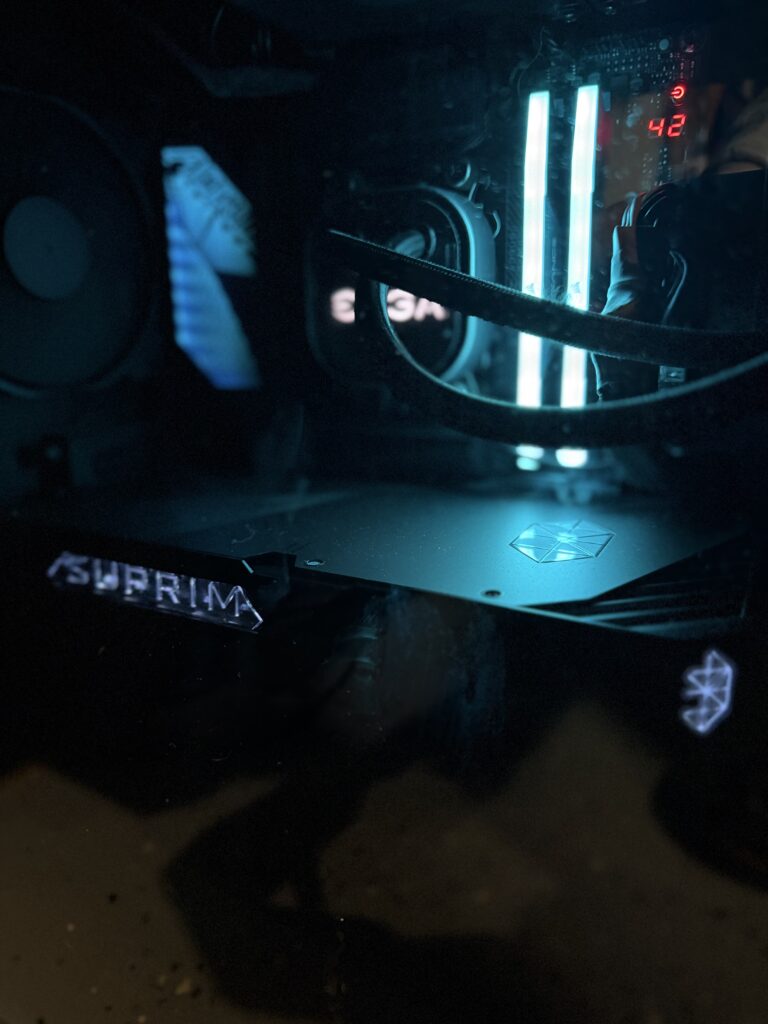
    5090 MSI Liquid Suprim On Gigabyte X870E AORUS Master, Corsair VENGEANCE  DDR5-6000 PC5-48000
    5090 MSI Liquid Suprim On Gigabyte X870E AORUS Master, Corsair VENGEANCE DDR5-6000 PC5-48000

    Motherboards are funny.

    Nobody gets excited about motherboards.

    People get excited about CPUs.

    People get excited about GPUs.

    People get excited about benchmark numbers.

    Meanwhile the motherboard quietly does all the hard work while everyone pretends it doesn’t exist.

    The Gigabyte X870E AORUS Master is one of the few motherboards that actually made me appreciate the motherboard itself.

    Not because it magically made my system faster.

    It didn’t.

    Physics remains stubbornly undefeated.

    What it did do was make building, upgrading, and maintaining my system genuinely enjoyable.

    The EZ-Latch system.

    The tool-free M.2 installation.

    The diagnostic display.

    The oversized cooling.

    The absurd amount of metal.

    And I do mean absurd.

    This thing feels less like a motherboard and more like a piece of infrastructure.

    If civilization collapses and we find ourselves fending off medieval raiders, I’m reasonably confident this board could serve as a shield.

    Possibly a small door.

    Maybe light body armor.

    The point is:

    This thing is built like a tank.


    💩 Poop Rating

    💩 1/4 Poops

    Excellent Crap.

    Expensive? Sometimes.

    Overbuilt? Absolutely.

    Worth it? In the right situation, yes.


    Why This Review Matters

    If you’re researching:

    • Gigabyte X870E AORUS Master Review
    • Best X870E motherboard
    • AM5 enthusiast motherboard
    • Ryzen 9000 motherboard
    • X870E motherboard comparison
    • AORUS Master worth buying

    this review combines extensive research with real-world ownership experience.


    First Impressions

    The very first thing I noticed was the weight.

    Seriously.

    Pick this thing up.

    The PCB is thick.

    The heatsinks are enormous.

    The cooling hardware is substantial.

    The board uses an 8-layer PCB with 2-ounce copper construction and some of the largest VRM cooling Gigabyte has ever attached to a gaming motherboard. Independent testing found VRM temperatures staying remarkably cool even under a Ryzen 9 9950X stress load. (TechSpot, TechPowerUp)

    You immediately understand where some of your money went.

    This does not feel like a budget board wearing expensive clothing.


    Building On It Is Genuinely Nice

    Most motherboards aren’t fun to work on.

    This one is.

    The EZ-Latch system deserves a special mention.

    The M.2 installation mechanism is fantastic.

    No tiny screws.

    No balancing acts.

    No hunting for hardware that launched itself into another dimension when it hit the floor.

    Multiple reviewers specifically praised Gigabyte’s screwless M.2 system as one of the best implementations currently available.

    The GPU release mechanism is another feature that sounds insignificant until you’re trying to remove a giant RTX card wedged into a packed case.

    Then suddenly it feels brilliant.

    These aren’t flashy features.

    They’re quality-of-life improvements.

    And unlike RGB lighting, you actually use them.


    Stability Has Been Outstanding

    This is the most important section.

    My board has been boring.

    And I mean that as the highest compliment possible.

    No crashes.

    No USB issues.

    No networking issues.

    No strange hardware behavior.

    No mysterious gremlins living in the BIOS.

    Just stability.

    Professional testing generally mirrors that experience, with no widespread reports of USB instability, networking failures, storage problems, or platform-level defects specific to the AORUS Master.

    A motherboard’s primary job is getting out of the way and letting the rest of the system do its thing.

    The X870E AORUS Master excels at that.


    Cooling Is Almost Comically Overbuilt

    The cooling solution borders on ridiculous.

    Massive VRM heatsinks.

    Massive M.2 heatsinks.

    Heatpipes.

    Armor.

    Shields.

    Probably classified military equipment.

    Testing showed VRM temperatures around 62°C even under sustained Ryzen 9 workloads, which is outstanding for a board of this class.

    The practical result?

    The board stays cool.

    Very cool.

    Most users will never push it hard enough to care.

    Which is exactly what you want.


    The Lighting Doesn’t Scream For Attention

    One thing I appreciate is restraint.

    The RGB lighting isn’t trying to turn my office into a nightclub.

    It’s tasteful.

    Subtle.

    Classy.

    As someone rapidly approaching “old man complains about RGB” territory, I appreciate that.

    It looks premium rather than flashy.


    Is It Really Overpriced?

    This is where I disagree with some of the reviews.

    On paper, they’re not wrong.

    Several competing boards offer comparable features for less money.

    The MSI MPG X870E Carbon WiFi is often cited as one of the better value alternatives.

    The ASRock X870E Taichi also provides strong specifications at lower prices.

    That’s all true.

    But here’s the thing.

    Motherboards aren’t always purchased at MSRP.

    I’ve seen the AORUS Master bundled with CPUs, memory, and complete build packages often enough that the value equation changes dramatically.

    At full MSRP, you’re absolutely justified in comparing every feature against competing boards.

    In a bundle?

    Now we’re talking about what the board actually costs you.

    And suddenly the value proposition gets much more attractive.


    Features I Actually Use

    The best features aren’t necessarily the ones marketing departments talk about.

    The features I appreciate most are:

    • EZ-Latch GPU release
    • Tool-free M.2 installation
    • POST code display
    • Debug LEDs
    • Q-Flash Plus
    • Massive cooling
    • Excellent connectivity
    • Stable BIOS support

    These are the things you keep using long after the excitement of a new build wears off.


    Support Matters

    Gigabyte deserves some credit here.

    The board continued receiving BIOS updates throughout 2025 and 2026, including:

    • Memory compatibility improvements
    • Ryzen CPU support updates
    • Security patches
    • Platform stability enhancements

    That’s exactly what you want on a premium motherboard that may remain in service for years.

    Useful links:


    Would I Buy It Again?

    Yes.

    Without hesitation.

    Would I buy it at full MSRP?

    Maybe.

    The deal matters.

    The market matters.

    Competition matters.

    But if I found myself building another high-end AM5 machine and this board was available in one of the excellent bundles that frequently appear?

    Absolutely.

    The X870E AORUS Master isn’t the best value motherboard I’ve ever owned.

    It might be the nicest motherboard I’ve ever owned.

    Those aren’t always the same thing.


    Pros & Cons

    ✅ Pros

    • Built like a tank
    • Excellent cooling
    • Rock-solid stability
    • Fantastic EZ-Latch M.2 system
    • Great GPU release mechanism
    • Excellent diagnostics
    • Premium construction
    • Plenty of connectivity
    • Strong BIOS support
    • Tasteful lighting
    • Makes upgrades significantly easier

    ❌ Cons

    • Expensive at MSRP
    • More motherboard than most gamers need
    • Competing boards can offer better paper value
    • Massive heatsinks occasionally get in the way
    • Premium features may be wasted on simpler builds

    Final Verdict

    The Gigabyte X870E AORUS Master isn’t for everyone.

    Most people can spend less and get essentially the same gaming performance.

    That’s just the reality of modern motherboards.

    But that’s missing the point.

    The AORUS Master wins through build quality, ease of use, cooling, diagnostics, and long-term ownership satisfaction.

    It’s one of those rare components that still makes you smile when you open the side panel months later.

    And in a world where most motherboards disappear into the background, that’s worth something.


    Final Poop Score

    💩 1/4 Poops

    Excellent Crap.

    A motherboard so massively overbuilt it feels like Gigabyte accidentally shipped part of a battleship with your computer.

    Reliable.

    Cool.

    Easy to work on.

    And sturdy enough that if the apocalypse comes, I’ll probably take the motherboard. 🖥️💩🛡️

    5090 MSI Liquid Suprim
    5090 MSI Liquid Suprim

    Additional Resources

    • Gigabyte X870E AORUS Master Official Page
      Gigabyte Product Overview
    • Gigabyte Support & BIOS Updates
      https://www.gigabyte.com/Motherboard/X870E-AORUS-MASTER/support
    • Independent Testing TechPowerUp Review
    • Platform Information https://www.amd.com/
  • Dogs, Fur, Treats, and Other Household Destruction

    Dog Product Reviews Foster Litter
    Scarlett’s Foster Litter

    Welcome to the Dog Stuff Section of Should I Buy This Crap

    Dogs are wonderful.

    Dogs are loyal.

    Dogs are loving.

    Dogs are also tiny contractors hired to convert money into poop.

    If you’ve ever rescued a dog, you’ve quickly discovered the rescue fee was merely a down payment on a lifetime subscription service.

    The monthly fees include:

    • Food
    • Treats
    • Toys
    • Beds
    • Replacement toys
    • Replacement beds
    • Grooming supplies
    • More treats
    • Vacuums for the fur
    • Carpet cleaners for the accidents
    • Vet visits
    • Emergency vet visits
    • Things swallowed during moments of poor decision-making

    And somehow, despite all of that, we keep signing up for more dogs.

    Welcome to life with a dog.


    The Household Fur Distribution System

    Scientists still don’t fully understand how one dog can generate enough fur to build two additional dogs every year.

    I’ve vacuumed.

    I’ve brushed.

    I’ve used deshedding tools.

    I’ve vacuumed again.

    Yet somehow a tumbleweed of fur will still roll across the floor exactly five minutes after cleaning.

    At some point you stop trying to win.

    You simply attempt to negotiate a ceasefire.


    Treat Economics

    Dog treats occupy a unique place in the economy.

    A dog will ignore a twenty-dollar toy.

    A dog will destroy an eighty-dollar bed.

    A dog will completely disregard your existence.

    Then you touch a seven-dollar bag of treats and suddenly you’re the most important human on Earth.

    It’s one of the best returns on investment available.


    Every Dog Product Claims To Be Revolutionary

    If you’ve spent any time shopping for dog products, you’ve probably noticed something.

    Apparently every new toy is:

    • Revolutionary
    • Innovative
    • Veterinarian approved
    • Life changing
    • Scientifically advanced

    Meanwhile your dog is standing in the yard eating a stick.

    The disconnect is fascinating.

    My goal here is to separate genuinely useful products from expensive marketing wrapped in attractive packaging.


    The Great Dog Parent Delusion

    Every dog owner starts with the same belief:

    “I will train my dog properly.”

    Then reality shows up.

    Eventually every dog learns:

    • Which treat jar makes the good noise
    • The exact sound of a refrigerator opening
    • Which family member is easiest to manipulate
    • How to occupy the entire king-size bed

    Meanwhile we’re still working on “sit.”


    What You’ll Find Here

    This section covers products I’ve actually used, researched, or lived with.

    Topics include:

    Treats

    Because happiness frequently comes in biscuit form.

    Grooming Tools

    Everything from brushes to deshedding devices capable of removing enough fur to stuff a recliner.

    Cleaning Products

    The tools we buy because dogs occasionally forget the social contract.

    Health Products

    Supplements, medications, and products designed to keep our furry freeloaders healthy.

    Toys & Accessories

    Items intended to survive contact with dogs.

    Results vary.


    A Word About Product Reviews

    One thing you’ll notice in these reviews:

    Dogs aren’t standardized test equipment.

    The same treat that sends one dog into orbit may get ignored by another.

    The same brush one dog loves might be treated like an assassination attempt by another.

    The same toy may survive ten years with one dog and ten minutes with another.

    I’ll tell you what happened in my household.

    I’ll tell you what the research says.

    But your furry little weirdo may have opinions of their own.


    Chasing The Perfect Dog Product

    Much like guitar players chasing tone, dog owners spend a surprising amount of time chasing the perfect product.

    The perfect treat.

    The perfect toy.

    The perfect brush.

    The perfect bed.

    The perfect solution to shedding.

    The perfect vacuum.

    The perfect carpet cleaner.

    The perfect answer usually turns out to be:

    “Good enough, and the dog likes it.”


    Things I’ve Learned From Dogs

    A few life lessons I’ve picked up:

    Every Treat Is Better Than No Treat

    This may be the foundation of modern economics.

    New Toys Are Best

    Until they’re not.

    Usually about six minutes later.

    The Floor Is Food Storage

    According to dogs.

    Personal Space Is A Myth

    According to dogs.

    Fur Is Forever

    According to dogs.


    Official Dog Owner Disclaimer

    ShouldIBuyThisCrap.com cannot be held responsible for:

    • Treat addiction
    • Additional dog acquisitions
    • Fur-covered clothing
    • Toy purchases that last twelve minutes
    • Photographs taking over your phone storage
    • Unplanned trips to pet stores
    • The belief that your dog is smarter than everyone else’s dog

    The last one is especially common.


    Final Thought

    Dogs aren’t cheap.

    Dogs aren’t convenient.

    Dogs aren’t logical.

    But they’re one of the best investments most of us will ever make.

    The trick is spending less money on useless crap and more money on the stuff that actually improves life for both you and your four-legged family members.

    That’s what this section is all about.

    Helping you answer one important question:

    Should I buy this crap for my dog?

    Sometimes the answer is yes.

    Sometimes the answer is no.

    And sometimes the answer is that your dog has already decided for you.

  • Eventide Knife Drop – Fuzz Pedal Review

    Eventide Knife Drop
    Eventide Knife Drop

    Some pedals give you a better version of your existing tone.

    The Eventide Knife Drop does not care about your existing tone.

    The Knife Drop looks at your carefully crafted guitar sound, laughs, and asks:

    “Would you like to sound like a broken Nintendo, an angry synthesizer, a spaceship landing in a junkyard, or perhaps all three simultaneously?”

    This thing is ridiculous.

    And I mean that as a compliment.

    It can do fuzz.

    It can do octaves.

    It can do synth sounds.

    It can do weird glitchy noises.

    It can do sounds that make other guitar players wander over and ask:

    “Okay, seriously… what the hell is that thing?”

    The Knife Drop is less of a guitar pedal and more of a creativity machine.

    I’ve owned pedals that improved my tone.

    I’ve owned pedals that improved my versatility.

    The Knife Drop improves my ability to waste an entire afternoon making noises instead of practicing.

    And honestly?

    That’s worth something.


    💩 1 Poop

    Really Good crap.

    Not because it isn’t amazing.

    It’s amazing.

    But this is specialty-grade weirdness.

    Some people want a screwdriver.

    The Knife Drop is a Swiss Army knife that occasionally catches fire and begins speaking in robot noises.


    Why This Review Matters

    If you’re researching:

    • Eventide Knife Drop Review
    • Knife Drop pedal
    • Eventide fuzz pedal
    • Jack White pedal
    • Best synth pedal
    • Fuzz octave pedal
    • Weird guitar pedals

    This review combines research with actual owner impressions from someone who thinks musical chaos is a feature and not a bug.


    More Fun Than A Jack-In-The-Box

    I don’t say this lightly.

    This pedal is more fun than a jack-in-the-box was when I was three years old.

    Every knob adjustment feels like opening a surprise.

    Sometimes the surprise is:

    “Wow, that’s a beautiful vintage fuzz tone.”

    Sometimes the surprise is:

    “I appear to have accidentally summoned a robot bee.”

    Either way, you’re having a good time.

    The Knife Drop rewards experimentation more than almost any pedal I’ve played.


    It’s Not Really A Fuzz Pedal

    Technically?

    Sure.

    It contains fuzz.

    But calling the Knife Drop a fuzz pedal is like calling a Leatherman a screwdriver.

    Yes.

    One is in there somewhere.

    That isn’t the whole story.

    You get:

    • Fuzz
    • Octaves
    • Synth voices
    • Envelope filtering
    • Expression control
    • Presets
    • MIDI
    • Stereo operation

    This thing sits somewhere between a guitar pedal and a small science project.


    Nintendo Tones

    Let’s get the important stuff out of the way.

    Can it make Nintendo noises?

    Absolutely.

    The good kind.

    The sounds of discovering a secret level at 2 AM while your parents were telling you to go to bed.

    The synth engine and octave options can create wonderfully video-game-like textures that don’t sound like traditional guitar at all.

    Sometimes that’s exactly what you want.


    Cream, Classic Rock, and Real Guitar Sounds

    Thankfully, it also understands restraint.

    You don’t have to use it exclusively for intergalactic nonsense.

    Dial things back and there’s plenty of classic musical territory available.

    Cream-inspired fuzz lines?

    Absolutely.

    Vintage lead tones?

    Yep.

    Classic rock riffs?

    No problem.

    A lot of wild pedals eventually become one-trick ponies.

    The Knife Drop stays useful because it still knows how to sound like a guitar.

    It just also knows how to sound like several things that aren’t guitars.


    The Octave Madness

    This is where things start getting dangerous.

    The octave section can completely change the way you think about riffs.

    Suddenly you’re hearing notes in new places.

    New harmonics appear.

    New textures emerge.

    The pedal keeps presenting ideas you wouldn’t normally play.

    And that’s one of its greatest strengths.

    The best gear isn’t always the gear that sounds best.

    Sometimes it’s the gear that inspires you to play differently.

    The Knife Drop absolutely does that.


    Chords? Uh… Maybe.

    Let’s talk about the reality.

    The synth engine is monophonic.

    It likes clean notes.

    It likes intentional playing.

    It likes cooperation.

    If you start throwing giant jazz chords and sloppy muting at it, things can become… creative.

    Sometimes extremely creative.

    Personally, I think that’s part of the fun.

    But if you’re expecting perfect polyphonic synth tracking, you should probably look elsewhere.


    Built For Tinkerers

    The Knife Drop feels like it was designed by people who genuinely enjoy twisting knobs just to see what happens.

    Every control changes the personality of the pedal.

    Move the synth.

    Adjust the filter.

    Change the resonance.

    Add an octave.

    Flip the processing order.

    Suddenly you’re somewhere completely different.

    This is not a pedal for people who want:

    One sound.

    Three knobs.

    The end.

    This is for people who enjoy happy accidents.


    The Learning Curve

    I do have one criticism.

    The pedal isn’t always intuitive.

    There are secondary functions.

    Hidden features.

    Preset systems.

    Routing options.

    And enough flexibility to occasionally make your brain hurt.

    A simple Tube Screamer can be understood in thirty seconds.

    The Knife Drop wants a longer conversation.

    Fortunately, the conversation is usually entertaining.


    Guitar Players Beware

    This pedal can create a dangerous condition.

    The condition goes something like:

    “I’ll just try one more setting.”

    Three hours later:

    “What time is it?”

    The Knife Drop excels at making you lose track of time.

    You start looking for a tone.

    You end up discovering five tones.

    Then an alien invasion soundtrack.

    Then a sound that resembles an 8-bit chainsaw.

    Then a fuzz tone that makes you immediately play White Room for twenty minutes.

    It’s a journey.


    Durability

    Like most Eventide gear, the build quality is excellent.

    The enclosure feels substantial.

    The switches feel solid.

    The controls inspire confidence.

    Nothing about it feels cheap.

    This is professional-grade hardware disguised as a toy factory.


    Who Should Buy One?

    Buy a Knife Drop if:

    • You love experimentation
    • You enjoy synth sounds
    • You want fuzz plus much more
    • You love octaves
    • You already own several conventional pedals
    • You want inspiration as much as tone
    • You’re the person everybody calls “the gear guy”

    Skip it if:

    • You want simple operation
    • You need predictable behavior at all times
    • You only want traditional overdrive
    • You hate menus, presets, or deeper functionality

    Pros & Cons

    ✅ Pros

    • Exceptionally creative
    • Fantastic fuzz sounds
    • Excellent octave effects
    • Convincing synth textures
    • Inspires new playing ideas
    • Presets and MIDI support
    • Stereo operation
    • Great build quality
    • Covers an enormous amount of sonic territory
    • Can sound like things that shouldn’t legally come from a guitar

    ❌ Cons

    • Learning curve
    • Not always intuitive
    • Monophonic synth tracking has limitations
    • Chords can get weird
    • Far more complex than a traditional fuzz
    • May dramatically reduce your actual practice time
    • Makes normal pedals seem a little boring afterward

    Final Verdict

    The Eventide Knife Drop isn’t a pedal you buy because you need it.

    It’s a pedal you buy because you’re curious.

    Then that curiosity turns into fascination.

    And then somehow it’s midnight and you’ve spent four hours making sounds that range from Cream to Castlevania.

    This isn’t the pedal I would recommend to every guitarist.

    It’s the pedal I’d recommend to every guitarist who misses the feeling of discovery.

    Because that’s what the Knife Drop does best.

    Every time you step on it, there’s a chance you’ll find something you weren’t looking for.

    And those are usually the best tones anyway.


    Final Poop Score

    💩💩 1/4 Poops

    Good crap.

    A fuzz pedal.

    A synth pedal.

    An octave pedal.

    A creativity machine.

    And possibly the most fun I’ve had with a little metal box since discovering that guitar pedals were a thing.

    The Eventide Knife Drop proves an important truth:

    Sometimes the best gear doesn’t help you sound like your heroes.

    Sometimes it helps you sound like absolutely nobody else. 🎸💩👾🎮

  • Guitar Gear, Tone Chasing, and Other Financial Mistakes

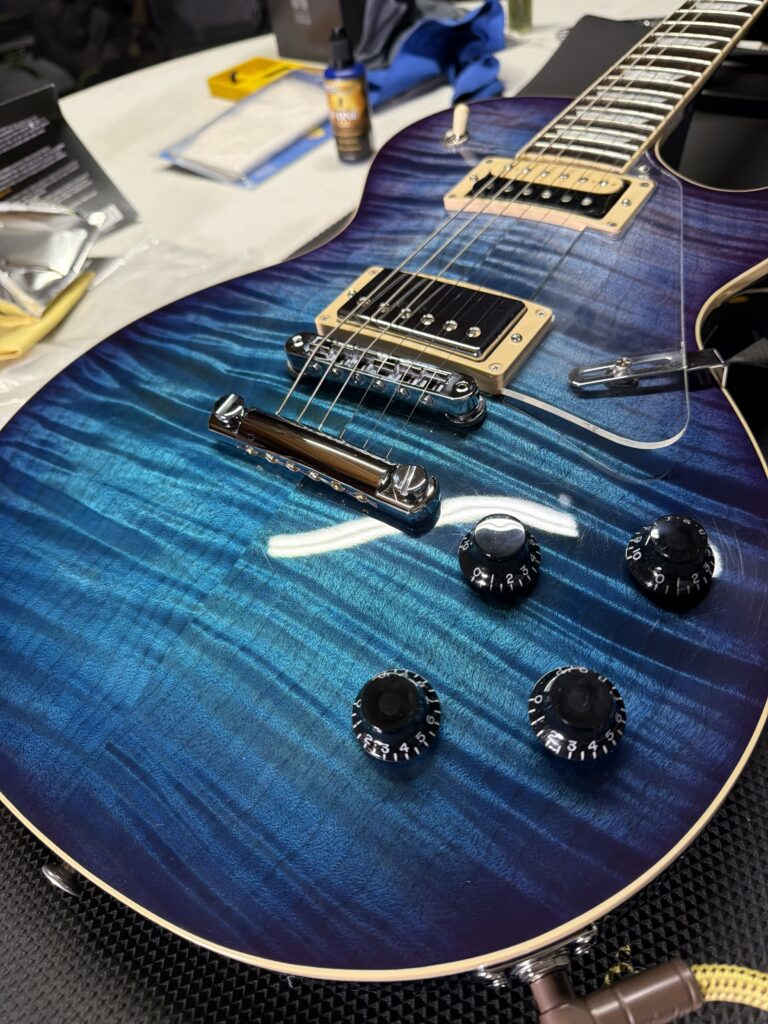
    guitar maintenance
    Cleaning day and new strings

    Welcome to the Gear Section of Should I Buy This Crap?

    If you’ve made it here, there’s a good chance you play guitar.

    And if you play guitar, there’s also a good chance you’ve convinced yourself at least once that the next piece of gear would finally make you sound like your favorite guitarist.

    How’d that work out?

    Yeah.

    Me too.

    Welcome to the wonderful world of G.A.S.

    Not the digestive kind, although guitar players are certainly old enough for that to become a concern too.

    I’m talking about Gear Acquisition Syndrome.

    The incurable condition where a guitarist with six guitars believes seven would be the correct number.

    The illness where someone with twelve overdrive pedals suddenly becomes convinced that pedal number thirteen possesses magical properties unavailable to modern science.

    The disorder that causes otherwise rational adults to explain to their spouses why they absolutely needed a guitar stand made from aircraft-grade unobtainium instead of the perfectly functional one already sitting in the corner.

    This section is dedicated to all of that wonderful nonsense.


    The Search For Tone

    Every guitarist eventually learns a difficult truth.

    The perfect tone doesn’t exist.

    Oh sure.

    You can get close.

    Really close.

    Then you’ll hear somebody on YouTube playing through a guitar you’ve never heard of, into an amp you can’t afford, through a pedal that was discontinued three years ago and now costs more used than it did new.

    Then the cycle begins again.

    The pursuit of tone is a lot like chasing a squirrel.

    You might catch it.

    But then you’ll immediately notice another squirrel.


    The Guitar Hierarchy Of Needs

    Most guitar players follow a surprisingly predictable path.

    Phase 1

    “I just need a guitar.”

    Phase 2

    “I should probably get an amp.”

    Phase 3

    “Maybe one overdrive pedal.”

    Phase 4

    “Well, technically this fuzz pedal is completely different.”

    Phase 5

    “These seven pedals all serve unique purposes.”

    Phase 6

    “I can quit buying gear anytime I want.”

    Phase 7

    Researching custom-shop instruments at three in the morning while pretending it’s educational.


    What’s Actually Worth Buying?

    One thing I’ve learned over the years is that not all guitar gear is created equal.

    Some products genuinely improve your playing experience.

    Some products solve real problems.

    Some products become trusted companions you use for decades.

    Other products exist primarily to separate guitar players from money.

    I’ll do my best to help you identify which is which.

    Every review in this section comes from actual ownership, actual use, and actual experience.

    That means you’ll get:

    • The good stuff
    • The bad stuff
    • The weird stuff
    • The stuff manufacturers would rather nobody mention

    If something is great, I’ll tell you.

    If something is overrated crap, I’ll tell you that too.


    My Philosophy On Guitar Gear

    The best gear isn’t always the most expensive.

    The best gear is the gear that makes you want to play.

    That’s it.

    A $500 guitar that makes you pick it up every day is better than a $10,000 guitar that spends its life decorating a wall.

    A simple overdrive pedal that inspires you is worth more than a boutique pedalboard full of confusion.

    And a reliable guitar stand that doesn’t eat your finish is worth its weight in gold.

    I’m far more interested in equipment that survives years of ownership than equipment that impresses somebody during a ten-minute demo.


    Some Hard Truths

    Let’s save everyone some time.

    You Probably Don’t Need Another Guitar.

    You probably want another guitar.

    Those are not the same thing.

    Nobody In The Audience Cares About Your Pickups.

    They care whether the song sounds good.

    Practicing Frequently Beats Buying Gear Frequently.

    Unfortunately, that advice is free and therefore unpopular.

    One More Pedal Will Not Turn You Into Jimmy Page.

    Trust me.

    Many of us have conducted extensive and expensive research on this topic.


    Reviews You’ll Find Here

    This section includes reviews and ownership reports covering:

    Electric Guitars

    Because apparently one Les Paul is never enough.

    Acoustic Guitars

    The instruments we buy to play quietly and somehow end up buying microphones for.

    Amplifiers

    Big boxes that transform electricity into happiness.

    Pedals

    Tiny boxes that transform happiness into empty bank accounts.

    Accessories

    Stands, straps, tuners, picks, cases, and all the other things we swear we’ll stop buying someday.


    Official Guitar Dad Disclaimer

    ShouldIBuyThisCrap.com cannot be held responsible for:

    • Additional guitar purchases
    • Unexpected amplifier acquisitions
    • Pedalboard growth
    • Obsessive tone chasing
    • Learning about discontinued gear you now desperately want
    • Sudden urges to play AC/DC riffs for two hours
    • Explaining Reverb purchases to your spouse

    If symptoms persist for more than four hours, purchase another guitar and call it a collection.


    Final Thought

    At the end of the day, gear isn’t the goal.

    Music is.

    The gear is just the fun pile of crap we accumulate along the way.

    So grab a guitar.

    Play something badly.

    Then play it a little better tomorrow.

    And if a cool piece of gear helps you enjoy the journey, well…

    That’s exactly the kind of crap we’re here to talk about.

  • Mesa/Boogie Grid Slammer Review

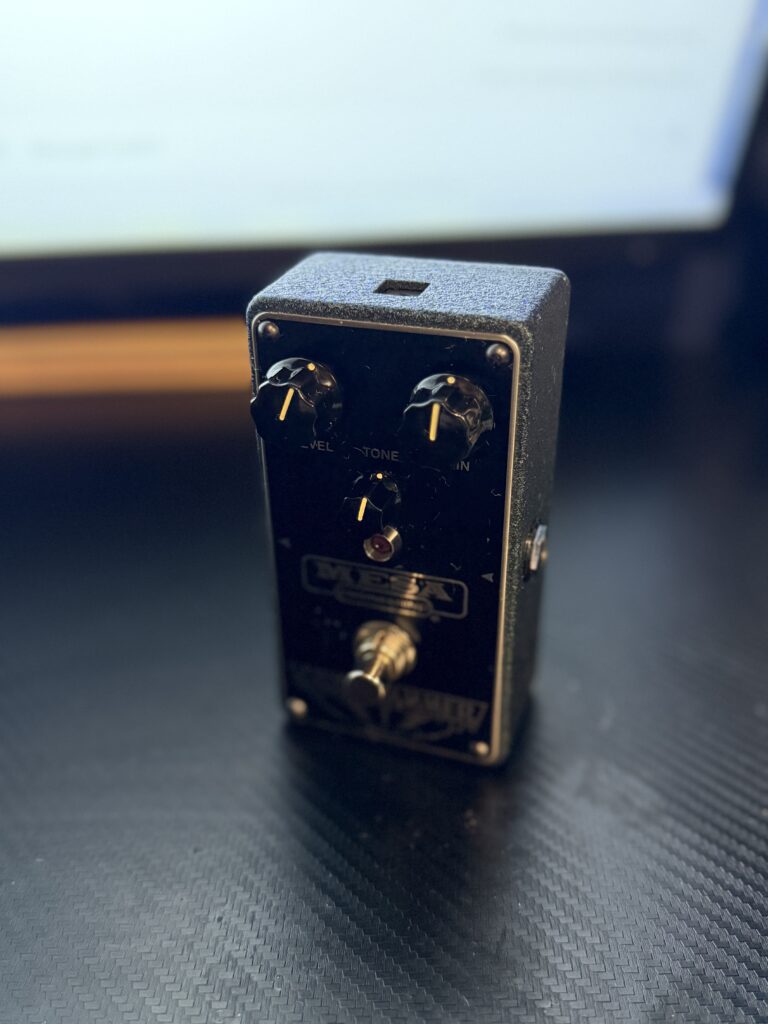
    Mesa/Boogie Grid Slammer
    Mesa/Boogie Grid Slammer

    The Mesa Grid Slammer was my gateway drug.

    Not to anything illegal.

    Just to guitar pedals.

    Before this little metal box showed up, I was firmly in the camp of:

    “I already have a dirty channel on my amp. Why do I need another dirty channel in a box?”

    Then I plugged in the Grid Slammer.

    Turns out the answer was:

    Because pedals do things amps can’t.

    Or at least not the same way.

    You can have twelve knobs.

    You can have a graphic EQ.

    You can have multiple gain channels.

    You can spend an entire afternoon trying to dial in the perfect tone.

    Then you step on the Grid Slammer and suddenly your amp starts making noises it never made before.

    I’m convinced the amount of fun produced by a handful of switches and electronic components in this little enclosure would be considered contraband in at least a few authoritarian countries.


    💩 Poop Rating

    💩💩 2 Poops

    Good crap.

    Not because it isn’t fantastic.

    It’s fantastic.

    The only reason it doesn’t earn a perfect one-poop score is because it’s a specialized flavor of awesome rather than a universal recommendation for every guitarist on earth.

    For blues, classic rock, and pushing an already good amp into greatness?

    This thing absolutely slaps.


    Why This Review Matters

    If you’re researching:

    • Mesa Grid Slammer Review
    • Mesa Boogie Grid Slammer
    • Grid Slammer vs Tube Screamer
    • Best overdrive for Les Paul
    • Mesa pedal review
    • Blues overdrive pedal
    • Classic rock overdrive pedal

    this review combines long-term ownership with current market research.


    My Introduction To Pedal Mania

    The Grid Slammer was the first pedal that made me understand why guitar players end up with giant pedalboards that resemble NASA mission control centers.

    Before this pedal, I thought overdrive was overdrive.

    After this pedal, I understood that there’s a whole world of gain textures, clipping characteristics, frequencies, boosts, saturation, and tone shaping hidden beneath the surface.

    It’s a dangerous realization.

    The Grid Slammer wasn’t just a pedal purchase.

    It was the beginning of a very expensive education.


    What Does It Actually Sound Like?

    Mesa describes the Grid Slammer as their take on the classic Screamer-style overdrive, and that’s true as far as it goes.

    But that description feels incomplete.

    The Grid Slammer doesn’t sound like somebody photocopied a Tube Screamer and painted it silver.

    It sounds bigger.

    More open.

    More aggressive in the upper mids.

    More vocal.

    More willing to step forward and announce its presence.

    When you hit a note, it wants people to hear it.

    That upper-mid push makes solos jump out of a mix beautifully.

    It’s one of those pedals that can make a guitar sound like it suddenly found confidence.


    Les Paul Owners, Pay Attention

    This pedal absolutely loves a Les Paul.

    Mine certainly does.

    The Grid Slammer takes that thick humbucker growl and gives it extra attitude.

    The low strings become more focused.

    Single notes start barking.

    Lead lines gain sustain and presence without turning into mush.

    A good Les Paul already sounds mean.

    The Grid Slammer sounds like it’s encouraging bad behavior.

    And I mean that as a compliment.


    Blues And Classic Rock Heaven

    This is where I think the pedal shines brightest.

    Blues.

    Classic rock.

    Roots rock.

    Hard rock.

    Anything that benefits from touch sensitivity and dynamic response.

    Roll back your guitar volume and it cleans up beautifully.

    Dig in with the pick and it growls back.

    That’s one of my favorite things about it.

    The Grid Slammer doesn’t feel like you’re switching between clean and distortion.

    It feels like you’re controlling the personality of the amp with your hands.


    “But I Already Have A Dirty Channel”

    I did too.

    That’s what makes this pedal so impressive.

    Most people assume a gain pedal is simply another version of a dirty channel.

    The reality is much more interesting.

    The Grid Slammer can add characteristics your amp never had.

    Different attack.

    Different compression.

    Different midrange focus.

    Different response to picking dynamics.

    It doesn’t replace the amp.

    It changes the conversation.

    And that’s why pedals continue to exist despite modern amplifiers becoming increasingly sophisticated.


    Built Like A Tank

    Mesa didn’t exactly build this thing to survive life in a display case.

    The enclosure is solid.

    The switching feels substantial.

    The controls feel sturdy.

    And perhaps most importantly:

    Mine still works exactly like it did when I bought it.

    No weird noises.

    No intermittent switches.

    No failing pots.

    No mysterious electronic drama.

    Just years of reliable service.

    That’s what I expect from Mesa, and the Grid Slammer delivers.


    The Value Situation Has Changed

    This is one area where I disagree with some of the market assessments.

    A lot of valuation guides still treat the Grid Slammer like a fairly ordinary used overdrive pedal.

    That may have been true once.

    I’m not convinced it’s true now.

    The pedal has become increasingly difficult to find through normal retail channels.

    It’s sold out nearly everywhere.

    And as availability has dried up, used prices have started climbing.

    I’ve personally seen examples listed on Reverb in the $270–$300 range, which would have sounded insane a few years ago.

    Now?

    Not so much.

    Would I tell someone to pay that much if they’re simply looking for a practical overdrive?

    No.

    There are other excellent options.

    But if someone specifically wants a Grid Slammer?

    The market appears to have noticed they’re not getting easier to find.

    The funny part is that some used examples are now worth more than the original new retail price.

    That’s not something you see every day with guitar gear.


    How It Compares To The Competition

    The Grid Slammer lives in a crowded category.

    You have:

    • Tube Screamers
    • Maxon OD808s
    • BOSS SD-1s
    • EarthQuaker Plumes
    • Dozens of boutique clones

    Most of them are good.

    Some of them are excellent.

    What keeps the Grid Slammer relevant is that it doesn’t sound generic.

    It’s got that Mesa personality.

    The upper-mid focus.

    The openness.

    The ability to push an amp without turning everything into compressed fuzz paste.

    It’s not necessarily better than every alternative.

    It’s just distinctly itself.

    And in a pedal market flooded with copycats, that’s valuable.


    Who Should Buy One?

    Buy a Grid Slammer if:

    • You play blues
    • You play classic rock
    • You play hard rock
    • You own a Les Paul
    • You love expressive overdrive
    • You want to push an amp harder
    • You enjoy dynamic, touch-sensitive pedals
    • You appreciate Mesa build quality

    Look elsewhere if:

    • You need metal distortion from the pedal alone
    • You want a transparent boost
    • You need extensive EQ controls
    • You want the cheapest Screamer-style pedal possible

    Pros & Cons

    ✅ Pros

    • Fantastic blues and classic rock tones
    • Excellent with Les Pauls and humbuckers
    • Great dynamic response
    • Strong upper-mid presence
    • Cuts through a mix beautifully
    • Built like a tank
    • Made in the USA
    • True bypass
    • Works as both overdrive and boost
    • Still performs flawlessly after years of ownership
    • Makes you want to buy more pedals

    ❌ Cons

    • Increasingly difficult to find
    • Used prices keep climbing
    • Limited tone-shaping controls
    • Not a high-gain monster
    • Can become mid-heavy in the wrong rig
    • May start an expensive pedal addiction

    Final Verdict

    The Mesa Grid Slammer wasn’t just my introduction to pedals.

    It was the pedal that taught me why pedals matter.

    It sounds fantastic.

    It’s built exceptionally well.

    It has survived years of use without complaint.

    And it continues to do things my amplifier simply can’t reproduce by itself.

    That’s not because the pedal is replacing the amp.

    It’s because it’s expanding what the amp can become.

    If you love blues, classic rock, expressive lead work, and the unmistakable sound of a guitar pushing back when you dig into it, the Grid Slammer remains one of Mesa’s best pedal designs.

    Even all these years later.


    Final Poop Score

    💩💩 2/4 Poops

    Good crap.

    A little metal box full of fun, sustain, growl, and questionable financial decisions.

    The pedal that taught me a simple truth:

    You don’t buy your first overdrive pedal because you need it.

    You buy your tenth one because of your first. 🎸💩

  • This Measure Is Total Crap: Why Colorado Should Reject the “Biological Sex” Sports Ban

    Fairnessandsport
    Fairness in Sport

    Colorado’s ballot this November is packed with issues, but one of them smells… well… like total crap. I’m talking about the proposal to force all school sports to be divided strictly by “biological sex.” Supporters claim it’s about fairness. My own life says it’s about fragile egos, outdated thinking, and a whole lot of steaming nonsense.

    I grew up in the early 90s. Our football team had a girl on it. Not a mascot. Not a novelty. Not a “statement.” She was there because she could kick the ball better than any of us. Period.

    And people gave her crap for it.

    Not because she was dangerous.
    Not because she broke the game.
    Not because she had some magical advantage.

    They gave her crap because she was a girl succeeding in a space some guys thought belonged exclusively to them.

    That’s the part nobody wants to admit.

    The resentment wasn’t about fairness.
    It was about ego — and that ego was the real turd on the field.

    Let’s be honest: this measure is a polished turd
    The organizations pushing this measure aren’t coaches, athletes, or people who’ve spent their lives building youth sports. They’re national political groups who discovered that “transgender sports” makes for a convenient wedge issue. They write one law, copy‑paste it into multiple states, and hope voters don’t notice the smell.

    But the emotional fuel behind it?
    That comes from the same place I saw in high school — the fear of being beaten by someone you didn’t expect to beat you.

    I can’t help but imagine some guy, decades ago, getting outplayed by a girl, and instead of processing it like a normal human, he carried that bruise into adulthood. Now he’s trying to legislate away the possibility of ever feeling that again.

    This isn’t about protecting sports.
    It’s about protecting feelings — and those feelings are, frankly, crappy.

    What this measure actually does (spoiler: more crap)
    If this law had existed in the 90s, the girl on my team — the one who earned her spot — would’ve been banned. Not because she wasn’t good enough. Not because she posed any risk. But because someone else’s discomfort mattered more than her ability.

    This measure would:

    Ban girls from boys’ teams even when they’re the best option

    Ban trans kids from playing with their peers

    Override local schools, coaches, and athletic associations

    Turn sports into a political battlefield instead of a place for kids to grow

    It’s a solution in search of a problem — and it punishes the wrong people.

    In ShouldIBuyThisCrap terms:
    This is the kind of crap that clogs the pipes and makes everyone’s day worse. 4/4 Craps. Really Shitty

    Sports should be about opportunity, not exclusion
    Youth sports teach teamwork, confidence, discipline, and resilience. They give kids a place to belong. They help them grow. They create memories that last decades — I’m still talking about mine.

    This measure takes all of that and replaces it with fear, gatekeeping, and political theater.

    Colorado doesn’t need a law that tells kids they don’t belong.
    We need coaches who lift them up, teammates who support them, and communities that recognize talent wherever it appears.

    If a kid can play, let them play.
    That’s fairness.
    That’s sports.
    That’s Colorado.
    And this measure?

    This measure is total crap.

    Final note
    As always, voters should confirm ballot details with trusted sources like the Colorado Secretary of State. But as someone who lived the reality this measure claims to address, I’m asking Coloradans to look past the talking points and recognize this proposal for what it is: a polished turd with a political bow on top.

  • Hoover SmartWash Pet Complete Review: The Carpet Cleaner That Couldn’t Make It To Retirement

    I wanted to like this machine.

    Seriously.

    On paper, the Hoover SmartWash Pet Complete sounds brilliant. Automatic detergent dispensing, push forward to wash, pull backward to dry, removable brushes, upholstery tools, pet-focused marketing, and a five-year warranty.

    It checks all the boxes.

    Unfortunately, I ended up using that warranty more than I’d have liked.

    Twice.

    The First Impression Is Great

    I’ll give Hoover credit where it’s due.

    The SmartWash is easy to use.

    You don’t need to hold a trigger. You don’t need to measure cleaning solution. You don’t need to remember which button does what.

    You push it forward and it washes.

    You pull it back and it dries.

    It’s one of the most user-friendly carpet cleaners I’ve owned, and for the first few cleaning sessions I thought I’d found a winner.

    Then the leaks started.

    The Reliability Problem

    Over the course of the five-year warranty period, I went through two of these machines.

    Not one.

    Two.

    Both eventually developed leaking issues, and by the time the second machine started showing the same behavior I had absolutely no interest in rolling the dice on a third replacement.

    At some point you stop asking if you got unlucky and start wondering if the machine simply isn’t built for the long haul.

    The warranty did its job.

    The product didn’t.

    It Never Cleaned As Well As I Wanted

    This is where my experience differs from a lot of the glowing reviews you’ll find online.

    Did it clean carpets?

    Sure.

    Did it clean them well?

    Mostly.

    Did it leave me impressed?

    Not really.

    Compared to my Bissell carpet cleaner, the difference wasn’t even close.

    The Bissell leaves carpets looking fresh, feeling clean, and drying in a reasonable amount of time. After using it, the carpet actually feels like dirt was removed.

    The Hoover often felt like it was just moving stains around and adding water to the situation.

    Some spots would improve.

    Other spots would spread out into larger, lighter versions of themselves.

    Technically that’s progress, I suppose.

    But it’s not exactly the result I was hoping for.

    Everything Always Felt Too Wet

    The SmartWash advertises drying functionality, and technically it has it.

    The problem is that the carpets always seemed wetter than I expected.

    Maybe the extraction wasn’t as strong as it needed to be.

    Maybe it was the way I was using it.

    Maybe both.

    What I do know is that my Bissell consistently leaves less water behind and produces better-looking results.

    For a machine whose entire purpose is washing carpets, that’s kind of an important detail.

    The Good Stuff

    To be fair, it isn’t all bad.

    The automatic operation is genuinely convenient.

    The hose attachments are useful.

    The removable brushes make cleaning the machine easier than many competitors.

    Assembly is simple.

    Storage is reasonable.

    If the machine lasted forever, I’d probably have a much higher opinion of it.

    Unfortunately, it didn’t.

    Final Verdict

    The Hoover SmartWash Pet Complete isn’t a terrible carpet cleaner.

    It’s worse.

    It’s a disappointing one.

    Because for a little while it convinces you that it’s really good.

    Then the leaks show up.

    Then the reliability concerns show up.

    Then you compare the results to a better machine and start noticing your carpets aren’t actually getting as clean as you thought.

    By the time my second warranty replacement started having issues, I’d reached my limit.

    There won’t be a third Hoover in my house.

    I’ll stick with the Bissell.

    Poop Rating 💩💩💩💩💩

    Final Poop Score: 💩💩💩 (3 / 4 Craps)

    The Hoover SmartWash Pet Complete earns 3 Craps.

    Not because it completely failed.

    Not because it never worked.

    Because it worked just well enough to be frustrating.

    The first few uses are promising. The automatic cleaning system is convenient. The attachments are useful.

    Then the leaks arrive.

    Then you’re filing warranty claims.

    Then you’re wondering why a carpet cleaner spreads some stains around better than it removes them.

    I’ve owned two of them.

    That was enough research for me.

    Final Verdict: 💩💩💩

    It cleans carpets, leaks eventually, and left me wishing I’d just used the Bissell in the first place.