Tag: Popular

  • Las Vegas: Slotzilla Review

    SlotZilla Zip Line: Flying Like Superman Over Fremont Street

    Las Vegas is full of attractions promising the experience of a lifetime. Some deliver. Some separate you from your money in record time.

    SlotZilla fortunately falls into the first category.

    Located at the eastern end of the Fremont Street Experience, SlotZilla launches riders high above downtown Las Vegas and sends them soaring beneath the massive Viva Vision canopy. The attraction opened in 2014 and has become one of the signature experiences of old Vegas. [visitlasvegas.city], [fremontstr…rience.com]

    The giant launch tower is built to resemble an oversized slot machine complete with showgirls, dice, martini glasses, and enough neon-inspired nonsense to fit perfectly into Fremont Street’s personality. It’s ridiculous.

    It’s also a blast.

    My Experience

    I’ll be honest, I loved the ride.

    As somebody who spends plenty of time doing normal adult things like paying bills, fixing stuff, and wondering where the weekend disappeared to, SlotZilla was a refreshing reminder that sometimes it’s fun to do something completely ridiculous.

    My first thought standing on that platform wasn’t excitement.

    It was:

    “Holy crap, I hope that teenager hooking up my harness knows what they’re doing.”

    A few seconds later that thought became:

    “HOLY CRAP, I’M FLYING LIKE SUPERMAN!”

    And honestly? That feeling alone was worth the price of admission.

    For a minute or two, you’re not thinking about schedules, errands, work. You’re just flying over Fremont Street having a blast.

    If you’ve gotten a little too comfortable with the routine of everyday life, I’d recommend giving it a try.

    The Ride Options

    SlotZilla offers two experiences. The standard Zip Line launches riders from approximately 77 feet above the street in a seated position. The higher Zoomline launches riders around 114 feet above the street in a face-down Superman-style flight that travels the entire Fremont Street Experience. [fremontstr…rience.com], [fremontstr…rience.com]

    If you’re already committing to being suspended above downtown Las Vegas by cables and engineering, I’d strongly recommend the Superman-style Zoomline.

    Go big.

    The Part That Sucked

    The ride was awesome.

    The operation wasn’t.

    We had 8:00 PM reservations.

    We arrived around 7:45 PM.

    We didn’t actually ride until nearly 11:00 PM.

    Three hours.

    Three.

    Hours.

    Apparently reservations and actual ride times are only loosely acquainted with one another.

    Nobody enjoys standing around Fremont Street for several hours wondering whether they’re about to fly through the air or simply become part of the local scenery.

    To their credit, we did not become pancakes on Fremont Street, so the safety side of things appears to be working.

    The scheduling side? That could use some attention.

    Save Your Money

    Here’s the part I wish somebody had told me before we booked.

    When we visited, our evening reservation tickets were roughly $80 per person.

    Meanwhile, daytime visitors had access to pass options that cost substantially less and allowed multiple rides before the evening rush started.

    If you’re visiting primarily for the thrill and don’t absolutely need the nighttime light show, it’s worth comparing ticket options before buying. The night ride was incredible, but I’d seriously look at the daytime passes next time.

    A Quick Zipline History Lesson

    Most people assume ziplines were invented for tourists with a questionable understanding of risk management.

    Not exactly.

    The concept dates back centuries. Early ropeway systems were used in mountainous regions of Asia to move people and supplies across difficult terrain. Similar systems later appeared in military and industrial applications long before anyone thought about charging tourists to fly through forests for fun. [en.wikipedia.org], [everything…ined.today]

    Modern recreational ziplining owes a surprising amount to researchers working in tropical forests. Scientists developed canopy-access systems to study wildlife high above the jungle floor, and those systems eventually evolved into the commercial zipline attractions that spread around the world. [nszipline.com], [coloradozipline.net]

    Most modern ziplines showcase mountains, forests, rivers, and waterfalls.

    SlotZilla showcases neon signs, casinos, and poor financial decision-making.

    And somehow that works perfectly.

    Reservations and Tickets

    Before purchasing, I’d compare prices directly from the source before using any third-party reseller:

    Many Las Vegas attraction sites and travel portals resell the same tickets, sometimes with added fees or limited availability. Checking the official source first can save both money and frustration.

    Final Crap Rating®

    💩💩 (2/4 Craps)

    The ride itself is outstanding.

    The wait times and operations can be frustrating.

    That’s how you end up with a middle score.

    If I’m rating only the flight experience, SlotZilla is flirting with a 1 Crap rating. It’s uniquely Vegas, genuinely exciting, and one of the few tourist attractions I’ve done where the smile lasted longer than the receipt.

    But when you’re standing around for three hours after making a reservation, that’s hard to ignore.

    Should You Buy This Crap?

    Yeah.

    Just bring your patience with you.

    You may spend several hours wondering if you’ll ever get on the ride, followed by sixty seconds wondering why humans were ever allowed to fly in the first place. Somehow, despite the wait, I’d absolutely do it again.


  • This Measure Is Total Crap: Why Colorado Should Reject the “Biological Sex” Sports Ban

    Fairnessandsport
    Fairness in Sport

    Colorado’s ballot this November is packed with issues, but one of them smells… well… like total crap. I’m talking about the proposal to force all school sports to be divided strictly by “biological sex.” Supporters claim it’s about fairness. My own life says it’s about fragile egos, outdated thinking, and a whole lot of steaming nonsense.

    I grew up in the early 90s. Our football team had a girl on it. Not a mascot. Not a novelty. Not a “statement.” She was there because she could kick the ball better than any of us. Period.

    And people gave her crap for it.

    Not because she was dangerous.
    Not because she broke the game.
    Not because she had some magical advantage.

    They gave her crap because she was a girl succeeding in a space some guys thought belonged exclusively to them.

    That’s the part nobody wants to admit.

    The resentment wasn’t about fairness.
    It was about ego — and that ego was the real turd on the field.

    Let’s be honest: this measure is a polished turd
    The organizations pushing this measure aren’t coaches, athletes, or people who’ve spent their lives building youth sports. They’re national political groups who discovered that “transgender sports” makes for a convenient wedge issue. They write one law, copy‑paste it into multiple states, and hope voters don’t notice the smell.

    But the emotional fuel behind it?
    That comes from the same place I saw in high school — the fear of being beaten by someone you didn’t expect to beat you.

    I can’t help but imagine some guy, decades ago, getting outplayed by a girl, and instead of processing it like a normal human, he carried that bruise into adulthood. Now he’s trying to legislate away the possibility of ever feeling that again.

    This isn’t about protecting sports.
    It’s about protecting feelings — and those feelings are, frankly, crappy.

    What this measure actually does (spoiler: more crap)
    If this law had existed in the 90s, the girl on my team — the one who earned her spot — would’ve been banned. Not because she wasn’t good enough. Not because she posed any risk. But because someone else’s discomfort mattered more than her ability.

    This measure would:

    Ban girls from boys’ teams even when they’re the best option

    Ban trans kids from playing with their peers

    Override local schools, coaches, and athletic associations

    Turn sports into a political battlefield instead of a place for kids to grow

    It’s a solution in search of a problem — and it punishes the wrong people.

    In ShouldIBuyThisCrap terms:
    This is the kind of crap that clogs the pipes and makes everyone’s day worse. 4/4 Craps. Really Shitty

    Sports should be about opportunity, not exclusion
    Youth sports teach teamwork, confidence, discipline, and resilience. They give kids a place to belong. They help them grow. They create memories that last decades — I’m still talking about mine.

    This measure takes all of that and replaces it with fear, gatekeeping, and political theater.

    Colorado doesn’t need a law that tells kids they don’t belong.
    We need coaches who lift them up, teammates who support them, and communities that recognize talent wherever it appears.

    If a kid can play, let them play.
    That’s fairness.
    That’s sports.
    That’s Colorado.
    And this measure?

    This measure is total crap.

    Final note
    As always, voters should confirm ballot details with trusted sources like the Colorado Secretary of State. But as someone who lived the reality this measure claims to address, I’m asking Coloradans to look past the talking points and recognize this proposal for what it is: a polished turd with a political bow on top.

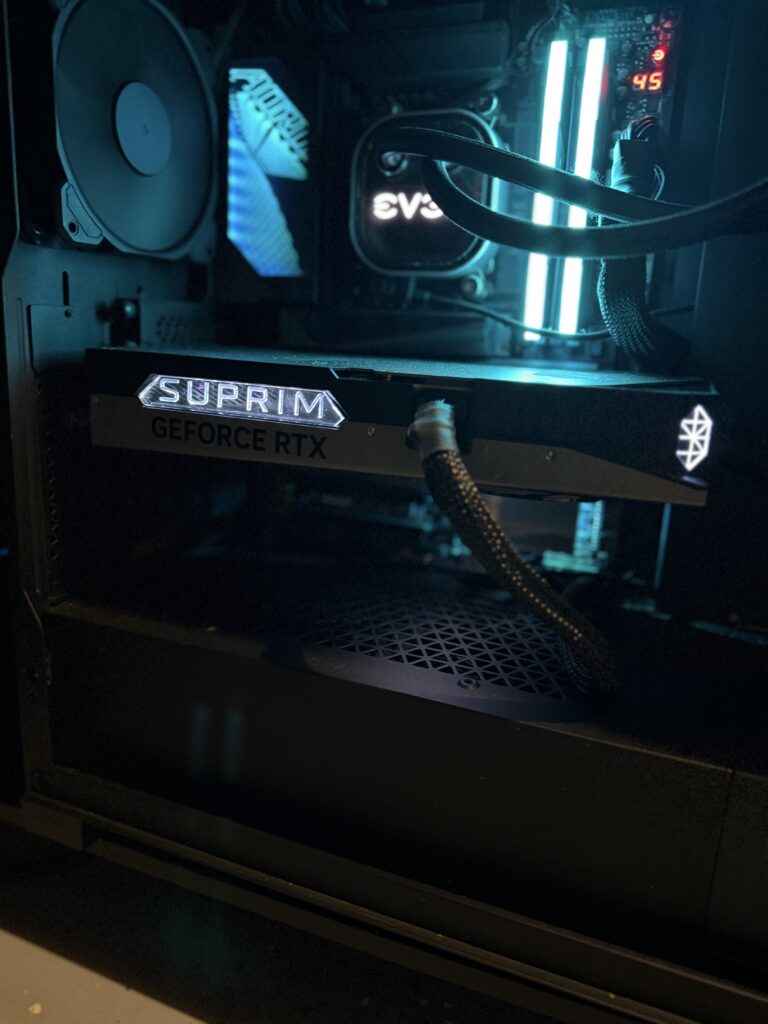
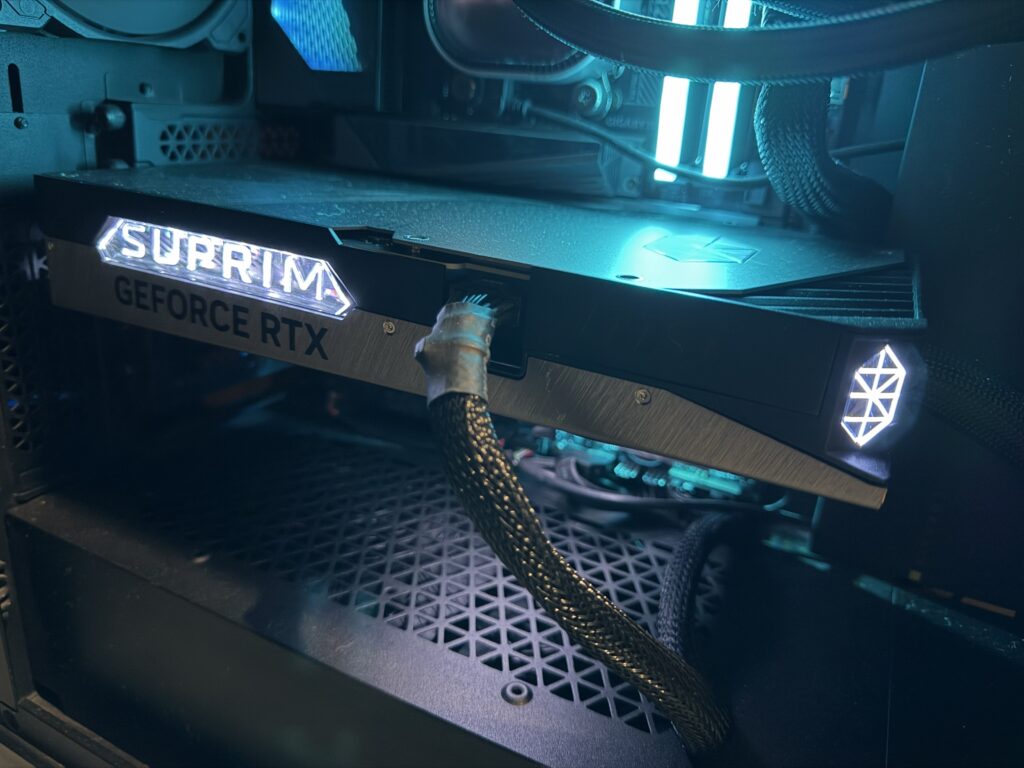
  • MSI Liquid Suprim 5090 Review:

    5090 MSI Liquid Suprim

    I hate this thing.

    Not because it’s bad. Quite the opposite. I hate it because every time I look at my credit card statement I briefly consider whether I could have bought a decent used car instead.

    The MSI RTX 5090 SUPRIM LIQUID SOC costs an absolutely stupid amount of money. Nobody should be comfortable spending this much on a graphics card. I certainly wasn’t. Even now I occasionally stare at it and wonder what exactly was wrong with my perfectly functional RTX 2080 Ti.

    Then I actually use it.

    And unfortunately that’s where my argument falls apart.

    The Upgrade From a 2080 Ti Is Ridiculous

    Going from the 2080 Ti to the 5090 isn’t an upgrade. It’s more like skipping several generations of hardware evolution and landing in the future.

    Games obviously run better, but honestly that’s the least interesting thing about this card.

    What surprised me most was how useful the 32GB of VRAM became once I started running local AI models, generating images, rendering projects, and experimenting with workflows that simply weren’t practical on my older hardware.

    Tasks that used to make my system groan now finish before I’ve had a chance to complain about them. In some cases the GPU can produce results faster than I can come up with the next thing to do.

    That’s a weird problem to have.

    Gaming Is Almost An Excuse

    Let’s get this out of the way.

    If your primary goal is gaming, buy a 5080.

    Seriously.

    The 5080 already pushes absurd frame rates, handles ray tracing well, and has enough performance for the vast majority of gamers. Spending the extra money on a 5090 purely for more FPS starts entering the realm of diminishing returns.

    Will the 5090 be faster?

    Of course.

    Will it be thousands-of-dollars-faster?

    Absolutely not.

    The 5090 only starts making sense when you’re using it for more than gaming.

    This Card Feels Like Hiring An Assistant

    The best way I can describe the 5090 is that it doesn’t feel like a hardware purchase.

    It feels like hiring an employee.

    Rendering jobs complete sooner.

    AI image generation runs faster.

    Local language models respond faster.

    Video exports finish faster.

    Everything that relies heavily on GPU acceleration simply gets out of my way.

    The card doesn’t make me work harder. It makes me spend less time waiting.

    Over weeks and months that time adds up quickly, especially if you’re constantly creating content, experimenting with AI tools, or working on projects that would otherwise leave your machine grinding away for hours.

    The Cooling Is Brilliant

    MSI’s SUPRIM LIQUID cooler is complete overkill.

    Which is exactly what you want on a 600-watt monster.

    Temperatures stay impressively low, noise levels remain reasonable, and the card avoids becoming the miniature space heater you’d expect from something drawing this much power.

    You do need room for the radiator, and installation is more involved than a traditional air-cooled card, but that’s the tradeoff for keeping a flagship GPU under control.

    The Price Still Hurts

    I wish I could tell you this card is great value.

    It isn’t.

    It’s a luxury item.

    A very fast luxury item.

    The painful reality is that cheaper RTX 5090s produce nearly the same performance. You’re paying extra for MSI’s premium design, liquid cooling solution, and enthusiast appeal.

    Whether that’s worth it is entirely up to your wallet.

    Mine is still filing complaints.

    Final Poop Score: 💩💩 (2 / 4 Craps)

    The MSI RTX 5090 SUPRIM LIQUID SOC earns 2 Craps.

    Not because it’s slow. Not because it’s loud. Not because MSI did anything wrong.

    It gets 2 Craps because every time I look at the purchase price, a small part of me dies.

    The card itself is phenomenal. The cooling is excellent, the performance jump from my 2080 Ti was enormous, and for AI, rendering, local models, and content creation it honestly feels less like a GPU and more like an extra employee working inside my computer.

    The problem is the cost.

    For gaming alone, I’d tell most people to buy a 5080 and keep the extra money. The 5090 only really starts making sense when you’re using it as a tool that saves you time and increases productivity.

    Do I regret buying it?

    My bank account says yes.

    My workflow says absolutely not.

    Final Verdict: 💩💩
    An outrageously expensive masterpiece.

    Final Verdict

    The MSI RTX 5090 SUPRIM LIQUID SOC is one of the best graphics cards I’ve ever owned and one of the most painful purchases I’ve ever made.

    The performance jump from my RTX 2080 Ti was massive. For gaming it’s incredible, but gaming alone isn’t enough to justify the cost. The real value comes from productivity, rendering, AI workloads, and anything else that can take advantage of the absurd amount of compute power on offer.

    If all you want is more frames in games, buy a 5080 and enjoy having money left over.

    If you spend your days rendering, generating AI content, running local models, or creating things professionally, the 5090 starts looking less like a graphics card and more like an investment in your workflow.

    I still think it’s outrageously expensive.

    I also have absolutely no intention of going back.

    5090 MSI Liquid Suprim
  • Mesa Verde National Park & Far View Lodge Review

    Cliff Palace
    Cliff Palace Mesa Verde National Park

    ⚠️ Buy Tour Tickets ONLY From The National Park Service

    Before we get into the review, let’s talk about something that annoyed the crap out of me.

    Mesa Verde’s guided tours are one of the biggest reasons to visit the park.

    Unfortunately, there are third-party resellers and tour brokers out there charging absolutely ridiculous markups for reservations that originate with the National Park Service.

    Most official cliff dwelling tours cost about $8 per person through the National Park Service reservation system.

    I’ve seen third-party offerings charging well over $100, and occasionally much more, for essentially the same access.

    Don’t do that.

    Buy directly from the source:

    Official Reservation Site

    National Park Service

    Mesa Verde tour reservations are released through Recreation.gov and typically become available 14 days before the tour date at 8:00 AM Mountain Time.

    Popular tours include:

    • Cliff Palace
    • Balcony House
    • Long House
    • Square Tower House

    If you’re planning a visit during busy periods, set a reminder and book directly through the official system.

    Your wallet will thank you.

    And you’ll have more money left over for gas, food, souvenirs, or additional adventures instead of funding somebody else’s ticket-flipping side hustle.

    Now for the actual review!

    Every now and then you visit a place that reminds you how incredibly small you are.

    Mesa Verde is one of those places.

    I’ve been to beaches.

    I’ve been to mountains.

    I’ve been to famous tourist attractions.

    None of those hit quite the same way as standing in the presence of homes built by people who lived here hundreds of years before Columbus ever got lost looking for somewhere else.

    Mesa Verde isn’t just a national park.

    It’s a direct connection to an ancient civilization that once thrived among these cliffs and mesas.

    And that’s a humbling experience.

    Far View Lodge only enhances that feeling. No television. No meaningful cell service. A private balcony overlooking a landscape that stretches for miles without modern development cluttering the view.

    This isn’t luxury in the traditional sense.

    It’s something rarer:

    Silence.

    Darkness.

    Perspective.


    💩 Poop Rating

    💩 1 Poop

    Excellent crap.

    One of the most memorable travel experiences I’ve ever had.


    Why This Review Matters

    If you’re researching:

    • Mesa Verde National Park review
    • Far View Lodge review
    • Is Mesa Verde worth visiting?
    • Best national parks in Colorado
    • Cliff Palace tour review
    • Ancient Puebloan sites
    • Far View Lodge experience
    • Mesa Verde stargazing

    This review combines research with real-world visitor experience.


    The Humbling Factor

    Photographs don’t prepare you for Mesa Verde.

    Neither do documentaries.

    Neither do textbooks.

    Then you stand in front of Cliff Palace or Long House and realize:

    People actually lived here.

    Families were raised here.

    Meals were cooked here.

    Communities thrived here.

    Hundreds of years ago.

    It’s one thing to read history.

    It’s another thing entirely to stand inside it.

    That feeling alone makes the trip worthwhile.


    This Park Is Not For The Faint Of Heart

    And I mean that literally.

    Mesa Verde takes its tours seriously.

    Many of the most famous sites require:

    • Ladders
    • Steep trails
    • Uneven terrain
    • Narrow passages
    • Significant elevation changes
    • Moderate to strenuous hiking

    The rangers don’t simply wave everyone through and hope for the best.

    If a visitor cannot safely complete a particular tour, access may be denied.

    And honestly, that’s a good thing.

    These sites deserve protection, and visitors deserve honest expectations.

    If you expect every attraction to be a short walk from the parking lot, Mesa Verde may surprise you.

    Wear good shoes.

    Bring water.

    And leave the sandals at the hotel.

    Why Advanced Planning Matters

    Mesa Verde rewards people who plan ahead.

    The most popular tours can sell out quickly, especially:

    • Cliff Palace
    • Long House
    • Square Tower House

    If you’re serious about seeing the best archaeological sites, reserve directly through Recreation.gov as soon as your booking window opens.

    Paying $8 to the National Park Service feels a lot better than paying some reseller enough money to finance their next truck payment.

    Start of the guided tour at Cliff Palace

    The Rangers Are Outstanding

    National parks live and die by their staff.

    Mesa Verde’s ranger team was fantastic.

    Knowledgeable.

    Friendly.

    Professional.

    Entertaining.

    Most importantly, they clearly cared about the history they were sharing.

    Anyone can memorize facts.

    Not everyone can make a thousand-year-old civilization feel relevant and alive.

    The ranger-led tours added tremendous value to the trip.


    Wildlife Encounters

    Nature decided to put on a show during our visit.

    At one point we encountered a mother bear with cubs feeding on a kill only a few hundred feet from the road.

    That’s obviously not guaranteed.

    Wildlife doesn’t operate on a schedule.

    But it was a powerful reminder that Mesa Verde isn’t simply a giant outdoor museum.

    It’s still a living landscape.

    Sometimes that reality gets much closer than expected.

    Mama bear and cubs near road to park

    Far View Lodge Is Part Of The Experience

    Most people think of Far View Lodge as merely a place to sleep.

    I think that’s underselling it.

    The lodge is part of what makes Mesa Verde special.

    No television.

    No reliable cell coverage.

    No constant notifications.

    No social media rabbit holes.

    Just you and the landscape.

    And what a landscape it is.

    The private balcony ended up being one of my favorite features.

    The view goes on forever.

    Unlike much of modern America, there aren’t subdivisions, strip malls, billboards, or parking lots dominating the horizon.

    You simply sit and look.

    That may not sound exciting.

    In today’s world, it feels almost revolutionary.


    The Darkness Deserves Its Own Section

    Mesa Verde became an International Dark Sky Park for a reason.

    The darkness here is extraordinary.

    Not suburban darkness.

    Not small-town darkness.

    Actual darkness.

    The sort of darkness where stars stop being background decoration and become the main attraction.

    One thing I loved about Far View Lodge was being able to simply walk onto the balcony and look out into genuine darkness.

    There was one distant light visible far out on the horizon.

    It might have been an oil rig.

    It might have been aliens.

    At that distance, either explanation seemed equally plausible.

    Everything else was darkness.

    Beautiful darkness.

    The kind that’s becoming increasingly difficult to find.


    No Cell Service Was Actually A Benefit

    Normally hotels advertise faster internet and stronger connectivity.

    Far View Lodge accidentally sold me on the opposite.

    No TV.

    No cell service.

    No endless stream of distractions.

    What started as a minor inconvenience quickly became one of my favorite parts of the trip.

    It forced me to pay attention to where I was instead of staring at a screen.

    That sounds obvious.

    It’s also surprisingly rare.


    A Brief History Of Mesa Verde

    Mesa Verde was home to the Ancestral Puebloan people for centuries.

    Between roughly 600 and 1300 CE, communities established villages, developed agriculture, and eventually built the remarkable cliff dwellings that make the park famous today.

    Sites like:

    • Cliff Palace
    • Balcony House
    • Long House
    • Square Tower House

    remain among the most significant archaeological sites in North America.

    What makes Mesa Verde so powerful isn’t simply its age.

    It’s the preservation.

    You don’t just see ruins.

    You see evidence of actual lives once lived.


    Why A Return Visit Is Worth It

    Many national parks are essentially one-and-done experiences.

    Mesa Verde isn’t one of them.

    The common mistake is assuming you’ve “seen Mesa Verde” because you’ve visited Cliff Palace.

    Cliff Palace is incredible.

    But it’s only part of the story.

    A second trip opens up completely different experiences:

    • Long House
    • Square Tower House
    • Wetherill Mesa
    • Step House
    • Badger House Community
    • Petroglyph Point
    • Ranger astronomy programs
    • Dark-sky viewing

    In fact, if I returned tomorrow, I’d focus heavily on Wetherill Mesa.

    It feels noticeably different from the more famous sections of the park.

    Quieter.

    More isolated.

    More immersive.

    Exactly the kind of place that rewards repeat visitors.


    Fall Might Be The Sweet Spot

    After looking into a possible return trip, I suspect fall may actually be the ideal season.

    Why?

    • Cooler hiking temperatures
    • Fewer crowds
    • Better stargazing opportunities
    • Earlier darkness
    • More intimate atmosphere
    • Active ranger programs still running

    For Colorado residents, Far View Lodge occasionally offers surprisingly attractive local discounts late in the season, making a return trip even easier to justify.

    The combination of cooler weather, smaller crowds, and exceptional night skies sounds almost perfect.

    Mesa Verde National Park looking north east
    Roadside view leaving the park

    What Surprised Me Most

    I expected interesting history.

    I expected pretty scenery.

    I expected educational tours.

    What I didn’t expect was the emotional impact.

    Standing there looking at structures built centuries ago creates a strange sense of perspective.

    Your inbox feels less important.

    Your deadlines feel less important.

    Your daily frustrations feel less important.

    Meanwhile you’re standing in a place built by people whose story still matters hundreds of years later.

    That sticks with you.


    Pros & Cons

    ✅ Pros

    • One of the most unique historical sites in America
    • Incredible cliff dwellings
    • Outstanding ranger programs
    • Amazing dark-sky viewing
    • Excellent wildlife opportunities
    • Far View Lodge provides immersive park access
    • Private balconies with spectacular views
    • No TV distractions
    • Limited cell service actually improves the experience
    • Plenty of reasons for repeat visits
    • Deeply educational and humbling

    ❌ Cons

    • Long drives within the park
    • Many tours require physical effort
    • Summer heat can be intense
    • Limited dining options compared to town
    • Poor cell service
    • Not ideal for visitors with significant mobility limitations
    • Can spoil you for other historical attractions

    Final Verdict

    Mesa Verde isn’t simply a place you visit.

    It’s a place you experience.

    The history is remarkable.

    The scenery is remarkable.

    The wildlife is remarkable.

    And Far View Lodge keeps you immersed in that experience instead of sending you back to modern civilization every evening.

    Most vacations entertain you.

    Mesa Verde teaches you something.

    Not just about the Ancestral Puebloan people.

    About perspective.

    About time.

    And about how small our worries can seem when standing in the presence of something that has endured for centuries.


    Final Poop Score

    💩 1/4 Poops

    Excellent crap.

    Come for the cliff dwellings.

    Stay for the stars.

    Leave with a little more humility than you arrived with.

    And if Far View Lodge somehow convinces you that a lack of cell service is a luxury feature instead of a problem, don’t worry.

    You’re not alone. 🏛️🐻🌌💩

    Balcony House – Mesa Verde National Park
    Ancient Cliff Dwellings
  • Fruitables Crunchy Dog Treats

    Some dog treats get a polite tail wag.

    Some get a sniff before being reluctantly accepted.

    And then there are Fruitables.

    In my house, if I so much as touch a bag, my dogs appear from every corner of the property and line up with military precision.

    It’s like the opening scene from The Sound of Music.

    One dog appears.

    Then another.

    Then somehow all of them are standing there in formation waiting for the performance to begin.

    The treats themselves are small, crunchy, pumpkin-based biscuits available in several flavors and advertised at only 8 calories per treat.

    They’re easy to carry, easy to portion, and apparently dog-crack based on the reactions I get here.

    Most importantly, they’ve become one of the few treats that’s consistently survived years of canine taste-testing by my furry panel of highly qualified snack inspectors.


    💩 Poop Rating

    💩 1 Poop

    Excellent crap.

    These treats disappear faster than a fresh pile of evidence in a guilty puppy’s backyard.


    Why This Review Matters

    If you’re researching:

    • Fruitables review
    • Fruitables Pumpkin Dog Treats
    • Low calorie dog treats
    • Best training treats for dogs
    • Healthy dog biscuits
    • Fruitables Pumpkin & Apple review
    • Fruitables Pumpkin & Blueberry review
    • Fruitables Pumpkin & Cranberry review

    this review combines product research with real-world multi-dog household experience.


    What Are Fruitables?

    Fruitables are small, crunchy baked dog treats built around pumpkin and complementary fruit flavors.

    The current lineup reviewed here includes:

    • Pumpkin & Apple
    • Pumpkin & Blueberry
    • Pumpkin & Cranberry

    All three varieties use a similar pumpkin-based formula and are marketed as low-calorie treats at approximately 8 calories per biscuit.

    The treats are small, flower-shaped, crunchy biscuits that are easy to carry in a pocket or treat pouch.

    Which is convenient because your dog will quickly learn exactly where you’re storing them.


    My Dogs’ Official Review

    If I touch the bag, they’re immediately interested.

    If I open the bag, they appear.

    If I shake the bag, they materialize like a furry supernatural event.

    I’ve watched dogs sleep through vacuum cleaners, thunderstorms, and delivery trucks.

    Fruitables?

    Apparently that is where they draw the line.

    The reaction is remarkably consistent across all three flavors.

    I haven’t found a clear favorite because they seem willing to commit equal acts of snack-related enthusiasm to all of them.


    The Calorie Advantage

    One of Fruitables’ biggest selling points is the calorie count.

    Each biscuit contains roughly 8 calories.

    That makes them easy to use for:

    • Training
    • Reinforcement
    • Rewarding good behavior
    • Bribing dogs during grooming
    • Convincing dogs not to embarrass you in public

    In other words, all the important uses.

    Now, “low calorie” doesn’t mean unlimited.

    If your dog eats enough of anything, eventually that becomes lunch.

    But compared to many larger biscuit-style treats, Fruitables make portion control significantly easier.

    They feel like rewards without accidentally turning every training session into an all-you-can-eat buffet.


    Size Matters

    And yes, for once we’re discussing dog treats.

    One thing I personally appreciate is the size.

    These aren’t giant dog cookies that require a chainsaw and three business days to consume.

    They’re small enough to reward frequently without making every treat feel like Thanksgiving dinner.

    For my dogs, I also find the smaller format reassuring compared to some larger treats.

    That doesn’t mean they’re choke-proof.

    Absolutely not.

    Every dog is different.

    Some dogs chew.

    Some inhale food like they’re trying to break speed records.

    But for my crew, the smaller biscuit size feels more manageable than some oversized treats I’ve used in the past.

    As always:

    Know your dog.

    Supervise appropriately.

    And remember that some dogs seem to consider chewing a completely optional activity.


    Flavor Breakdown

    Pumpkin & Apple

    This is the classic.

    If Fruitables had a flagship flavor, this would probably be it.

    The apple complements the pumpkin well without becoming overpowering.

    It’s the equivalent of a dependable family sedan.

    Not flashy.

    Just consistently good.


    Pumpkin & Blueberry

    This one always seems popular.

    Whether the dogs genuinely appreciate blueberry notes or simply enjoy edible objects in general remains scientifically unresolved.

    Regardless, the treats disappear quickly.

    And that’s usually the highest praise dogs can offer.


    Pumpkin & Cranberry

    The cranberry version feels slightly more unique.

    Like the others, it maintains the same small crunchy texture while offering a different flavor profile.

    The important part is that my dogs treat it with exactly the same enthusiasm they treat the other two flavors.

    Which is to say:

    Not much survives long enough for detailed analysis.


    Texture

    Fruitables are crunchy.

    Not jaw-breaker crunchy.

    Not stale-cracker crunchy.

    Just enough crunch to feel like a biscuit.

    The small format makes them particularly useful for training sessions because dogs can finish them quickly and get back to work without requiring a lengthy chewing intermission.

    This keeps momentum going during training.

    And lets you feel like the smartest person in the room when your dog suddenly remembers every command you’ve ever taught.


    A Brief History of Dog Biscuits

    Dog treats have been around surprisingly long.

    Commercial dog biscuits generally trace back to the 1800s when entrepreneurs realized dogs were more than willing to accept food in exchange for absolutely minimal effort.

    By the early 1900s, bone-shaped biscuits became popular and eventually helped create the modern treat industry.

    Today we have everything from dental chews and freeze-dried meat to gourmet cookies and birthday cakes.

    Fruitables sits in a more practical category:

    Small, everyday treats designed for regular rewards without requiring a second mortgage.


    Ingredients & Nutrition

    All three reviewed varieties share a similar pumpkin-based foundation and are intended as supplemental treats rather than complete nutrition.

    They are:

    • Pumpkin-based
    • Oat and barley based
    • Crunchy baked biscuits
    • Approximately 8 calories each

    One thing worth mentioning is that online ingredient listings appear somewhat inconsistent between retailers and manufacturer pages.

    That’s not necessarily unusual in the pet-food world, but it does mean the actual bag in your hand should always be considered the final authority.

    If ingredient specifics are important because of allergies or sensitivities, read the package rather than relying entirely on internet listings.


    Long-Term Owner Experience

    This is one of those products that’s easy to overlook because it simply works.

    I’ve purchased plenty of dog treats over the years that looked promising.

    Some were ignored.

    Some caused digestive complaints.

    Some generated initial excitement before becoming “meh.”

    Fruitables have remained popular.

    That’s harder to achieve than it sounds.

    Dogs are surprisingly willing to revise their opinions on snacks.

    These have maintained their status.

    The bags disappear.

    The dogs remain enthusiastic.

    The treats keep getting purchased.

    That’s usually about as strong a recommendation as I can give.


    Pros & Cons

    ✅ Pros

    • Dogs absolutely love them
    • Only about 8 calories per biscuit
    • Easy to portion
    • Great for training
    • Convenient size
    • Crunchy texture
    • Multiple flavors available
    • Bags are easy to store
    • Less intimidating than giant biscuit treats
    • Produce impressive levels of canine enthusiasm

    ❌ Cons

    • Not choke-proof
    • Some dogs may still gulp them
    • Limited flavor differences from the dog’s perspective (“Treat is treat”)
    • Ingredient information can vary between online listings
    • Opening a bag may attract dogs from neighboring ZIP codes

    Final Verdict

    Fruitables are one of those products that don’t try to reinvent the wheel.

    They simply execute the basics extremely well.

    They’re small.

    They’re low calorie.

    They’re crunchy.

    They’re easy to carry.

    And most importantly, dogs seem to genuinely love them.

    In my house, they’ve become a staple treat because they strike a nice balance between reward value and calorie control.

    The reaction they get from my dogs is honestly kind of ridiculous.

    Touch the bag and suddenly you’ve become the most important person in the household.

    And if a dog treat can create that level of excitement without turning your dog into a furry beach ball, I’d call that a success.


    Final Poop Score

    💩 1/4 Poops

    Excellent crap.

    The dogs love them.

    The calorie count is reasonable.

    And they disappear faster than a suspicious backyard poop after someone asks, “Who did this?”

    That’s some seriously good crap. 🐕💩🍪

  • The Springs Resort: Couples stay at Pagosa Springs, Colorado resort review

    The Springs Resort is one of the most famous hot-springs destinations in Colorado, and after visiting, I understand exactly why.

    I also understand why some people leave feeling a little conflicted.

    This isn’t a one-poop review.

    Not because it’s bad.

    Far from it.

    The mud treatment area was fantastic. The sauna was excellent. The ability to jump from a cold plunge directly into a steaming hot spring was one of my favorite parts of the trip. The property sits right on the San Juan River, and when river access is open, that contrast-therapy experience is one of the resort’s biggest selling points.

    But I also couldn’t ignore the downsides.

    The facilities feel a bit dated in places.

    Several soaking pools felt somewhat stagnant during my visit.

    Weekend crowds turned some pools into human soup.

    And when you start looking at the price tag, the value proposition becomes harder to defend.

    The Springs Resort isn’t selling luxury rooms.

    It’s selling access.

    Whether that’s worth the premium depends entirely on how much soaking you’re planning to do.


    💩 Poop Rating

    💩💩 2 Poops

    Good crap, but expensive crap.

    I enjoyed my stay.

    I’d go back.

    But I’d be lying if I said I thought the value matched the price.


    Why This Review Matters

    If you’re researching:

    • Springs Resort Pagosa Springs review
    • Is The Springs Resort worth it?
    • Pagosa Springs hot springs resort
    • Best hot springs in Colorado
    • Couples getaway in Pagosa Springs
    • Springs Resort vs Healing Waters
    • Staying at The Springs Resort

    This review combines firsthand experience with extensive background research.


    First Impressions

    The first thing you’ll notice is the smell.

    Not the mountains.

    Not the pools.

    Not the river.

    The smell.

    And holy crap, the sulfur smell is real.

    Now, I understand that’s part of the authentic geothermal experience. Sulfur is one of the things that makes hot springs hot springs.

    But during my visit, the smell was absolutely everywhere.

    Some people probably adapt to it quickly.

    I certainly did.

    The problem isn’t that you never get used to it.

    You do.

    The problem is that “getting used to it” and “stopping smelling it” are not the same thing.

    During my stay, my brain more or less learned to file the odor into the background, but the sulfur smell remained noticeable almost everywhere on the property. It’s part of the identity of the resort, and if you’re sensitive to strong smells, it’s something you should know before booking.

    In other words, I adapted to it.

    I just never forgot it was there.

    If you’re sensitive to strong smells, do not dismiss this as a minor detail.

    This could become one of the defining memories of your trip.


    The Hot Springs Experience

    This is the reason people come.

    And to be fair, it’s mostly excellent.

    The resort has roughly fifty pools and water features spread throughout the property.

    The variety is impressive.

    You can bounce between:

    • Warm soaking pools
    • Hot soaking pools
    • Cold-plunge pools
    • Wellness pools
    • River-access areas
    • Adults-only zones

    The contrast therapy options are where the resort really shines.

    Jumping from cold water directly into a hot spring is fantastic.

    It’s the closest I’ve come to understanding why Vikings seemed so enthusiastic about life.

    Unfortunately, river access was mostly closed during my most recent visit, which removed one of the coolest aspects of the experience.


    The Mud and Sauna Experience

    This was easily one of the highlights.

    The mud area was fantastic.

    The sauna was equally impressive.

    If you’re already paying Springs Resort prices, I strongly recommend taking advantage of these amenities.

    Compared to some of the overcrowded pools, these areas felt much more like a genuine wellness experience rather than communal soup preparation.


    The Crowding Problem

    Let’s talk about the elephant in the hot tub.

    Crowds.

    Weekend crowds can be rough.

    During busy periods, some pools became far more crowded than I would have liked.

    It’s hard to achieve peak relaxation when you’re sharing a small soaking pool with enough strangers to form a softball team.

    The resort’s biggest advantage is that overnight guests receive access outside public hours.

    If you’re staying on property, take advantage of early mornings and late evenings.

    That’s when the experience becomes significantly more enjoyable.


    Rooms and Facilities

    This was one of the more mixed parts of the trip.

    The newest rooms are substantially nicer than the older inventory.

    If you’re spending significant money here, I would absolutely prioritize one of the newer accommodations whenever possible.

    The older facilities aren’t terrible.

    But they don’t always feel like accommodations charging premium resort prices.

    That’s where the value conversation starts getting uncomfortable.

    The rooms are fine.

    The pools are the attraction.

    Keep your expectations aligned accordingly.


    Is It Romantic?

    Honestly?

    Yes.

    But not in the way many people imagine.

    This is not a private hot-tub retreat.

    Most pools are communal.

    Most soaking areas are shared.

    Most experiences involve other people.

    What makes it romantic is the atmosphere.

    The mountains.

    The river.

    The steam rising at night.

    The ability to spend hours soaking together while doing absolutely nothing productive.

    If that sounds appealing, you’ll probably have a great time.

    If you’re imagining private pools and total seclusion, you may be disappointed.


    Food and Dining

    The resort has significantly improved its dining options over the years.

    You can easily spend an entire day moving between:

    • Pools
    • Meals
    • Drinks
    • Wellness activities

    without ever needing to leave the property.

    The problem?

    Pricing.

    The nicer dining options are good.

    They’re also expensive.

    Very expensive.

    The food wasn’t bad by any means, but I didn’t walk away thinking I had discovered the culinary bargain of the century.


    Is It Worth the Money?

    This is the hardest question.

    And honestly, my answer is:

    Sometimes.

    If you’re the type of person who plans to:

    • Soak repeatedly
    • Use the wellness facilities
    • Take advantage of early and late access
    • Spend most of your vacation on property

    Then the overnight stay makes sense.

    If you’re planning:

    • One soak
    • A quick visit
    • Mostly hiking and sightseeing

    then the economics become much harder to justify.

    At that point, staying somewhere less expensive and buying a day pass may be the smarter move.

    The Springs Resort works best when the resort itself is the vacation.


    A Brief History of Pagosa Springs

    Long before tourists arrived carrying flip-flops and reusable water bottles, people came here for the geothermal waters.

    The Mother Spring remains the centerpiece of the entire area and is officially recognized as the deepest measured geothermal hot spring in the world.

    Or at least the deepest anyone has successfully measured.

    The last major measurement exceeded 1,000 feet without reaching the bottom.

    Apparently even science eventually looked down the hole and said:

    “Good enough.”

    The modern resort grew around this remarkable natural feature and has continued expanding into the large wellness destination it is today.

    While visiting, we did encounter a local who had enjoyed enough adult beverages to confidently explain that the “real” hot spring is supposedly underground somewhere and that the visible Mother Spring is merely a tourist attraction.

    Since this theory arrived with approximately the same level of supporting evidence as most late-night bar conversations, I wasn’t inclined to rewrite the history books based on it.

    The documented geothermal spring on the property remains the centerpiece of the modern resort and the reason Pagosa Springs became famous in the first place.


    Best Time to Visit

    For me?

    Fall wins.

    Cool weather plus hot springs is a nearly unbeatable combination.

    The aspens are beautiful.

    The temperatures make soaking more enjoyable.

    And the entire atmosphere feels more magical.

    Winter would be a close second.

    Few things sound better than soaking in geothermal water while snow falls around you.

    Summer is still enjoyable, but hot weather naturally reduces some of the appeal of sitting in very hot water.


    Pros & Cons

    ✅ Pros

    • Fantastic hot springs experience
    • Excellent mud treatment area
    • Great sauna facilities
    • Cold plunge and hot spring combinations are amazing
    • Beautiful riverside location
    • Excellent for couples
    • Large variety of pools
    • Overnight access provides a major advantage
    • Wellness programs continue expanding
    • Easy walkability around downtown Pagosa Springs

    ❌ Cons

    • Expensive
    • Value doesn’t always match the pricing
    • Facilities feel dated in places
    • Sulfur smell can be overwhelming
    • Weekend crowds can significantly impact the experience
    • Some pools felt stagnant during my visit
    • Not especially private despite its romantic reputation
    • Food and drinks add up quickly
    • River access may not always be fully available

    Final Verdict

    The Springs Resort gave me some genuinely memorable experiences.

    The mud treatment was fantastic.

    The sauna was fantastic.

    The contrast therapy opportunities were fantastic.

    The setting is beautiful.

    The crowds and pricing, however, prevent me from calling it excellent value.

    If money were no object, I’d recommend it without hesitation.

    But money unfortunately exists, and The Springs Resort certainly knows that.

    I’d return.

    I’d recommend it.

    I’d just recommend going in with realistic expectations.

    You’re paying for access to an incredible geothermal resource.

    You’re not necessarily paying for one of the most luxurious resort experiences in Colorado.

    Those are two very different things.


    Final Poop Score

    💩💩 2/4 Poops

    Good crap.

    The hot springs are excellent.

    The wellness experience is excellent.

    The value? Not so much.

    Come for the soaking, the mud, and the cold plunges.

    Just don’t expect your wallet to leave feeling quite as relaxed as you do. 🌋💩🏔️

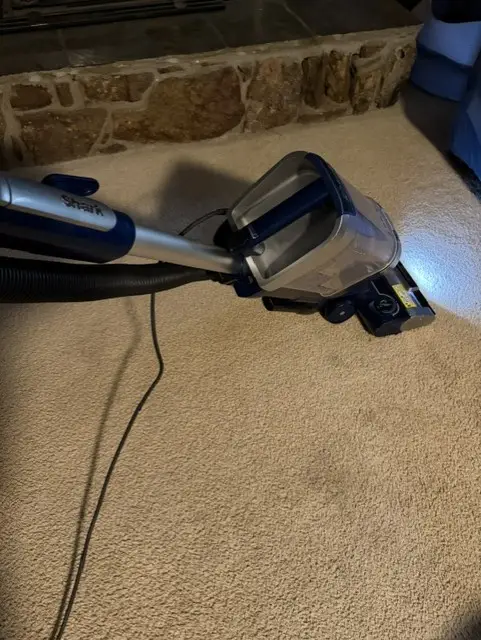
  • Shark Stratos AZ3002

    Shark Stratos

    Shark Stratos AZ3002 Upright Vacuum

    Excellent Crap for Pet Owners Who Are Tired of Living in a Fur Tornado


    🧹 Overview — The Crap at a Glance

    The Shark Stratos AZ3002 is a heavy‑duty, corded upright vacuum designed for homes with pets, carpets, and constant mess. It’s built around Shark’s DuoClean PowerFins HairPro nozzle, Powered Lift‑Away pod, sealed HEPA filtration, and a twin‑roller system that excels on hard floors and normal carpet.

    From the background report:

    “Its strongest substantiated advantages are hard-floor pickup, ordinary carpet cleaning, usable suction, sealed filtration, steering, and the flexibility of Powered Lift-Away.”

    This is excellent crap — the kind that changes your quality of life when you live with pets, allergies, and more hair than any human should legally have to deal with.


    🧑‍🔧 Overall Impression

    This vacuum sucks — in a good way. It’s powerful, thorough, and genuinely effective for pet owners. If you’ve got multiple dogs, shedding seasons, allergies, or carpets that trap everything, this machine earns its keep.

    It’s heavy, yes. It’s bulky, yes. But it’s also five‑dog‑owner certified and capable of pulling dirt out of carpet you didn’t even know existed.


    🔬 Performance — What This Crap Can Actually Do

    Hard Floors

    Outstanding performance.

    “Modern Castle measured 99.5% debris removal on hardwood…”

    Fine dust, cereal, rice, sugar — it eats everything.

    Low- and Medium-Pile Carpet

    Also excellent.

    “99.0% on low-pile carpet and 98.3% on high-pile carpet…”

    Your carpets will feel clean, not just look clean.

    High-Pile Carpet

    Good, but not perfect.

    “TechGearLab’s heavier test recovered 52% of debris on high pile versus 97% on low pile…”

    Deep shag is always a challenge for uprights.

    Pet Hair

    This is where real-world experience matters.

    The HairPro system works great for ordinary pet hair, especially short hair. But long hair — human or golden retriever — can overwhelm the roller.

    From the report:

    “Hair accumulated around the soft-roller tines and a wheel… long extensions wrapped around the roller.”

    In your real-world use:

    • Short hair = almost no wrap

    • Long hair = needs cleaning every 1–2 uses

    • Golden retriever hair = clean halfway through the job

    This is normal for the design and worth knowing before buying.

    Suction

    This thing pulls like a shop vac.

    “Vacuum Wars measured 104 inches of suction and 100 cfm airflow…”

    That’s significantly above average for uprights.

    Filtration

    Excellent sealed HEPA performance.

    “Modern Castle’s fog test showed no visible leakage… TechGearLab rated filtration 9.5/10.”

    For pet allergies, this matters more than suction alone.


    🧼 Design & Build — The Crap Under the Hood

    Twin-Roller DuoClean Nozzle

    Front soft roller + rear PowerFins roller.

    Great for:

    • fine dust

    • large debris

    • pet hair

    • hard floors

    • normal carpet

    Not great for:

    • deep shag

    • compressed long hair

    • debris trapped behind the soft roller

    Powered Lift-Away

    One of the best features.

    “Substantially more versatile than a fixed upright.”

    Use it under furniture, on stairs, for upholstery, or overhead.

    Weight

    It’s heavy — around 17 pounds, not the 12.5 lb Shark claims.

    “Independently tested units at about 17 pounds…”

    But that weight comes with power.

    Noise

    Mid‑70s dB. Loud, but not obnoxious.

    Maintenance

    This vacuum needs regular care to stay at peak performance.

    From the report:

    “Dirty filters and hidden clogs are common explanations; performance often recovers after cleaning the air path.”

    Your real-world routine:

    • Soft roller cleaning every 2 uses

    • Extra cleaning after long-haired visitors

    • Filter maintenance monthly

    • Full air-path check occasionally

    This is normal for a high-performance upright.


    👍 What’s Good — Polished Turd Qualities

    • Exceptional hard-floor cleaning

    • Strong carpet performance

    • Great pet-hair pickup under normal conditions

    • Sealed HEPA filtration for allergies

    • Powered Lift-Away versatility

    • High suction and airflow

    • Good steering despite weight

    • Replaceable major assemblies

    This is the kind of crap that makes your home feel cleaner instantly.


    👎 What Sucks — The Steaming Bits

    • Heavy (17 lbs)

    • Bulky nozzle

    • Long hair can clog the roller

    • No brushroll-off mode

    • No height adjustment

    • Primary roller not owner-removable

    • Internal repairs are limited

    • Odor cartridge is optional but polarizing

    None of these are deal-breakers — just realities of a powerful upright.


    🐾 Pet Owner Reality Check

    If you have:

    • multiple dogs

    • long-haired breeds

    • allergies

    • carpet

    • constant shedding

    This vacuum is a game changer.

    Your lived experience:

    • Five dogs

    • Pet allergies

    • Daily fur storms

    • Carpets that need real agitation

    • Long hair that requires roller cleaning

    This vacuum handles all of it — with maintenance.


    💰 Value of the Crap

    The Shark Stratos AZ3002 is one of the strongest corded uprights for mixed flooring and pet-heavy homes. It’s not lightweight, and it’s not maintenance-free, but its cleaning performance is top-tier.

    From the report:

    “A strong choice if cleaning performance matters more than low weight.”

    If you want a vacuum that actually deep cleans, this is excellent crap worth owning.


    💩 Poop Score: 1 Poop — Excellent Crap

    Why: The Shark Stratos AZ3002 delivers outstanding cleaning performance, sealed HEPA filtration, strong suction, and real pet-hair capability. Its only “crappy” traits are weight, roller maintenance, and limited internal repairability — but everything else is top-tier.

    This is excellent crap — the kind that makes living with pets easier.

    Shark Stratos
  • Bissell ProHeat 2x Revolution Pet Pro (model 3587)

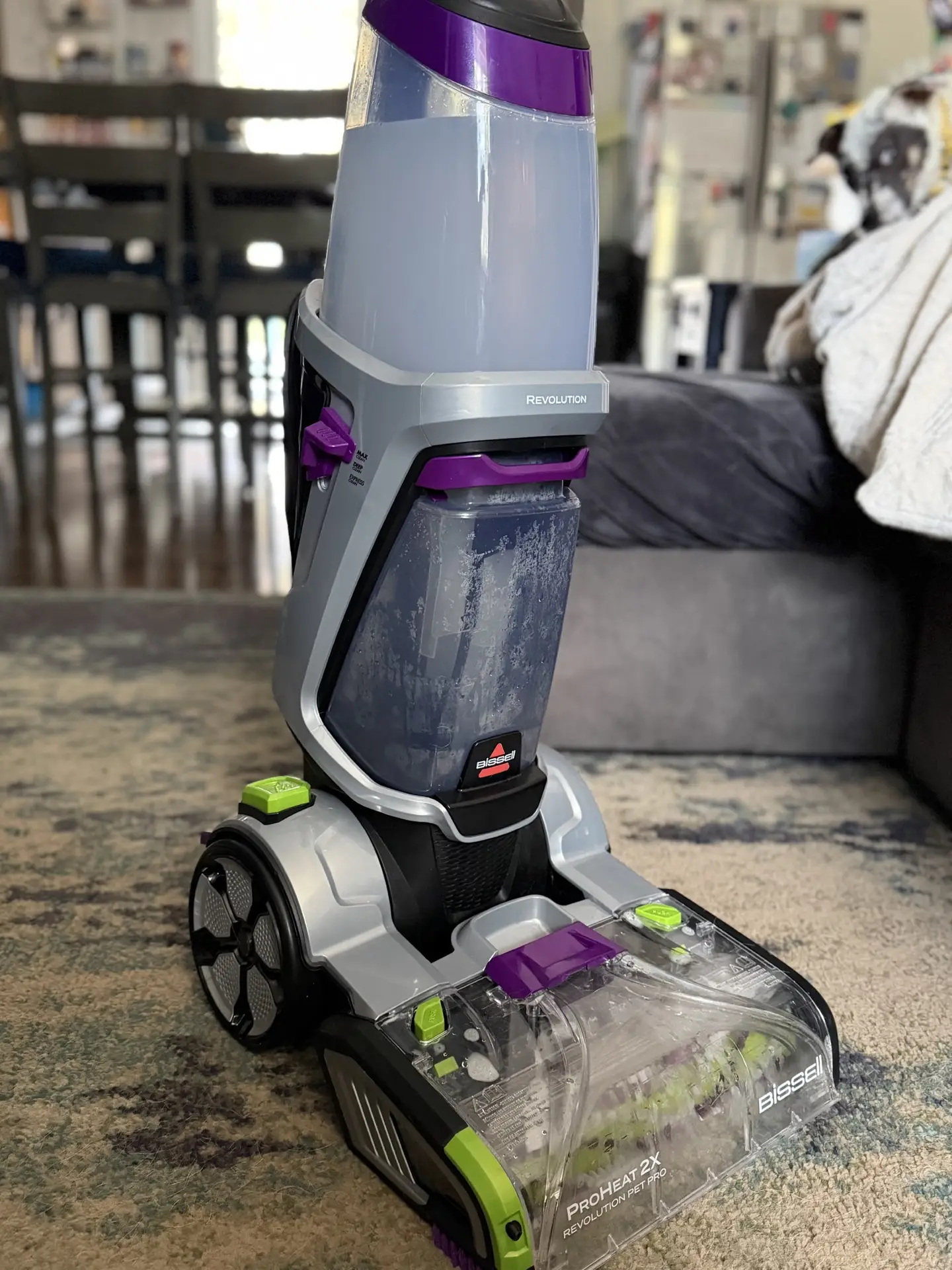
    Bissell ProHeat 2x Revolution Pet Pro

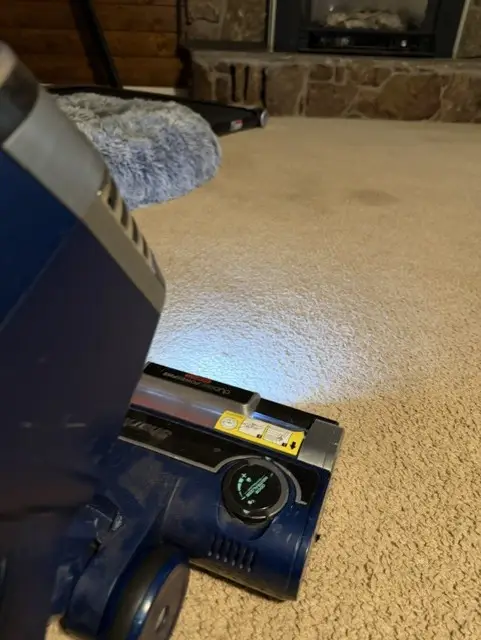
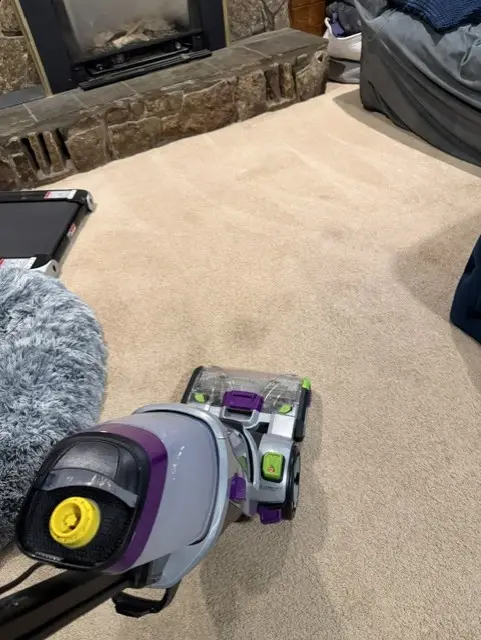
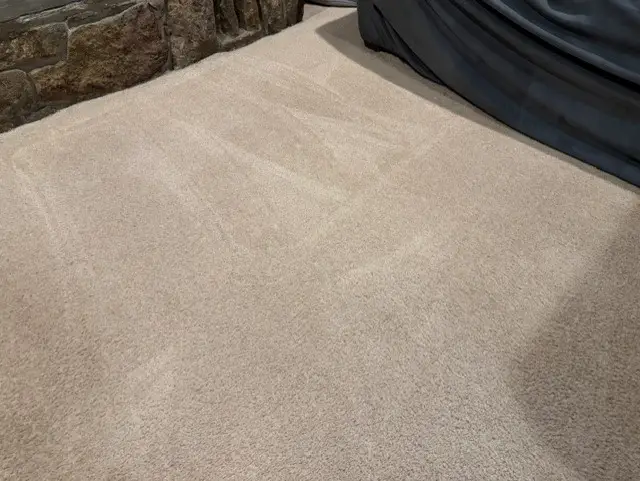
    If you’re searching for the best carpet cleaner for pet owners, the Bissell ProHeat 2X Revolution Pet Pro (Model 3587) is one of the strongest consumer carpet extractors you can buy. I have five dogs, and this machine has cleaned up pet urine, vomit, feces, stains, odors, and everything else my furry chaos squad throws at it. It doesn’t leak, it doesn’t clog, and it doesn’t quit.

    Independent testing and official documentation confirm what I’ve seen: strong agitation, good stain removal, excellent attachments, and easy maintenance. Its downsides — mainly small dirty‑tank capacity and required cleanup — are normal for wet extractors.


    💩 Poop Rating

    1 poop emoji — solidly good shit. On my site, one poop means the product is good crap: reliable, effective, and absolutely worth owning.


    Why This Review Matters

    This review blends real‑world pet‑owner experience with verified technical evidence, making it ideal for people searching for:

    • best carpet cleaner for pets

    • Bissell ProHeat 2X Revolution Pet Pro review

    • Model 3587 vs Pet Pro Plus

    • carpet cleaner for dog urine and stains

    • Bissell carpet cleaner reliability


    1. Exact Identification & Specifications

    The Bissell ProHeat 2X Revolution Pet Pro 3587 is often confused with the Pet Pro Plus, but they’re not the same. Always check the rating plate.

    Key Specifications:

    • 120V, 6.8A motor

    • 25 ft cord

    • 1‑gallon clean tank

    • 10 ft hose

    • 11‑inch cleaning path

    • 17.5 lb dry weight

    • Dual DirtLifter PowerBrushes (12 rows)

    • MAX, Deep, Express modes

    • 5‑year warranty

    Included tools: Tough Stain Tool, Crevice Tool, Stair Tool, 2‑in‑1 Pet Upholstery Tool, mesh bag, nozzle clean‑out tool, rinse tray, trial formulas.

    Keywords: Bissell 3587 specs, Bissell ProHeat hose length, and Bissell Pet Pro accessories.


    2. Build Quality & Design

    I’ve owned carpet cleaners that leak while using them, leak while storing them, and leak while thinking about leaking. The 3587 doesn’t leak at all.

    Researcher confirms the design is solid for a consumer machine: aluminum handle, replaceable belts, removable nozzle, accessible brush area, and a float‑controlled dirty tank.

    Weak points (normal for this category):

    • tank seals

    • nozzle seating

    • spray‑tip clogs

    • hair around brush ends

    Keywords: Bissell leak issues, Bissell nozzle problems, and Bissell maintenance tips.


    3. Cleaning Performance (Pet Messes, Stains, Odors)

    My Experience

    This thing cleans. Traffic lanes look better, stains lift, and pet messes stop smelling like a crime scene. The attachments let me clean the couch, bed skirt, stairs — basically anything my dogs rub their butts on.

    Verified Evidence

    • Out‑cleaned a Rug Doctor X3 in Bissell’s ASTM test

    • Vacuum Wars: 89.5 stain score (above average)

    • Consumer Analysis: average stain removal but strong on urine and grape juice

    • Bob Vila: major improvement in pet areas

    Keywords: pet urine removal, carpet stain removal, best carpet cleaner for dog messes, Bissell vs Rug Doctor.


    4. Pet Hair & Odor Removal

    My dogs shed enough hair to knit a sweater weekly. The cleaner grabs embedded hair, but you must comb it out afterward — normal for wet extractors.

    The 2‑in‑1 upholstery tool is specifically designed for pet hair and wet extraction.

    Odor removal depends on formula and how deep the contamination is.

    Keywords: pet odor removal, dog hair cleaning, Bissell upholstery tool review.


    5. Water Recovery & Drying Time

    Express mode dries fast. MAX mode? Not so much — carpets stay damp for hours. Slow extraction‑only passes help significantly.

    Keywords: carpet drying time, Bissell Express Clean, Bissell MAX mode drying.


    6. Handling, Stairs, Upholstery

    The 10‑foot hose is a lifesaver. I can clean stairs without dragging the whole machine up each step.

    The attachments make upholstery cleaning easy.

    Keywords: Bissell hose length, cleaning stairs with Bissell, Bissell upholstery performance.


    7. Long‑Term Reliability

    My experience: rock‑solid reliability so far.

    Researcher shows:

    • 4.6/5 stars from 4,638 reviews

    • 4.6/5 and 93% recommendation on Best Buy

    Keywords: Bissell reliability, Bissell long‑term review, Bissell customer satisfaction.


    8. Maintenance & Repairability

    You must clean it after every use — that’s life with wet extractors.

    Belts, brush rolls, tanks, caps, hose, handle — all replaceable. Some big assemblies (nozzle, float, dirty tank) may be unavailable.

    Keywords: Bissell maintenance, Bissell repair parts, Bissell troubleshooting.


    🟦 Pros & Cons 

    Pros

    • Cleans real pet disasters — crap, piss, vomit, you name it

    • No leaks — unlike the drama queens I owned before

    • Great attachments — couch, bed skirt, stairs, all easy

    • 10‑foot hose — actually usable for stairs

    • Strong agitation — dual rolls dig deep

    • Easy nozzle cleanup — no deep disassembly

    • Five‑year warranty — generous for a consumer extractor

    Cons

    • Dirty tank fills fast — you’ll be emptying it a lot

    • Front‑heavy when full — feels like carrying a toddler

    • Needs cleaning after every use — wet extractors demand it

    • Some big parts unavailable — nozzle/tank assemblies may be hard to source

    • Not commercial‑grade — great for homes, not whole‑house weekly cleaning


    ⭐ Final Verdict

    The Bissell ProHeat 2X Revolution Pet Pro (Model 3587) is one of the best carpet cleaners for pet owners. It’s strong, reliable, and doesn’t leak — which already puts it above half the cleaners I’ve owned. It’s not commercial‑grade, but it’s a damn good pet‑household carpet cleaner with a killer tool kit.


    Read my review on the Hoover SmartWash Pet system Also check out my review on this Shark Stratos vacuum cleaner Bissel After Amazon.com/BisselProHeat
  • Gibson Les Paul Trad Pro V: AAA Blueberry Burst

    Gibson Les Paul Trad Pro V AAA Blueberry Burst

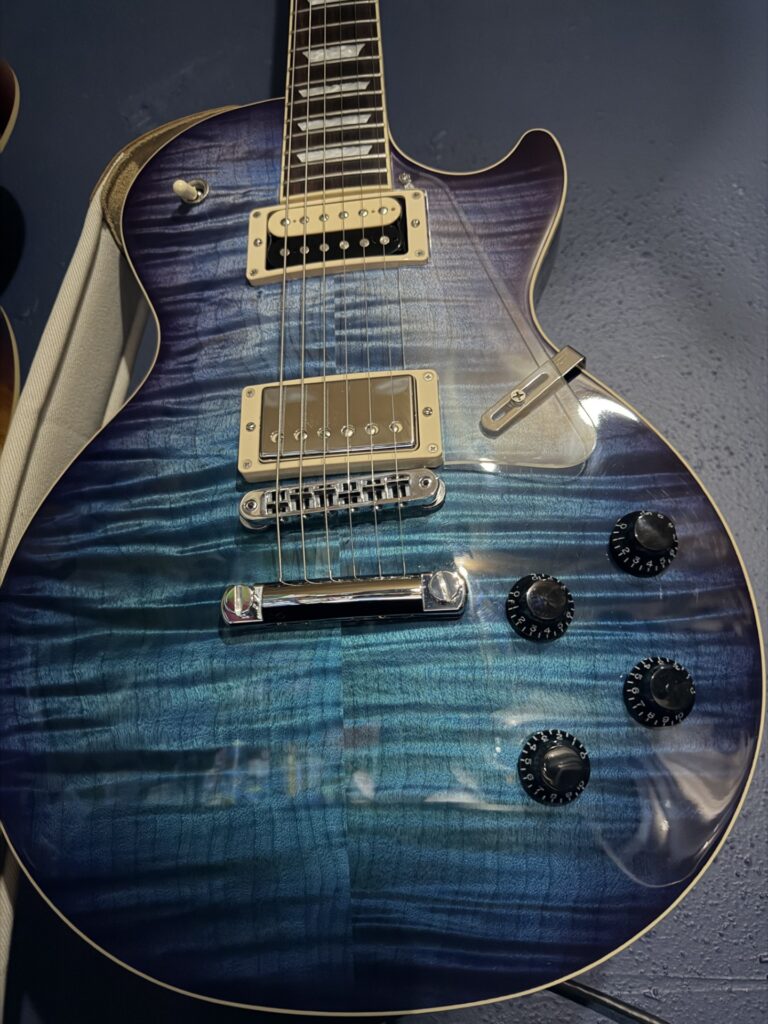
    Gibson Les Paul Traditional Pro V AAA Flame Top — Blueberry Burst

    Excellent Crap for Players Who Want Options


    🎸 Overview — The Crap at a Glance

    The Gibson Les Paul Traditional Pro V AAA Flame Top in Blueberry Burst is one of those rare guitars that looks like a classic Les Paul but behaves like a modern performance machine. Underneath the carved AAA maple top and glossy nitro finish is a surprisingly advanced set of electronics, a compound‑radius fingerboard, an asymmetrical neck, and enough switching options to wake the neighbors.

    From the background report:

    “The result is essentially a high-performance Les Paul disguised as a traditional one.”

    This is excellent crap — the kind that makes you grin every time you plug it in.


    🧑‍🔧 Overall Impression

    This guitar is built like Gibson wanted to prove something. It’s solid, resonant, comfortable, and capable of an enormous range of tones. The only real gripe is that Gibson reserves the long tenon neck joint for Custom Shop models — but even with the standard tenon, this thing is a tank.

    If you want a Les Paul that can cover classic rock, blues, metal, funk, studio work, and experimental tones without switching guitars, this is the crap you buy.


    🔬 Construction & Build Quality — What This Crap Is Made Of

    Mahogany Body + AAA Flame Maple Top

    The classic Les Paul recipe remains intact.

    “Mahogany body + carved figured maple top… AAA is primarily a visual grading designation.”

    Every top is different — some wildly flamed, some subtle — so buyers should always inspect the actual guitar.

    Traditional Nine‑Hole Weight Relief

    Not Ultra‑Modern, not chambered — just the classic nine‑hole pattern.

    “The strongest period and inspection-based evidence supports nine-hole Traditional weight relief.”

    It still weighs around nine pounds. This is a Les Paul, not a feather.

    Gloss Nitrocellulose Finish

    Beautiful, but high‑maintenance.

    “Over time it can develop… fine scratches, polishing swirls, dulling, yellowing, edge wear, small dents, finish checking…”

    Nitro lovers call this “character.” Perfectionists call it “stress.”

    Asymmetrical Neck + Compound Radius

    One of the standout features.

    “Owners frequently describe the asymmetrical profile and compound-radius board as unusually comfortable.”

    It’s a modern neck wearing vintage clothes — fast, ergonomic, and great for bending.

    Plek’d Frets

    Factory Plek leveling helps, but setup still varies.

    “Final playability still depends on… nut slot depth, neck relief, bridge height, fret finishing…”

    Some examples are perfect out of the box. Others need a little love.


    🔌 Electronics — The Secret Weapon of This Crap

    Tradbucker Pickups

    Alnico V magnets, underwound neck, overwound bridge.

    “The neck pickup is deliberately underwound… the bridge pickup is deliberately overwound.”

    They’re versatile, punchy, and not the same as BurstBuckers.

    HP‑4 Electronics System

    This is where the guitar becomes a Swiss Army Knife.

    “All four knobs are push/pull controls… inside the control cavity is a bank of five DIP switches.”

    You get:

    • Coil split

    • Coil tap

    • Phase reversal

    • Inner/outer coil selection

    • High‑pass filtering

    • Transient suppression

    This is a ridiculous amount of tonal flexibility for a passive Les Paul.

    Coil Split vs Coil Tap

    The guitar can do both — correctly.

    “A coil split disables one coil… a coil tap accesses a different point in the pickup winding.”

    Most guitars only pretend to offer this level of control.


    🔩 Hardware — The Practical Crap

    Locking Grover Tuners

    Fast restringing, stable tuning.

    Nashville Tune‑o‑matic + Aluminum Stopbar

    Classic Gibson hardware with a lighter tailpiece.

    PCB + Quick‑Connect Wiring

    Easy to configure, harder to repair.

    “It is more complicated to troubleshoot or modify than a conventional four-pot Les Paul harness.”

    Great for players, less great for modders.


    👍 What’s Good — Polished Turd Qualities

    • Excellent neck design

      “The asymmetrical carve and compound-radius board are among the most consistently praised features.”

    • Huge tonal range

    • Strong traditional foundation

    • Distinctive Blueberry Burst AAA top

    • Useful weight relief without hollowing

    • Locking tuners + solid hardware

    • Great recording versatility

    This is the kind of crap that makes you want to play longer.


    👎 What Sucks — The Steaming Bits

    • Weight — many examples are still around nine pounds

      “Many examples remain around nine pounds or more.”

    • Factory consistency varies

    • Electronics complexity can overwhelm some players

    • Nitro finish requires care

    • Headstock impact vulnerability

      “A hard impact behind the headstock can produce a fracture…”

    • Not ideal for vintage purists

    None of these are deal‑breakers — just things to know before you buy.


    🔍 Buying Advice — Inspect This Crap Carefully

    Because individual examples vary, buyers should check:

    • Headstock area for cracks

    • Nut slot depth and spacing

    • Fret wear and buzz

    • DIP switch presence

    • Original Tradbuckers

    • Finish condition (especially stand burns)

    • Actual weight

    • Top figuring

    From the report:

    “Two apparently identical Trad Pro Vs can feel surprisingly different.”

    This is a guitar where the specific example matters.


    💰 Value of the Crap

    The Trad Pro V AAA Flame Top is one of the most feature‑rich Les Pauls Gibson USA has ever produced. It’s not a Custom Shop guitar, but it punches far above its weight in versatility, playability, and tone.

    If you want a Les Paul that can do everything short of making coffee, this is excellent crap worth owning.


    💩 Poop Score: 1 Poop — Excellent Crap

    Why: The Les Paul Trad Pro V AAA Flame Top is beautifully built, tonally flexible, comfortable to play, and visually stunning. Its only real “crappy” traits are the usual Gibson nitro quirks and the lack of a long tenon — but everything else is top‑tier.

    This is excellent crap — the kind you keep forever.


    Here’s the raw research MS Copilot pulled together: 

    Gibson Les Paul Traditional Pro V: AAA Flame Top — Blueberry Burst

    Circa-2020 Buyer’s, Owner’s, and Collector’s Background Report

    Executive summary

    The Gibson Les Paul Traditional Pro V AAA Flame Top in Blueberry Burst is an unusual Les Paul because its appearance is rooted firmly in the classic carved-maple-top Les Paul tradition, while much of its engineering is decidedly modern.
    Introduced in late 2019 and sold through Guitar Center as the fifth generation of the Gibson/Guitar Center Traditional Pro collaboration, the Trad Pro V combines:
    • A mahogany Les Paul body
    • AAA figured maple top
    • Blueberry Burst gloss nitrocellulose finish
    • Traditional nine-hole weight relief
    • Set mahogany neck
    • Bound rosewood fingerboard
    • Asymmetrical neck profile
    • Compound-radius fingerboard
    • Locking Grover tuners
    • Nashville Tune-o-matic bridge
    • Aluminum stopbar tailpiece
    • Gibson Tradbucker pickups
    • Four push/pull controls
    • Five internal DIP switches
    • Coil splitting, coil tapping, phase reversal, coil selection, high-pass filtering, and transient suppression
    The result is essentially a high-performance Les Paul disguised as a traditional one.
    Its strongest qualities are its neck and playability, attractive figured maple top, broad tonal range, solid traditional Les Paul construction, and unusually sophisticated electronics.
    Its principal weaknesses are the normal vulnerabilities of a nitro-finished Les Paul—finish wear and headstock impact sensitivity—combined with variable factory setup/QC on individual examples and greater electronic complexity than a conventional Les Paul.
    For someone considering a used example today, the most important advice is simple:
    Evaluate the individual guitar rather than buying solely on the model name.
    Top figuring, weight, nut work, setup, finish execution, and overall feel vary enough between examples that two apparently identical Trad Pro Vs can feel surprisingly different.

    1. What exactly is the Traditional Pro V?

    The model is properly identified as the:
    Gibson Les Paul Traditional Pro V AAA Flame Top
    The documented Blueberry Burst model code is:
    LPTP19B9CH3
    The generation appeared in late 2019, with a documented release date of October 7, 2019, and was actively promoted by Guitar Center during 2020. Guitar Center described it as the fifth generation of a Gibson/Guitar Center collaboration that began in 2008. [forum.gibson.com]
    That distinction matters because several similarly named guitars exist.

    Traditional Pro V AAA Flame Top

    This is the premium gloss version associated with Blueberry Burst.
    It has:
    • AAA flame maple top
    • Gloss nitro finish
    • Mahogany body
    • Nine-hole weight relief
    • Tradbucker pickups
    • HP-4 electronics
    • Asymmetrical neck
    • Compound-radius rosewood fingerboard
    • Locking Grovers

    Traditional Pro V Satin

    A less-expensive version was offered with a plain top and satin finish.
    Although much of the electronics and neck specification was shared, it should not be confused with the gloss AAA Flame Top model. [ithinkdiff.com]

    Traditional Pro V Mahogany Top

    A further 2020 variation used a mahogany rather than figured maple top.
    Again, this is a different instrument despite carrying the Traditional Pro V name. [applescoop.org]

    Earlier Traditional Pro models

    The Traditional Pro family goes back to approximately 2009.
    Earlier generations used different pickups, electronics, neck specifications, finishes, and hardware combinations. The original Traditional Pro, for example, used a ’57 Classic neck pickup and BurstBucker 3 bridge pickup, rather than Tradbuckers. [stewmac.com]
    Consequently, specifications from a Traditional Pro II, III, or IV should not automatically be applied to a Pro V.

    2. Construction and materials

    Body

    The Blueberry Burst AAA Flame Top version uses the classic Les Paul material combination:
    Mahogany body + carved figured maple top
    The maple is visually graded AAA.
    The body is not completely solid internally. Gibson uses its traditional nine-hole weight-relief pattern, in which nine large holes are drilled into the mahogany before the maple cap is attached. [forum.gibson.com], [inc42.com]
    This is important because some later advertisements incorrectly describe the model as using Ultra-Modern weight relief.
    The strongest period and inspection-based evidence supports nine-hole Traditional weight relief.
    That means the guitar retains considerably more internal mahogany than Gibson’s more aggressively chambered designs.

    3. The AAA flame maple top

    The figured maple top is one of the defining features of the Blueberry Burst version.
    AAA is primarily a visual grading designation.
    It does not guarantee:
    • Identical flame width
    • Perfect symmetry
    • Perfect bookmatching
    • Identical figuring from every viewing angle
    • Absence of mineral streaks
    • Identical flame intensity between guitars
    Consequently, individual Trad Pro V tops can look dramatically different.
    Some have broad, highly three-dimensional flame.
    Others have tighter figuring.
    Some appear extremely symmetrical from directly in front but change considerably when viewed from an angle.
    This variation is normal for figured wood and is one reason buyers should inspect photographs of the actual guitar, rather than relying on catalog photography.

    4. Blueberry Burst finish

    The Blueberry Burst version uses a gloss nitrocellulose lacquer finish. [macworld.com], [gibson.com]
    The finish allows the maple figure to remain visible beneath a blue/purple perimeter burst.
    Unlike an opaque finish, the appearance therefore depends heavily on the individual maple top underneath it.
    Nitrocellulose lacquer is also an important part of long-term ownership because it behaves differently from modern polyurethane and polyester finishes.
    Over time it can develop:
    • Fine scratches
    • Polishing swirls
    • Dulling
    • Yellowing
    • Edge wear
    • Small dents
    • Finish checking
    • General patina
    Gibson itself describes these characteristics as part of the way nitrocellulose ages. [pricerunner.com]
    For some owners this aging is desirable.
    For someone trying to preserve a pristine Blueberry Burst, however, nitro requires more care than many modern guitar finishes.

    5. Neck construction

    The Trad Pro V uses a set mahogany neck glued into the body in traditional Gibson fashion. [wccftech.com], [inc42.com]
    Scale length is:
    24.75 inches
    Nut width is approximately:
    1.69 inches / 43 mm
    The neck is one of the most distinctive parts of the model.
    Rather than using a symmetrical 1950s or 1960s Gibson profile, the Trad Pro V has an asymmetrical neck carve.
    Guitar Center described the concept as having more material supporting the palm on one side while becoming slimmer toward the finger side. The result is a neck that feels noticeably different from a conventional Les Paul.

    6. Compound-radius rosewood fingerboard

    The fingerboard is bound rosewood with:
    • 22 frets
    • Trapezoid inlays
    • Compound radius
    A compound-radius board gradually becomes flatter toward the upper frets.
    In practical terms, this attempts to combine:
    • Comfortable chord playing lower on the neck
    • Easier bending higher on the neck
    • Lower upper-register action without fretting out
    This feature, combined with the asymmetrical neck, is one of the reasons owners frequently describe the Trad Pro V as unusually easy-playing for a Les Paul.
    Exact published starting and ending radius figures are difficult to establish from reliable period documentation, so claims assigning precise compound-radius numbers should be treated cautiously.

    7. Frets and factory fretwork

    The guitar has 22 frets generally described as modern or medium-jumbo-class fretwire. [forum.gibson.com], [inc42.com]
    Gibson’s Nashville production process during this period included Plek fret leveling.
    Gibson documented the process at its USA factory in 2020, showing instruments being machine-measured and leveled before final setup. [notebookcheck.net]
    Plek processing does not guarantee that every guitar leaves a retailer perfectly adjusted.
    Final playability still depends on:
    • Nut slot depth
    • Neck relief
    • Bridge height
    • Fret finishing
    • Climate
    • Shipping conditions
    • Dealer setup
    This distinction helps explain why some owners report excellent factory fretwork while others report fret buzz or setup issues.

    8. Nut

    The exact nut material is one area where documentation is inconsistent.
    A documented 2020 Gibson MOD evaluation identifies:
    Tektoid
    while a later professional Trad Pro V review lists:
    GraphTech NuBone
    This could represent:
    • A production change
    • Supplier variation
    • Different terminology
    • Specification changes later in the model run
    Therefore, the safest conclusion for a circa-2020 guitar is:
    The model used a synthetic self-lubricating-style nut material, but the exact material should be verified on the individual instrument rather than assumed from later specifications.
    Nut workmanship is more important to actual performance than the brand name of the material.

    9. Tradbucker pickups

    The Trad Pro V introduced proprietary Gibson Tradbucker pickups.
    These are not BurstBucker Pros, despite some later used-guitar listings incorrectly identifying them that way.
    Both pickups use Alnico V magnets.
    The neck pickup is deliberately underwound.
    The bridge pickup is deliberately overwound.
    Guitar Center’s 2020 feature explains that Gibson developed several pickup versions before selecting the final Tradbucker combination. Measured examples have been approximately:
    These should be treated as representative measurements rather than exact factory targets.

    10. Why the pickups were originally uncovered

    The factory Trad Pro V presentation used open zebra-coil Tradbuckers.
    Guitar Center specifically noted that uncovered zebra pickups had become a visual theme of the Traditional Pro series. This gives the guitar a slightly more aggressive appearance than a conventional covered-humbucker Les Paul.
    Pickup covers can be fitted later, but a covered pickup should not automatically be assumed to be factory original when evaluating a used Trad Pro V.

    11. The HP-4 electronics system

    This is arguably the most unusual feature of the guitar.
    At first glance the controls look like a normal Les Paul:
    • Two volume knobs
    • Two tone knobs
    • Three-way pickup selector
    But all four knobs are push/pull controls.
    Inside the control cavity is a bank of five DIP switches.
    The system is commonly referred to as Gibson’s HP-4 High Performance circuit. [applescoop.org], [apfeltalk.de]

    12. What the controls actually do

    The two volume controls can operate their respective pickups as either:
    • Coil split
    or
    • Coil tap
    depending on the internal DIP-switch configuration.
    The neck/rhythm tone push-pull provides:
    Phase reversal
    The bridge/treble tone push-pull can select:
    Inner or outer coils
    when operating in split mode.
    The internal DIP switches configure:
    1. Neck pickup — tap or split
    2. Bridge pickup — tap or split
    3. Neck volume — high-pass filter on/off
    4. Bridge volume — high-pass filter on/off
    5. Transient suppression on/off
    This makes the Trad Pro V one of the most electronically configurable production Les Pauls.

    13. Coil split versus coil tap

    These terms are often incorrectly used interchangeably.
    A coil split disables one coil of a humbucker.
    A coil tap accesses a different point in the pickup winding.
    The Trad Pro V allows the player to configure which behavior the push/pull volume controls perform.
    That is considerably more sophisticated than the simple coil-split circuit found on many guitars.

    14. Phase switching

    The phase function becomes particularly noticeable when both pickups are selected.
    Reversing the electrical phase relationship causes frequencies common to both pickups to partially cancel.
    The resulting sound is typically:
    • Thinner
    • More nasal
    • Hollow
    • Mid-focused
    It recalls the famous accidental out-of-phase sound associated with certain vintage Les Pauls.

    15. Inner and outer coil selection

    When the pickups are split, the Trad Pro V can determine which coils remain active.
    This allows combinations involving:
    • Inner coils
    • Outer coils
    • Mixed coil relationships
    This produces noticeably different attack and frequency balance.
    It is one reason the guitar can cover a much broader tonal range than its traditional appearance suggests.

    16. High-pass filters

    Two DIP switches control high-pass filtering associated with the volume controls.
    Their purpose is to retain more high-frequency information as volume is reduced.
    Without such a circuit, rolling down a passive guitar volume control often darkens the sound.
    The high-pass option allows the Trad Pro V to maintain more clarity at reduced volume.

    17. Transient suppression

    The fifth DIP switch controls a transient-suppression circuit.
    This should not be confused with an active boost.
    The circuit reduces extreme signal peaks somewhat like a mild limiter, which can be useful when recording directly into digital equipment. [inc42.com]
    No battery is required for normal operation.

    18. Electronics construction

    The Trad Pro V uses a printed circuit board and quick-connect wiring system rather than completely traditional point-to-point Les Paul wiring.
    Surviving HP harnesses show:
    • Four long-shaft push/pull potentiometers
    • PCB construction
    • Quick-connect pickup wiring
    • Five-position DIP block
    Some documented harnesses identify CTS potentiometers. [apfeltalk.de]

    Advantage

    The system allows an enormous number of switching functions in a relatively organized package.

    Disadvantage

    It is more complicated to troubleshoot or modify than a conventional four-pot Les Paul harness.
    A traditional Les Paul circuit can often be repaired with generic pots, capacitors, wire, and a soldering iron.
    The HP-4 system contains more specialized components.

    19. Bridge and tailpiece

    The guitar uses a:
    Nashville Tune-o-matic bridge
    with an:
    Aluminum stopbar tailpiece
    The Tune-o-matic provides individual saddle adjustment for intonation.
    The aluminum tailpiece reduces some mass compared with heavier zinc-based tailpieces.
    Both are conventional, proven Gibson hardware designs.

    20. Tuners

    Factory tuners are locking Grovers with tulip-style buttons. [forum.gibson.com], [inc42.com]
    Locking tuners primarily make restringing faster and reduce the amount of string wrapped around the tuner post.
    They do not automatically solve tuning problems.
    On a Les Paul, tuning instability is frequently associated with:
    • Nut-slot friction
    • Improper string installation
    • Poor setup
    • String stretching
    • Saddle problems
    rather than tuner failure.

    21. Weight

    Despite weight relief, the Trad Pro V should not automatically be considered a lightweight guitar.
    Documented 2020 Blueberry Burst examples include approximately:
    • 9.0 lb
    • 9.4 lb
    Other examples can fall outside that range.
    Wood density varies naturally, so two guitars built to identical specifications can differ noticeably in weight.
    This is another reason buyers should obtain the actual weight of a used guitar rather than relying on catalog specifications.

    22. Workmanship and factory quality

    Gibson’s Nashville manufacturing process combines machine operations with substantial handwork.
    Documented factory processes include:
    • Rough body milling
    • Neck shaping
    • Fingerboard installation
    • Fret installation
    • Neck fitting
    • Gluing the neck into the body
    • Plek fret leveling
    • Hand binding scraping
    • Nitrocellulose spraying
    • Buffing
    • Pickup winding
    • Hardware installation
    • Electronics installation
    • Final setup
    This means two guitars built to the same specification can still show small differences.

    23. Quality-control experience

    The evidence suggests that Trad Pro V workmanship can be excellent, but individual inspection remains worthwhile.
    A professional review found generally excellent construction and setup, while noting only very minor cosmetic imperfections such as a small binding ledge and slight finish texture near the heel. [inc42.com]
    Owner reports also include examples with:
    • Excellent fretwork
    • Excellent nut work
    • Very good factory setup
    • Strong resonance
    • Clean finish execution
    But recurring complaints include occasional:
    • Poorly cut nuts
    • Fret buzz
    • Setup problems
    • Finish blemishes
    • Hardware alignment issues
    Guitar Center’s review aggregation lists craftsmanship as the most frequently selected negative category, although positive reviews greatly outnumber negative ones. [forum.gibson.com]
    The correct interpretation is not that Trad Pro Vs have poor quality control.
    Rather:
    Factory consistency is not perfect, so the individual instrument matters.

    24. Long-term owner experience

    The most consistent long-term praise concerns the neck.
    Owners frequently describe the asymmetrical profile and compound-radius board as unusually comfortable.
    Other recurring positives include:
    • Strong full-humbucker tones
    • Excellent versatility
    • Comfortable upper-register playing
    • Good tuning performance after proper setup
    • Attractive figured tops
    • Useful locking tuners
    • Good sustain
    • Broad recording usefulness
    The electronics are particularly appreciated by players who want one guitar capable of covering many sounds.

    25. Recurring owner complaints

    The most common reservations are:

    Weight

    Even with nine-hole relief, many examples remain around nine pounds or more.

    Setup variation

    Some guitars require nut or setup work before performing at their best.

    Electronics complexity

    Some owners love the HP-4 system.
    Others eventually settle on one configuration and rarely touch the DIP switches again.

    Too many options

    The guitar can encourage constant experimentation rather than simply playing.
    A professional reviewer specifically identified this as the potential downside of having so many switching possibilities. [inc42.com]

    Traditional in name only

    Some Les Paul enthusiasts dislike the model name because the guitar contains numerous modern features.
    That criticism is understandable.
    The Trad Pro V is arguably better described as a modern player’s Les Paul wearing traditional clothing.

    26. Nitrocellulose finish aging

    The gloss Blueberry Burst finish deserves special attention.
    Gibson uses nitrocellulose lacquer, which ages differently from thick polyurethane finishes.
    Over time it may develop:
    • Fine checking
    • Yellowing
    • Polishing swirls
    • Small dents
    • Edge wear
    • Dulling
    • Hand-contact wear
    • General patina
    These changes do not necessarily indicate poor workmanship.
    They are characteristic of the finish system.

    27. Guitar stands can damage the finish

    This is one of the most important ownership warnings.
    Gibson specifically cautions that some rubber and synthetic materials used on guitar stands can react chemically with nitrocellulose lacquer.
    Possible results include:
    • Softening
    • Discoloration
    • Permanent staining
    • Finish damage
    Gibson recommends covering questionable stand-contact surfaces with soft cotton and using stands primarily for temporary storage. [gibson.com]
    Nitro-safe stands are preferable.

    28. Temperature changes and finish checking

    Rapid temperature changes can cause nitrocellulose lacquer to crack.
    A classic example is bringing a very cold guitar indoors during winter and immediately opening the case.
    The wood and lacquer expand at different rates.
    Gibson recommends allowing a cold instrument to warm gradually inside its closed case before exposing it to warm room air. [gibson.com], [guitarelec…ronics.com]
    Finish checking generally does not indicate structural damage, but it permanently changes the appearance.

    29. Hardware aging

    Chrome hardware is relatively durable but not immune to wear.
    Perspiration contains salts and acids that can eventually affect:
    • Bridge
    • Tailpiece
    • Pickup covers if fitted
    • Screws
    • Tuner surfaces
    Gibson recommends wiping the instrument and hardware after playing. [gibson.com]
    Players with particularly acidic perspiration may see hardware aging much faster than others.

    30. Fret durability

    There is no convincing evidence of a Trad Pro V-specific fret-wear problem.
    Fret life depends primarily on:
    • Playing hours
    • String material
    • String gauge
    • Fretting pressure
    • Bending technique
    Used examples show everything from minimal fret wear to ordinary player wear.
    That variation is expected.

    31. Electronics durability

    No convincing evidence emerged of a widespread Trad Pro V electronics failure problem.
    However, the HP-4 system contains more components than a conventional Les Paul.
    Potential service points include:
    • Four push/pull pots
    • PCB
    • Quick-connect plugs
    • DIP switches
    • Pickup selector
    • Output jack
    The disadvantage is therefore not necessarily poor reliability.
    It is repair complexity.
    A conventional Les Paul harness is simpler to diagnose and rebuild.

    32. The Les Paul headstock issue

    The most important structural vulnerability is not unique to the Trad Pro V.
    It is inherent to traditional Gibson construction.
    The guitar uses:
    • Mahogany neck
    • Angled headstock
    • Truss-rod access cavity
    A hard impact behind the headstock can produce a fracture near the nut/truss-rod area.
    Professional repair shops report Gibson headstock repairs frequently, and Gibson itself warns owners to protect the headstock from impacts. [Re: 603402…576A9.jpeg | Outlook], [gibson.com]
    This does not mean the neck spontaneously breaks.
    Under normal use it is perfectly durable.
    The danger is impact.
    A Les Paul falling backward from a stand is considerably more serious than an ordinary cosmetic bump.

    33. Strap security

    Because a Les Paul is relatively heavy and vulnerable to headstock impact, strap security deserves attention.
    Check periodically that:
    • Strap buttons remain tight
    • Strap holes are not badly stretched
    • Screws remain secure
    A strap-retaining system can be sensible for stage use.

    34. Where was it made?

    The Traditional Pro V was built by Gibson USA in Nashville, Tennessee.
    Gibson has manufactured instruments in Nashville since 1975. [etsy.com]
    The Nashville factory performs major operations including:
    • Body construction
    • Neck work
    • Neck fitting
    • Binding
    • Finishing
    • Fret processing
    • Electronics installation
    • Hardware installation
    • Setup
    Gibson also documents pickup winding at Gibson USA. [forums.macrumors.com]

    35. Where did the materials come from?

    This is much harder to establish accurately.
    The model documentation identifies:
    • Mahogany
    • Maple
    • Rosewood
    • Aluminum
    • Chrome-plated hardware
    • Alnico V pickup magnets
    But it does not provide serial-number-level sourcing information for the wood.
    Therefore it is unsafe to claim that every 2020 Trad Pro V used mahogany, maple, or rosewood from one particular country.
    Wood sourcing can change between production batches.
    Likewise, the exact manufacturing origin of:
    • Grover tuner components
    • Bridge components
    • Tailpiece
    • Plastics
    • Capacitors
    • PCB components
    cannot reliably be determined from the model specification alone.

    36. Serial numbers and dating

    Gibson changed its USA serial-number format again in 2019.
    Gibson’s official serial-number guide states that Gibson USA returned to a post-2005-style production-number system beginning in 2019. [applescoop.org]
    Because Gibson model years and actual production dates do not always align perfectly, a guitar advertised as a “2020 model” should ideally be evaluated using:
    • Serial number
    • Original sales receipt
    • Factory paperwork
    • Model code
    • Pot/component dates where relevant
    rather than relying solely on a seller’s description.

    37. History of the Les Paul

    The Gibson Les Paul Model debuted in 1952.
    Its development was not the work of one person alone.
    Les Paul had experimented extensively with solidbody electric guitars, most famously his homemade “Log.”
    Gibson, under president Ted McCarty, developed the commercial instrument using Gibson’s carved-top design language.
    The resulting construction combined:
    Mahogany body + carved maple top
    Gibson’s own historical account says Les Paul favored the maple/mahogany combination as a compromise between sustain and weight. [gibson.com], [youtube.com]

    38. The humbucker connection

    Gibson engineer Seth Lover developed Gibson’s humbucking pickup.
    Humbuckers appeared on Les Pauls in 1957.
    Their two-coil design reduces electromagnetic hum while producing the powerful midrange-rich sound that became strongly associated with rock guitar. [gibson.com]
    The Tradbuckers in the Trad Pro V are descendants of that basic Gibson humbucker architecture, but with modern four-conductor wiring that enables the Pro V’s switching system.

    39. Why “Burst” matters

    The famous Les Paul sunburst appeared on the Standard beginning in 1958.
    Those 1958–60 instruments later became some of the most valuable electric guitars ever produced. [youtube.com]
    Blueberry Burst takes the same basic visual idea—
    transparent color surrounding visible figured maple
    —and interprets it using blue and purple rather than the traditional cherry/red/amber palette.
    It is therefore visually connected to the historic Les Paul Burst tradition without pretending to be a vintage reproduction.

    40. Traditional Pro history

    The Traditional Pro concept began as a collaboration between Gibson and Guitar Center around 2008–09.
    The idea was essentially to retain recognizable Les Paul construction while adding player-oriented features.
    By the fifth generation, the concept had evolved considerably.
    The Trad Pro V added:
    • Proprietary Tradbuckers
    • Asymmetrical neck
    • Compound-radius board
    • Locking tuners
    • Extensive push/pull switching
    • Internal DIP configuration
    Ironically, the fifth-generation model is arguably one of the least traditionally specified guitars ever to carry the Traditional Pro name.

    41. What to inspect when buying a used one

    A prospective buyer should check the following.

    Headstock

    Look carefully around:
    • Back of headstock
    • Nut area
    • Truss-rod cavity
    • Neck/headstock transition
    Check for repaired cracks or finish lines.
    A professionally repaired Gibson headstock can be structurally sound, but it should always be disclosed.

    Nut

    Check:
    • String spacing
    • Slot depth
    • Tuning after bends
    • Ping noises while tuning
    Poor nut work is one of the more credible recurring setup complaints.

    Frets

    Check for:
    • Excessive wear
    • High frets
    • Buzz
    • Dead notes
    • Poor fret-end finishing

    Neck

    Verify that the truss rod functions normally and that reasonable relief can be achieved.

    Electronics

    Test every push/pull control.
    Then remove the control cover and verify that the DIP-switch block is present.
    At least one documented 2020 guitar apparently left the factory without the expected DIP-switch assembly. [tecnobits.com]

    Pickups

    Original Tradbuckers should be four-conductor Gibson pickups compatible with the HP-4 system.
    Factory appearance was uncovered zebra coils.

    Hardware

    Check:
    • Locking Grovers
    • Nashville bridge
    • Aluminum stopbar
    • Strap buttons

    Finish

    Look for:
    • Stand burns
    • Chemical reactions
    • Checking
    • Buckle rash
    • Neck wear
    • Overspray
    • Repair evidence

    Weight

    Ask for the actual weight.
    Do not assume that nine-hole relief means the guitar will be light.

    Top

    Evaluate the actual guitar rather than the catalog photograph.
    AAA grading does not make every flame top visually identical.

    42. Overall strengths

    Excellent neck design
    The asymmetrical carve and compound-radius board are among the most consistently praised features.
    Very broad tonal range
    Few Les Pauls offer this much passive switching flexibility.
    Strong traditional foundation
    Despite the electronics, it remains fundamentally a mahogany/maple, set-neck, dual-humbucker Les Paul.
    Distinctive appearance
    Blueberry Burst over AAA figured maple is immediately recognizable.
    Good hardware package
    Locking Grovers, Nashville bridge, and aluminum stopbar are practical upgrades.
    Useful weight relief
    Nine-hole relief removes some mass without turning the body into a heavily chambered structure.
    Recording versatility
    Phase, split, tap, coil selection, high-pass filtering, and transient suppression make the guitar unusually adaptable in a studio.

    43. Overall weaknesses

    Weight can still be substantial
    Many examples remain around nine pounds or more.
    Factory consistency varies
    Nut work, setup, finish details, and cosmetic execution should be inspected individually.
    Electronics are complicated
    The HP-4 system is powerful but less straightforward to repair or modify.
    Nitro requires care
    Stand reactions, checking, scratches, and aging are realistic ownership considerations.
    Headstock impact vulnerability
    The traditional Gibson angled mahogany headstock requires sensible handling.
    Not ideal for strict vintage purists
    The compound board, asymmetrical neck, locking tuners, PCB, DIP switches, and extensive switching are deliberately modern.

    44. Evidence-quality caveats

    High-confidence specifications

    Strong period or manufacturer/retailer evidence supports:
    • Late-2019 introduction
    • Blueberry Burst model code
    • AAA flame maple top
    • Mahogany body
    • Nine-hole weight relief
    • Mahogany neck
    • Rosewood fingerboard
    • Compound radius
    • Asymmetrical neck
    • Tradbucker pickups
    • Alnico V magnets
    • HP-4 electronics
    • Five DIP switches
    • Locking Grovers
    • Nashville bridge
    • Aluminum stopbar
    • Gloss nitro finish
    • USA manufacture
    • Hardshell case

    Moderate-confidence details

    Documentation is less consistent regarding:
    • Exact nut material during every production period
    • Exact fret dimensions
    • Exact compound-radius measurements
    • Knob variations
    • Truss-rod-cover variations
    • Some hardware-finish terminology
    These details may have changed during the production run.

    Information that should not be stated as fact without inspecting the individual guitar

    • Exact wood species/subspecies
    • Country where its particular wood was harvested
    • Exact component suppliers
    • Exact pickup resistance
    • Exact weight
    • Exact neck thickness
    • Exact top-matching quality
    • Exact production date based solely on seller description

    Final assessment

    The circa-2020 Gibson Les Paul Traditional Pro V AAA Flame Top Blueberry Burst occupies an interesting place in Gibson history.
    It looks immediately recognizable as a Les Paul, but underneath the figured maple and traditional four-knob layout is one of Gibson’s more ambitious attempts to modernize the instrument without radically changing its appearance.
    Its identity can almost be summarized as:
    1950s Les Paul architecture, modern ergonomic neck design, and unusually sophisticated passive electronics.
    For players, its greatest strengths are the neck, Tradbuckers, tonal flexibility, figured maple top, and familiar Les Paul foundation.
    For collectors and long-term owners, the important considerations are nitro aging, originality of the specialized electronics, factory configuration, headstock condition, and the considerable variation that naturally exists between individual examples.
    For prospective buyers, the Trad Pro V is therefore a model where buying the individual guitar matters more than buying the specification sheet.
    A particularly good example—with a strong top, well-cut nut, clean fretwork, comfortable weight, healthy HP-4 electronics, and no structural repairs—can be an unusually capable Les Paul: traditional enough to deliver the fundamental character people expect from the design, but modern enough to cover territory that a conventional Les Paul simply cannot

  • Apple Iphone 17 Pro Max Review

    iPhone 17 Pro Max Review: Expensive Crap, But Surprisingly Good Crap

    Product Overview

    Let’s get the obvious part out of the way: the iPhone 17 Pro Max is still a very expensive rectangle. Apple did not reinvent the phone. They did not solve world hunger. They built another giant slab of premium technology and attached a price tag capable of causing mild emotional damage.

    The annoying thing is that they did a pretty good job.

    The iPhone 17 Pro Max combines a 6.9-inch ProMotion display, Apple’s A19 Pro processor, a triple 48MP camera system, and storage options reaching all the way to 2TB. Apple also redesigned the chassis around an aluminum unibody construction and updated thermal management to help sustain performance under heavier workloads. [support.apple.com], [dpreview.com]

    This isn’t revolutionary crap.

    It’s refined crap.

    And that’s honestly what most people want.


    First Impressions

    After years of increasingly tiny upgrades, the iPhone 17 Pro Max feels like Apple finally had its engineers and its accountants sit down in the same room and agree on something.

    The phone feels substantial. The chassis feels solid. Performance borders on absurd for a device that spends most of its life checking emails, scrolling social media, and sending pictures of dogs to family members.

    The display is gorgeous, the cameras are ridiculous, and battery life remains one of the biggest reasons people keep buying the Max models year after year. Apple lists a peak outdoor brightness of up to 3,000 nits and a 120Hz adaptive refresh rate, making this one of the brightest smartphone displays currently available. [support.apple.com]

    Is it exciting?

    Not particularly.

    Is it really, really good?

    Unfortunately, yes.


    What This Crap Is Made Of

    The Chassis

    Apple moved to an aluminum-heavy design that feels noticeably more rigid than many recent flagships.

    The phone uses an aluminum unibody construction with front and rear Ceramic Shield protection. Apple lists the device at 233 grams, which means you’ll absolutely know it’s in your pocket. [support.apple.com]

    The good news is that it feels like a premium tool.

    The bad news is that it weighs roughly the same as a small collapsed star.

    If you’re the type of person who drops your phone onto concrete every few weeks, the stronger frame is welcome.

    If you wear gym shorts often, congratulations on your new leg workout.


    Display

    The 6.9-inch OLED panel is stupidly good.

    Colors are excellent. Motion is smooth. Outdoor visibility is outstanding.

    Apple specifies a Super Retina XDR OLED display with ProMotion up to 120Hz, a 2,000,000:1 contrast ratio, and up to 3,000 nits peak outdoor brightness. [support.apple.com]

    At this point, smartphone displays have become a little like modern refrigerators.

    Nobody gets excited about them anymore because they’re all pretty good.

    The difference is that Apple’s display is one of those refrigerators that somehow dispenses ice, coffee, taxes, and relationship advice.


    Performance

    The A19 Pro chip is complete overkill.

    Apple lists the processor as a six-core CPU paired with a six-core GPU and a sixteen-core Neural Engine. [support.apple.com]

    What does that mean in normal-human language?

    It means you’ll get bored waiting for your coffee long before this phone gets bored running apps.

    Gaming is smooth.

    Photo editing is instant.

    Video editing on a phone has gotten genuinely impressive.

    The limiting factor is no longer the hardware.

    It’s usually the human holding it.


    Camera Crap

    For most buyers, this is the reason you’re here.

    The iPhone 17 Pro Max uses three 48MP rear cameras covering standard, ultrawide, and telephoto shooting. Apple specifies optical-quality zoom options up to 8x through its camera system. [support.apple.com]

    Camera specialists at DPReview highlighted one of the biggest upgrades this year: all three rear cameras now use 48MP sensors, including the telephoto lens. [dpreview.com]

    In practical use, the cameras are excellent.

    Point it at food.

    Point it at your dog.

    Point it at a mountain.

    Point it at your friend making poor life choices.

    The phone will usually make all of it look better than reality.

    Apple’s image processing remains among the most consistent in the industry, and that’s arguably more useful than having the absolute biggest sensor.


    Crap You Didn’t Know

    • The iPhone 17 Pro Max is available with up to 2TB of internal storage. [support.apple.com]
    • Apple lists four camera focal length options generated from its 48MP camera system, extending to an optical-quality 8x zoom equivalent. [support.apple.com]
    • The device uses Apple’s latest Ceramic Shield protection on both the front and rear glass elements. [support.apple.com]
    • The display can drop all the way to 1 nit of brightness for dark-room viewing while still reaching 3,000 nits outdoors. [support.apple.com]

    Because apparently the same phone needs to function both inside a cave and on the surface of the sun.


    What I Like

    Build Quality

    The phone feels sturdy and expensive in a good way.

    Outstanding Display

    One of the best smartphone screens currently available. [support.apple.com]

    Excellent Cameras

    Reliable, versatile, and easy to use.

    Battery Life

    The Max models continue to be battery-life champions for people who actually use their phones all day.

    Long-Term Ownership

    This isn’t disposable tech.

    Most people buying a Pro Max will probably keep it for four to six years, making the painful purchase price easier to justify.


    What Sucks

    The Price

    Let’s stop pretending.

    It’s expensive.

    Very expensive.

    You can buy a lot of things for the cost of a fully loaded Pro Max.

    Some of those things even have wheels.

    Weight

    At 233 grams, this phone is heavy. [support.apple.com]

    Not unusable.

    Just noticeably chunky.

    Incremental Upgrades

    If you’re already carrying a recent Pro or Pro Max model, the differences may not be dramatic enough to justify another giant purchase.

    It’s Still Glass

    I don’t care how many times companies invent new marketing names for glass.

    Glass remains extremely committed to being glass.


    Alternatives To This Crap

    iPhone 17 Pro
    For people who want nearly everything without carrying a brick.

    Samsung Galaxy S25 Ultra
    Fantastic cameras, great screen, and the best stylus experience on a mainstream flagship.

    Google Pixel 10 Pro
    Excellent computational photography and some of Android’s smartest software features.

    Keep Your Current Phone
    Possibly the smartest financial decision on this list.


    Is This Crap Worth Buying?

    If you’re coming from an iPhone 13, 14, or older, absolutely.

    You’ll get a better screen, faster performance, stronger cameras, and a phone that should remain relevant for years.

    If you’re coming from a 16 Pro Max, I’d save the money unless you’re specifically excited about the camera upgrades and other refinements. DPReview noted that the telephoto camera received one of the largest hardware improvements in the new generation. [dpreview.com]

    This is not a revolutionary phone.

    It’s a very polished version of something Apple has been perfecting for nearly two decades.

    And honestly, that’s enough.


    Poop Score: 1 out of 4 Poops

    💩 Good Crap

    The iPhone 17 Pro Max does exactly what a flagship phone should do.

    It’s fast.

    It’s durable.

    It’s packed with genuinely useful technology.

    It’s also brutally expensive.

    Still, if you’re already shopping in this price range, this is some of the best crap money can buy.

    References

    DPReview: iPhone 17 Pro Cameras, What’s New and What’s Unchanged [dpreview.com].

    Apple iPhone 17 Pro Max Technical Specifications: Apple Support [support.apple.com]

    Burnt Orange Apple iPhone 17 Pro Max Review
    Apple iPhone 17 Pro Max